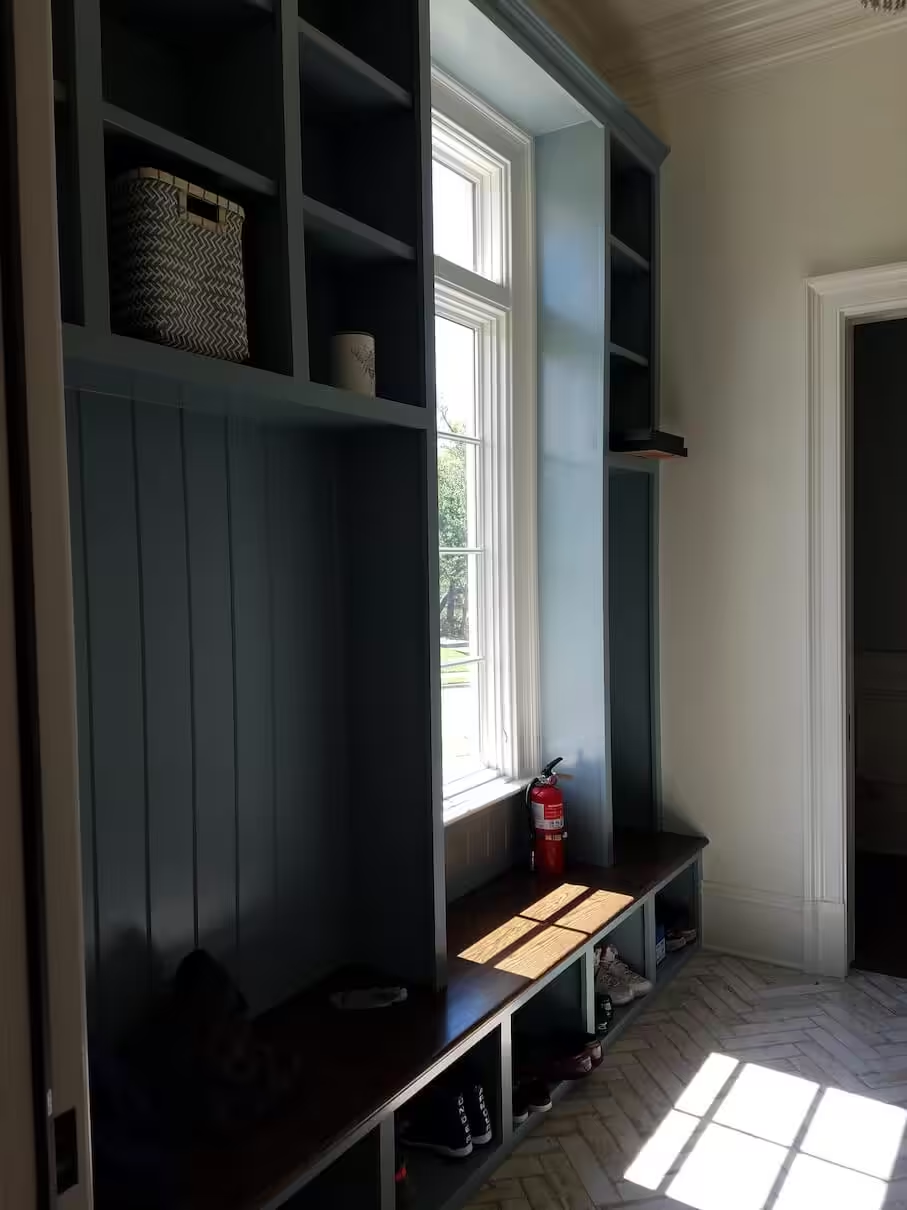
In a contemporary home in Dunes West, Mount Pleasant, the mudroom is lined floor to ceiling with built-in cabinetry painted a rich charcoal gray. A mudroom is where wet shoes, school bags and dog leashes land every day, which makes it a demanding place for painted cabinets.
So how long does a painted cabinet finish last? There is no fixed number of years: a cabinet that is degreased, sanded, primed, finished with a cabinet-grade enamel and given time to cure can look good for many years, while the same doors rushed back into daily use can mark and chip early.
The myths below are the ones that set the wrong expectations, and the numbers come from manufacturers’ data sheets and the cabinet industry’s own test standard.
Myth: painted cabinets come with a lifespan in years
Fact: you will find ranges quoted online, such as 8 to 15 years, but none of the paint data sheets or cabinet standards we read publishes a lifespan for a painted cabinet. What they publish are the conditions: how the surface is prepared, how long the finish needs before use, and what it can stand up to.
That is not a dodge. Two kitchens painted with the same product can age very differently because one gets a week to cure and the other gets a day.
Myth: dry means ready for daily use
Fact: the finish keeps hardening long after it feels dry. Benjamin Moore’s data sheet for Advance, an enamel the maker recommends for cabinets, says not to expose it to heavy abrasion for at least 3 to 5 days, and that full hardness can take up to 30 days depending on weather.
Its cabinet guide asks for at least 24 hours before doors go back on and 5 to 7 days before heavy cleaning.
A fast recoat time does not change that. Sherwin-Williams lists 4 hours to recoat its Emerald Urethane Trim Enamel at 77°F, which speeds up the job, not the curing. The first weeks are when a new finish is easiest to mark. Our article on how long the painting itself takes walks through the day-by-day schedule.
Myth: a brushed or sprayed finish equals a factory finish
Fact: factory finishes on certified cabinets have to pass tests that a finish applied in your kitchen never goes through. The Kitchen Cabinet Manufacturers Association’s A161.1 certification includes, according to KCMA:
- a spill test with vinegar, grape juice, coffee, alcohol and mustard, with no discoloration that can’t be easily polished away;
- 24 hours in a humid, 120-degree hotbox with no discoloration or blistering;
- door tests with 65 pounds of weight and 25,000 swing cycles;
- 14 tests in all, which 40% to 50% of cabinets fail on the first attempt.
A field-applied paint job can be excellent, but it is a different system, applied in a room rather than a controlled line. Expect it to need occasional touch-ups at edges and handles, and plan care around the same threats KCMA tests for: spills, heat, moisture and hinges.
Myth: a hairline at the door joint means the paint failed
Fact: often it means the wood moved. Many cabinet doors are built from separate rails, stiles and a center panel. The USDA Forest Products Laboratory’s Wood Handbook explains that wood shrinks and swells as its moisture content follows the humidity around it. Where separate pieces meet, a paint film that bridges the joint can show a fine line.
A thin, straight line at a joint is different from paint that flakes off in patches. Flaking points to adhesion: the prep, the primer or the cure.
Indoor humidity is the part you control. The EPA recommends keeping indoor relative humidity below 60%, ideally between 30% and 50%, and in a Charleston summer that means the air conditioning doing its job.
Myth: every chip means a bad job
Fact: impact chips paint, whatever the quality. A pot lid against a door edge or a ring against a pull will mark any finish. The question is whether the paint is bonded around the chip, which you can see when the edge is crisp rather than peeling.
Touch-ups are also part of owning painted cabinets, and they rarely vanish. The Painting Contractors Association’s P24 standard says spot repairs should be a reasonable match in color, gloss and texture, but will likely still show, especially at an angle and as the gloss goes up.
P20 lists leftover “attic stock” paint among the things handed over at the end of a job when the contract calls for it; ask for it.
Myth: old oak cabinets can’t hold paint
Fact: they can, with the right prep. Benjamin Moore’s cabinet guide starts with degreasing and sanding with 100- to 150-grit, because most cabinet finishes are too smooth or glossy to paint over directly. Oak adds open grain and tannin, which our guide to painting oak cabinets covers step by step.
Where painted cabinetry shows up in our projects
The project pages on our site show where homeowners choose paint for cabinetry, not just for walls:
- the charcoal mudroom built-ins in the Dunes West home;
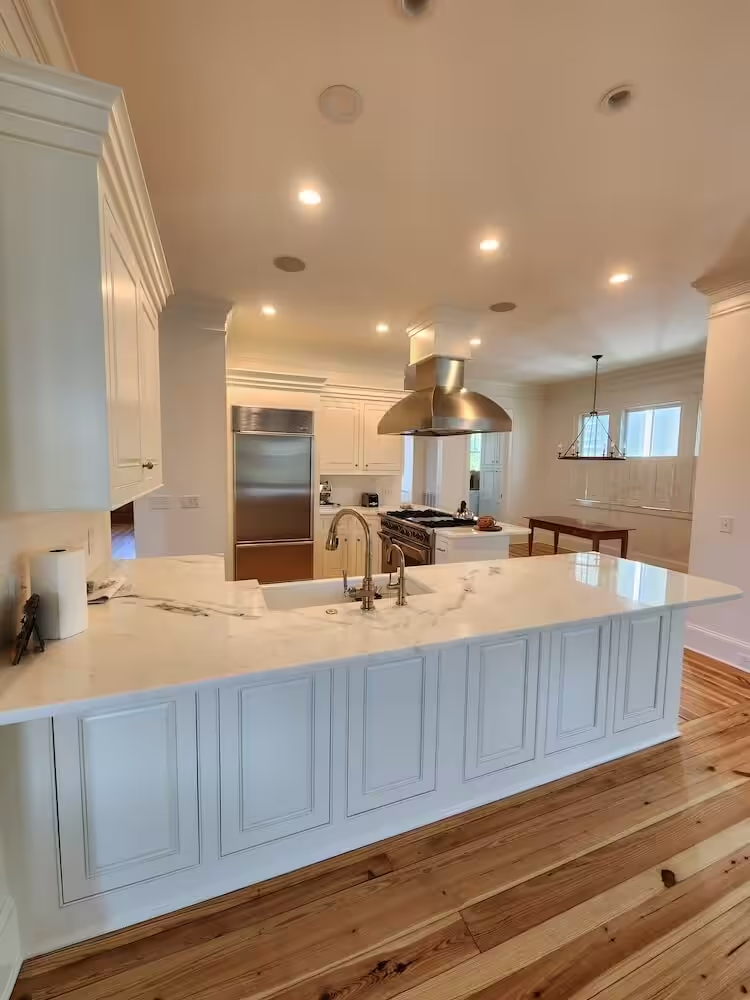
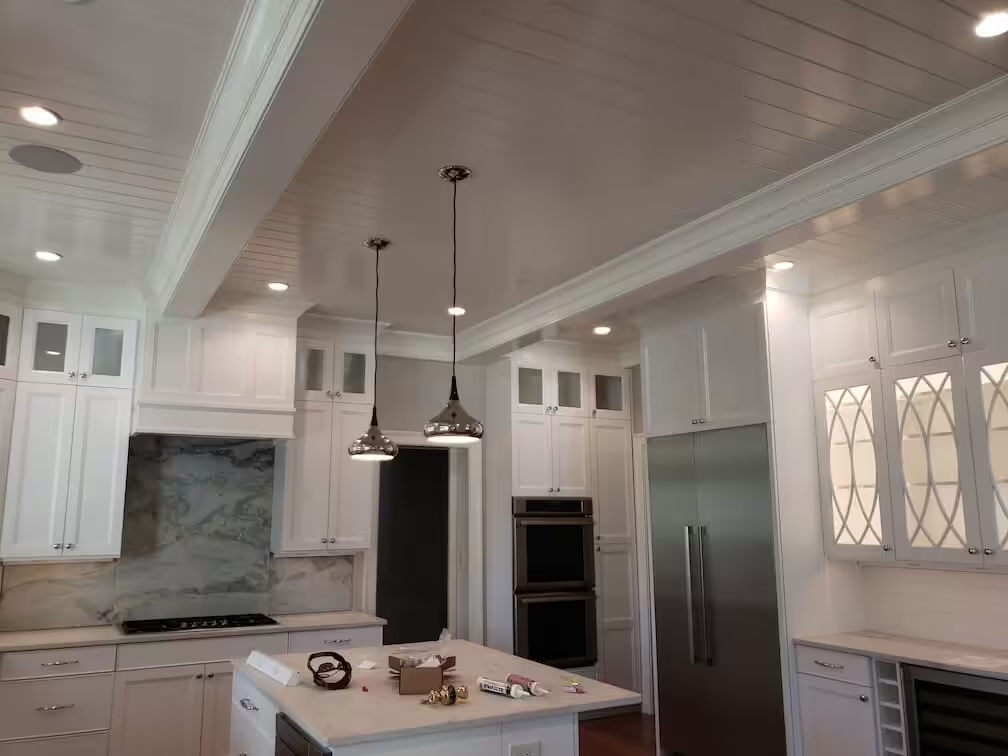
- white kitchen cabinetry and floor-to-ceiling office built-ins in a Park West home;
- hallway built-ins painted bright white with glass-front doors in a modern farmhouse in Mount Pleasant.

Those pages document the work itself; they don’t show how the finishes look years later. If you want to know how a painted kitchen ages, the habits in the next section matter more than any photo.
Habits that add years
- Give the finish its time: doors back on no sooner than the data sheet allows, and gentle use for the first few weeks.
- Wipe spills promptly, especially the ones KCMA uses in its tests: vinegar, juice, coffee, alcohol and mustard.
- Clean with a soft cloth and mild cleaner once the cure period has passed, not abrasive pads.
- Keep indoor humidity in the EPA’s 30% to 50% range where you can, and run the range hood and bathroom fans.
- Add soft bumpers where doors close against the frame, so fresh paint isn’t pressed together every time.
- Keep the leftover paint, labeled with the room, for touch-ups at edges and pulls.
What changes the price of a cabinet repaint
A cabinet quote is built from the number of doors and drawer fronts, the condition of the existing finish and any repairs, the wood and its grain, the size of the color change, whether boxes are painted inside, whether doors are finished on site or off site, and the product system chosen.
Planning a cabinet repaint
If you are deciding whether painted cabinets will hold up in your household, start with how the kitchen is used and how long you can wait for the cure. Those two answers say more about the result than the color.
VMS Home Painting offers cabinet painting and refinishing in Charleston for kitchens, mudrooms and built-ins. Schedule a free cabinet estimate and send a photo of your doors up close.