Before you hire a painter, ask questions whose answers you can check: is the company registered with the state, who will work on your property and how they are insured, what the written estimate covers, and how the finished job will be judged.
Below are the 12 questions to ask a painter before hiring in South Carolina, with what a good answer sounds like.
Most lists stop at “Are you licensed and insured?” In South Carolina that question has a specific answer you can look up in minutes, and homes built before 1978 add a federal rule on top of it. Print the checklist, bring it to every estimate visit, and compare the answers side by side instead of comparing totals alone.
The 12 questions, with what a good answer sounds like
| # | Ask the painter | A good answer sounds like |
|---|---|---|
| 1 | Are you registered with the South Carolina Residential Builders Commission? | “Yes. Here is our registration number.” A number you can look up, not just “we’re licensed.” |
| 2 | Will the crew be your employees or subcontractors, and who supervises each day? | A named person in charge of your job, and a clear answer about who else will be on site. |
| 3 | Can I see your certificate of insurance? | A current certificate showing liability coverage and, if they have employees, workers’ compensation, with the policy dates. |
| 4 | My house was built in [year]. Are you an EPA Lead-Safe Certified Firm? | They ask the year before you do. For a pre-1978 home: yes, with the firm’s certification and a copy of the Renovate Right pamphlet. |
| 5 | How long have you worked in this area? Can I see finished jobs near me and talk to a past client? | A straight answer on years and type of work, photos or addresses of local projects like yours, and a reference willing to talk. |
| 6 | What prep is included, surface by surface? | Washing, scraping, sanding, patching, caulking and priming written per area, not “prep included.” |
| 7 | Which product, sheen and number of coats for each surface? | A product line, a sheen and a coat count for walls, ceilings, trim and doors, in writing. |
| 8 | How will you protect floors, furniture, plants and cars? | Specific coverings, who moves furniture, and what happens at the end of each day. |
| 9 | What is not included? | A written list of exclusions, such as wood repair, moving heavy items or extra colors. |
| 10 | Can we approve a sample area before you paint everything? | Yes: a sample of the real color, sheen and prep on your own wall or siding. |
| 11 | How will we decide the job is finished? | A final walk-through in normal light, a punch list, and touch-ups before final payment. |
| 12 | What are the schedule, payment steps and warranty, in writing? | Start and end dates, a plan for rain days, payments tied to progress, and written warranty terms. |
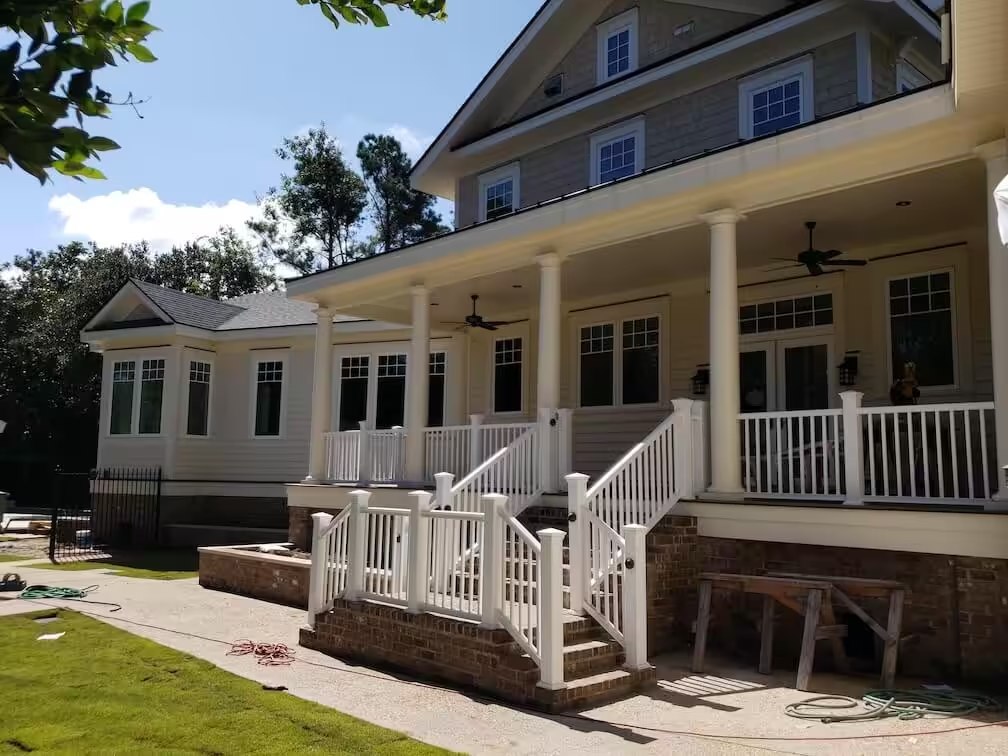
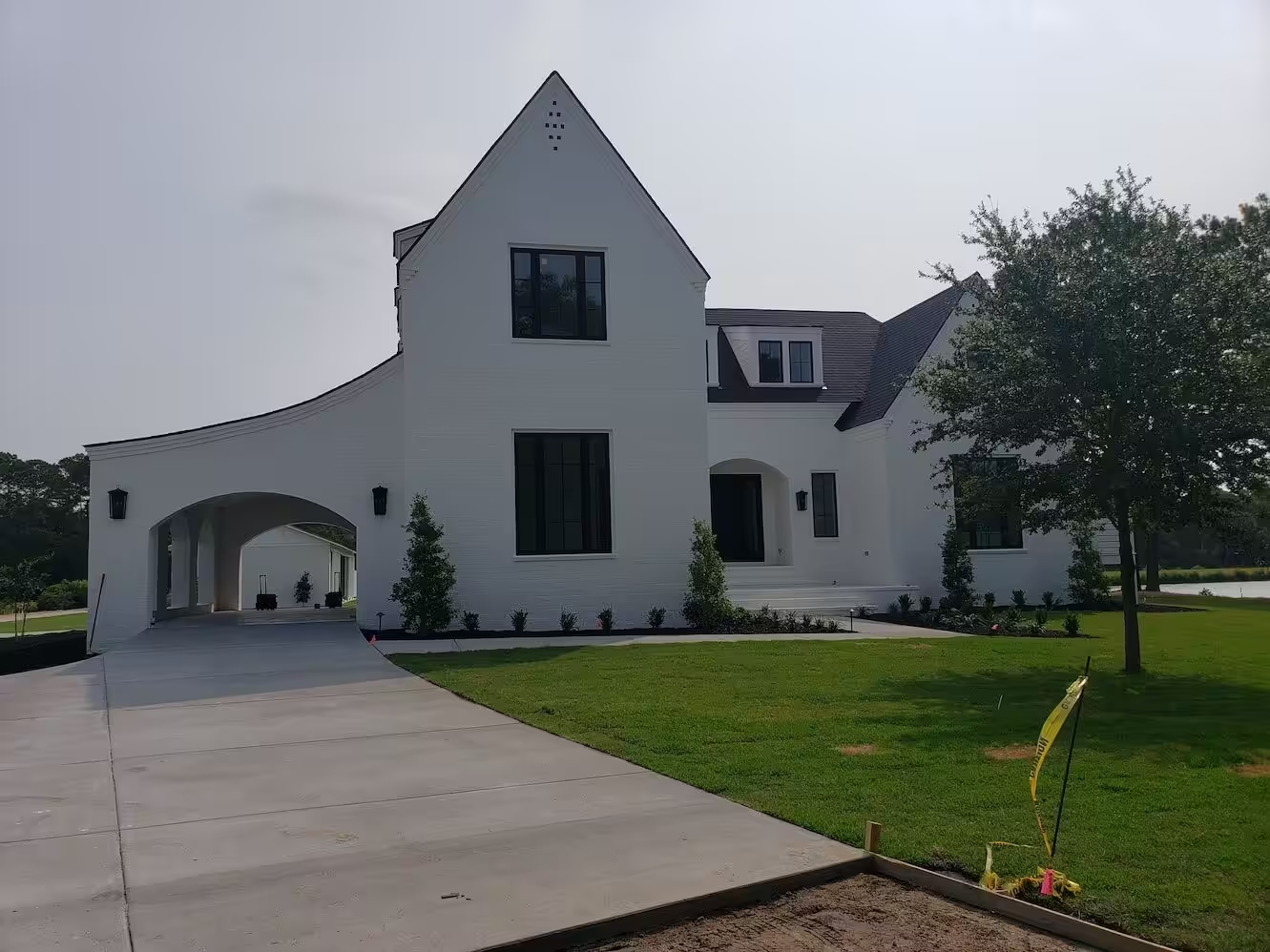
Question 5 is the easiest to verify. Our modern farmhouse project in Mount Pleasant, painted inside and out during construction, is the kind of nearby, documented job any painter should be able to show you.

Is the painter registered with the state?
In South Carolina, painters who contract for residential work are residential specialty contractors, and state law says painters “must be issued specialty contractor registrations.” The registration comes from the Residential Builders Commission, part of the Department of Labor, Licensing and Regulation (LLR), and applies once a job passes the dollar threshold written into S.C. Code §40-59-20.
Ask for the registration number and look it up on the LLR website. The name on the record should match the company name on your estimate and contract.
Three more points from the same chapter of the law are worth knowing as a homeowner:
- The owner-builder section states that it does not authorize an owner to hire anyone who is not licensed or registered under the chapter (§40-59-260(F)).
- On larger jobs for an individual property owner, the specialty contractor must carry a surety bond approved by the commission (§40-59-240(D)). Ask whether your project crosses that line.
- State registration does not replace city or county business licenses (§40-59-240(C)).
Who will be working on your property, and who insures them?
Ask whether the people on your ladders are the company’s employees or subcontractors, and who is in charge when the owner is not there. Then ask for a certificate of insurance rather than a verbal “yes.”
This matters more in South Carolina than many homeowners expect. The state’s workers’ compensation law exempts businesses that regularly employ fewer than four people (S.C. Code §42-1-360). A small painting outfit can be operating legally with no workers’ compensation policy at all.
That is not automatically a reason to say no. It is a reason to know what covers an injury on your property before work starts, and to ask your own homeowner’s insurance agent if the answer is unclear.
Was your house built before 1978?
If it was, a federal rule applies. The EPA’s Renovation, Repair and Painting (RRP) Rule requires anyone paid to disturb painted surfaces in homes built before 1978 to be certified and to use lead-safe work practices. EPA notes that this includes all firms, even sole proprietorships.
Under the rule’s text in 40 CFR Part 745, Subpart E, the firm must give you EPA’s Renovate Right pamphlet no more than 60 days before work begins.
Only very small jobs are treated as minor repair: no more than 6 square feet of painted surface per room inside, or 20 square feet outside. Scraping and sanding a whole room or a whole house goes well past that.
Many homes in the Charleston area’s older neighborhoods predate 1978. Look up the year your house was built before the first estimate visit, and ask the painter to name the certified renovator who will be responsible for your job.
What exactly is in the written estimate?
An estimate is only comparable to another one when both list the same things. Ask each painter to write down, per room or per side of the house:
- the prep steps, from washing and scraping to caulking and spot-priming;
- the product line, the sheen and the number of coats;
- which surfaces are included: walls, ceilings, trim, doors, closets, shutters;
- how floors, furniture, landscaping and vehicles will be protected;
- daily cleanup and what you need to move before day one;
- what is excluded.
Protection is easy to promise and easy to see. On this coastal home on Mary Ellen Drive in Charleston, the floors were covered and taped before interior painting started.
One customer review published on our site mentions that our crew took the shutters off and covered the neighbors’ cars while working on the exterior. That is what a protection plan looks like when it is real.

On price, compare the lines that drive it rather than the totals: the square footage of the surfaces, the number of stories and how hard they are to reach, the condition of the surfaces and the prep they need, the number of colors and coats, and the products specified. Two estimates with different prep lists are pricing two different jobs.
How will you judge the finished job together?
Agree on the standard before work starts, not after. The Painting Contractors Association publishes one in its Standard P1: a properly painted surface is uniform in appearance, color, texture, hiding and sheen, and virtually free of runs, sags, missed spots, drips, spatters and overspray caused by the painter.
The same standard says how to look: without magnification, from 39 inches (one meter) or more, under finished lighting and from a normal viewing position.
That answers a common question about the signs of a bad paint job, and it also keeps a walk-through fair to both sides. A flashlight held flat against the wall shows things nobody sees in daily life.
For larger or more particular projects, ask for a benchmark sample. PCA’s Standard P5 describes preparing a full-scale sample area with the complete system, from prep and primer to the finish coat, and approving it before the rest of the job.
Schedule, weather and payment terms
Ask for a start date, a finish date and the working hours. For exterior work, ask how the schedule handles rain and humid days: paint makers print minimum application temperatures on their data sheets, and Benjamin Moore’s sheets note that high humidity and cool temperatures lengthen drying and recoat times.
For payment, look for steps tied to visible progress, with the final payment after the walk-through and punch list. Get the warranty in writing, with what it covers and for how long, and keep it with the contract.
Ask us the same questions
We are painters in Charleston, SC, working on homes and commercial buildings across the area, from Summerville to Mount Pleasant and the islands. Bring this checklist to your estimate with us and ask every question on it. Get your free, no-obligation estimate from VMS Home Painting.
Looking for a licensed, insured painting contractor you can trust? See our house painting services in Charleston, SC, or explore interior painting and exterior house painting.