The most common mistake with an epoxy floor is judging the concrete by how it looks. A garage slab can look and feel dry on top while moisture keeps moving up from below, and that moisture is what pushes a new coating off as blisters and peeling patches.
Moisture in concrete has to be tested before epoxy goes down, and the result has to meet the limit on the coating’s own data sheet. We install epoxy coatings in garages, basements and commercial spaces around Charleston, and these are the six mistakes we would want every homeowner to know about before anyone coats their slab.
Mistake 1: Judging a slab by how dry it looks
Concrete is porous. Water from the ground below and from the air above moves through it, and the top surface dries first. A slab can pass the “looks dry” test on a sunny afternoon and still be releasing water vapor that a sealed coating will trap.
Coating makers say this plainly. Rust-Oleum’s technical data sheet for its EpoxyShield garage floor kits says the product is not intended for floors that have a moisture problem.
The same sheet gives the simplest check: tape a 2 by 2 ft sheet of plastic to the bare concrete, leave it 24 hours, and look underneath. Water droplets on the inside of the plastic, or concrete that looks darker under it, mean moisture is trapped in the slab and needs to be dealt with before coating.
Mistake 2: Running one test and treating it as the whole answer
The plastic sheet tells you whether there is moisture. It does not tell you how much. The standard tests answer different questions, and ASTM’s own descriptions show where each one stops.
| Test | What ASTM says it does | What you learn | What it does not tell you |
|---|---|---|---|
| ASTM D4263, plastic sheet | Indicates the presence of capillary moisture in concrete; used before coatings are applied | Yes or no: moisture is coming through | How much, or whether it is within a coating’s limit |
| ASTM F1869, calcium chloride | Measures the rate of moisture vapor emitted from a bare concrete floor, reported in pounds (per 1,000 sq ft over 24 hours) | A number to compare with a product’s limit | Conditions on any other day: the result reflects the floor at the time of the test |
| ASTM F2170, in situ probes | Determines the percent relative humidity in concrete slabs | Moisture inside the slab, not just at the surface | Anything if the probes are not placed and read as the method requires |
F1869 was written for resilient floor coverings, and coatings borrowed it. When a coating’s data sheet names a test and a limit, run that test and compare with that limit.
Mistake 3: Testing once, in the wrong weather
ASTM states that the calcium chloride result only reflects the condition of the floor at the time of the test. A slab tested after a dry week in spring is not the same slab after a stretch of summer storms.
Humidity matters on the day of coating, too. The EpoxyShield sheet says to apply only when the surface is at least 5 °F above the dew point and the relative humidity is no higher than 85%, with air, material and surface between 60 and 85 °F.
On a humid Lowcountry morning, a cool garage slab can sit close to the dew point, and water then condenses on top of the concrete instead of coming up through it. Measure the surface temperature and the dew point the day you coat, not the day of the estimate.
Mistake 4: Coating new concrete because it has cured
Cured and dry are two different things. Curing is the concrete gaining strength. Drying is the extra water leaving the slab, and it keeps going after curing.
The EpoxyShield sheet asks for newly poured concrete to cure for at least 28 days before coating, and a Benjamin Moore masonry data sheet asks for 30 days on new masonry before priming or painting. Treat those numbers as the earliest possible date, then test. A new slab can still fail a moisture test after the cure time has passed.
Mistake 5: Ignoring the limit printed on the coating’s data sheet
There is no single moisture number that works for every epoxy. Each product sets its own conditions: the test to run, the limit to meet, the temperature and humidity window, and what to do when a slab fails, such as applying a moisture-control primer first.
If the slab fails, there are two honest options: wait and retest in the conditions you will coat in, or use a moisture-control primer rated for the reading before the epoxy. The EpoxyShield sheet, for example, points to the maker’s Moisture Stop product when its plastic sheet test shows trapped moisture.
When you compare estimates, ask which product will go on your floor and ask to see its data sheet. A contractor who has tested the slab can tell you the reading and the product’s limit side by side.
Mistake 6: Skipping the prep that lets epoxy grip
Epoxy bonds to concrete that is clean, open and sound. Moisture is only one of the things that stop that bond. The EpoxyShield sheet lists others:
- Sealers: drip a little water on the floor. If it beads, a sealer is present and must be removed first.
- Oil spots: scrub them out with a degreaser and rinse, repeating until clean.
- Loose or spalled concrete: repair it before coating, because the coating will not perform over it.
- Basement floors: the sheet says not to use its acid etch there, and to clean with a TSP solution instead.
The surface also has to be opened so the coating can grip. The same kit includes a concrete etch for bare garage floors, and for floors that were coated before, the sheet calls for removing loose paint and scuff-sanding the entire surface.
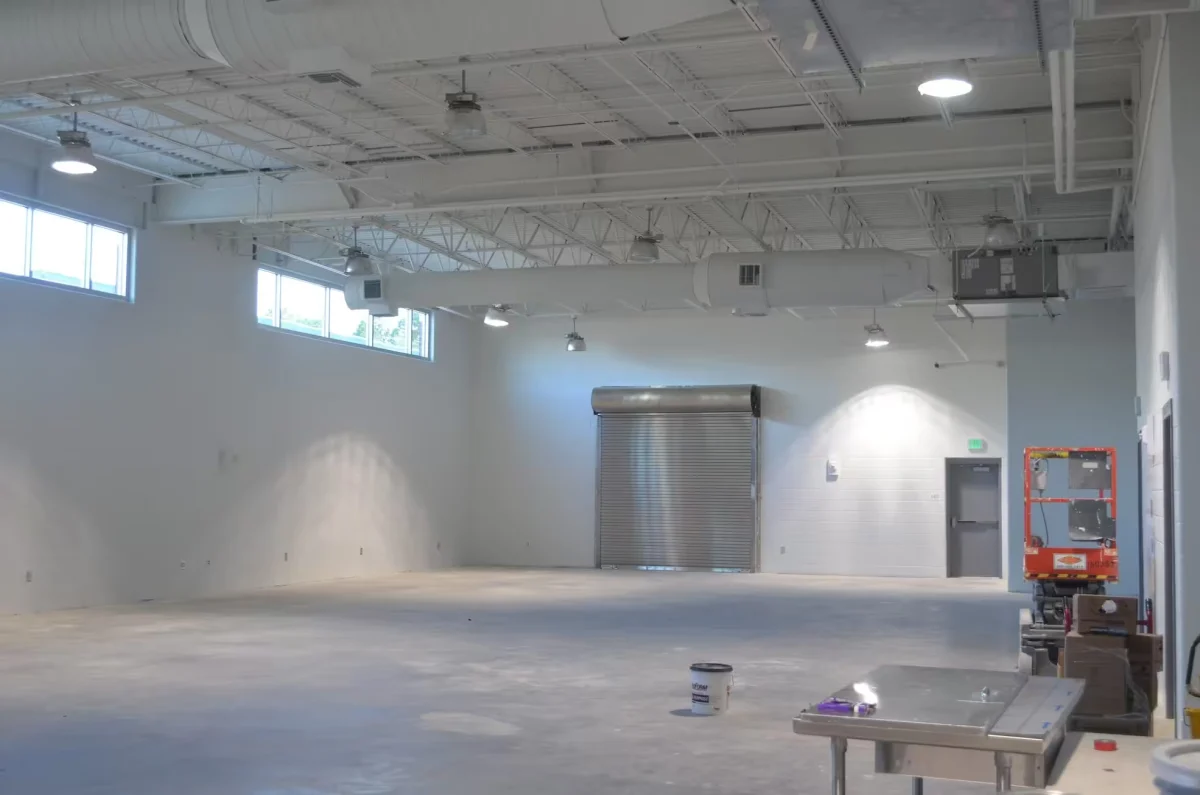
Moisture shapes commercial coating work too. Our pool house facility project in Charleston called for industrial coatings and surface preparation chosen for a moisture-intensive environment.
Printable checklist before anyone coats your slab
- How old is the slab? New concrete: at least the cure time on the data sheet, then test.
- Has anyone run a moisture test, which one, and on what date?
- What was the reading, and what is the limit on the product’s data sheet?
- Was the test done in weather like the weather on coating day?
- Does water bead on the floor? If so, how will the sealer be removed?
- Are oil stains gone, and is damaged concrete repaired?
- How will the surface be opened: etching, grinding or sanding? (For a basement floor, ask why.)
- On coating day: surface temperature, dew point and relative humidity, written down.
- If the slab fails: which moisture-control primer, and what limit is it rated for?
Epoxy floors in the Charleston area
VMS Home Painting installs durable epoxy coatings for garages, basements and commercial spaces. Bring the checklist above to your estimate and ask us every question on it. See our epoxy flooring in Charleston or request a free epoxy flooring estimate.