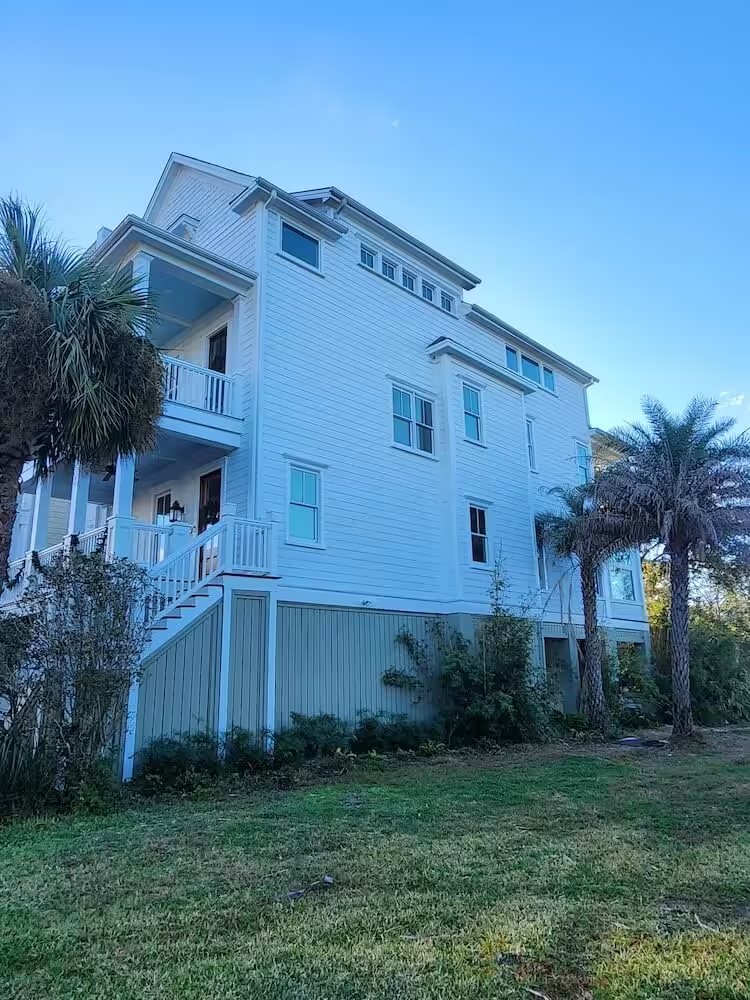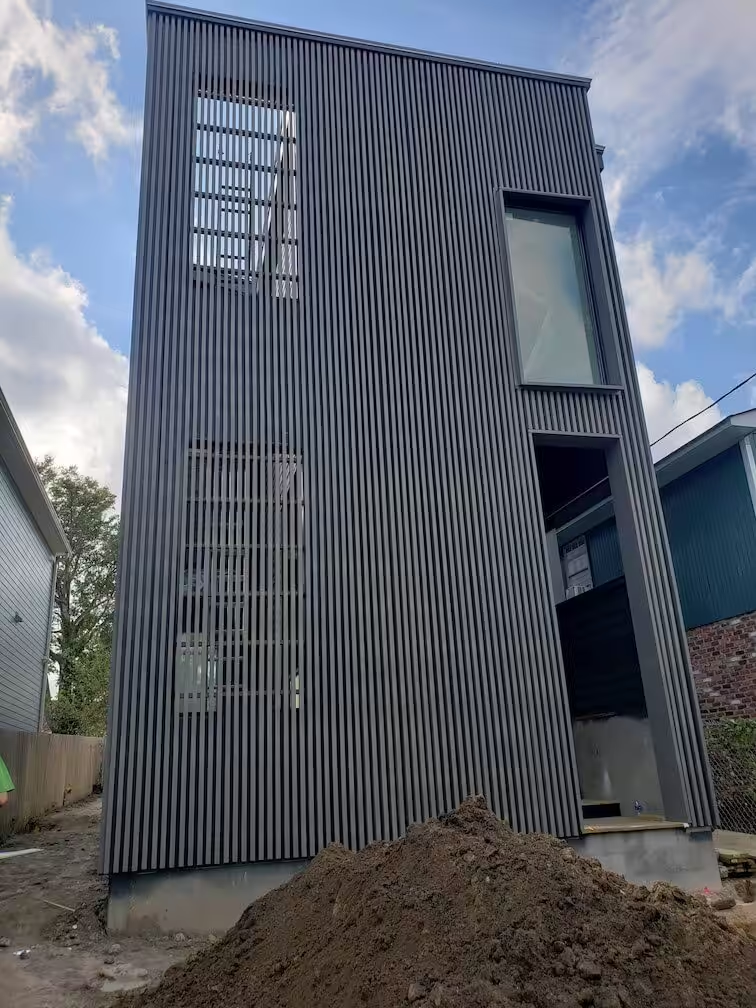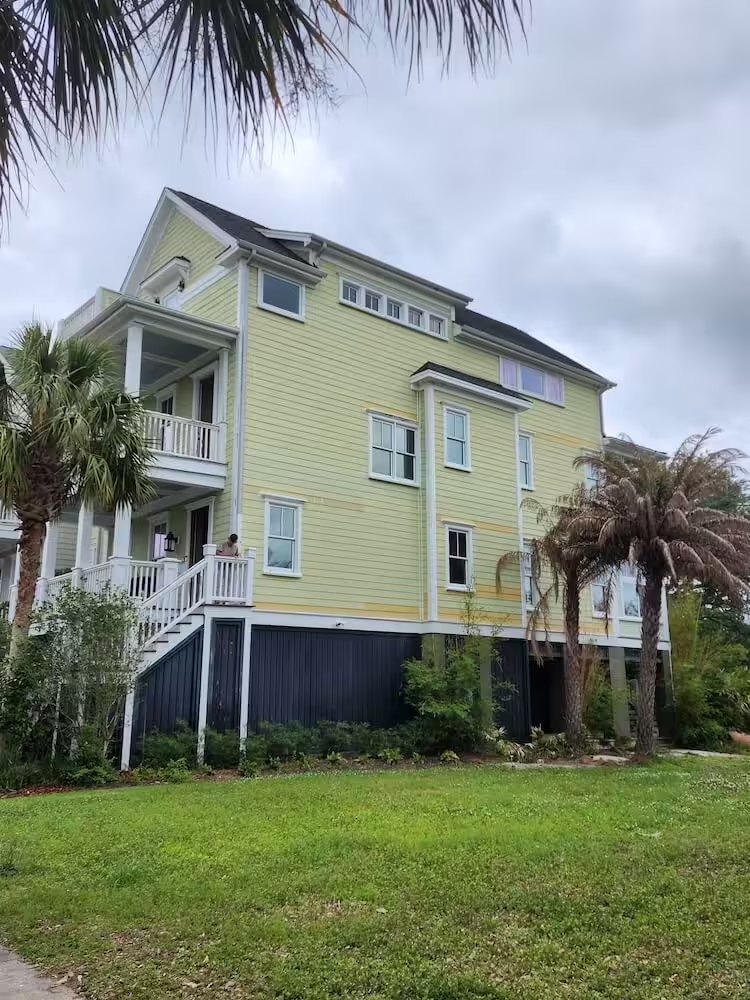
Yes. Painting Hardie board siding works well, as long as you follow the rules James Hardie prints in its own installation instructions. Primed boards are made to be painted, and factory-finished ColorPlus boards can be repainted when you want a new color.
The essentials: use 100% acrylic topcoats, never stain or oil-based paint; paint factory-primed boards within 180 days of installation; seal every edge cut on site; keep the siding clear of the ground and roofs; and clean it with a hose and soft brush, not a pressure washer.
Most failures on fiber cement trace back to skipping one of those.
Primed or ColorPlus: know what is on your wall
James Hardie sells its siding two ways. Primed boards arrive with a factory primer and need finish paint on site.
ColorPlus boards come with a baked-on factory finish, which the company says is cured onto the board during manufacturing and carries a 15-year limited finish warranty covering paint and labor against peeling, cracking and chipping. The board itself has a 30-year non-prorated warranty.
The difference changes the job. Primed boards need their topcoats on a deadline. ColorPlus boards need nothing until you want a new color or the finish wears, and then they follow their own repaint rules.
Mistake 1: Letting primed boards wait too long
Factory-primed boards must be painted within 180 days of installation. That line appears in the HardiePlank lap siding instructions (December 2019 edition). The older HardieShingle instructions (April 2009 edition) give 180 days for primed product and 90 days for unprimed product, which also needs a field-applied prime coat.
On new construction, the siding often goes up months before anyone thinks about paint. If you are buying or building, ask when the siding was installed and put the paint date on the schedule.
Mistake 2: Reaching for stain or oil-based paint
The HardiePlank instructions are blunt: do not use stain, oil or alkyd base paint, or powder coating on James Hardie products, and use 100% acrylic topcoats. The same rule appears in the section on repainting ColorPlus boards. A product that is perfect for a wood deck or a cedar shake is the wrong one here.
Mistake 3: Leaving cut edges bare
Every board cut on site exposes raw fiber cement. The instructions say to caulk, paint or prime all field-cut edges, and for ColorPlus boards to use the company’s edge coaters or end cut-edges into trim and caulk them.
Cut ends hidden at butt joints or behind trim still count, so ask how they were sealed before the walls get their finish coats.
Mistake 4: Caulking the wrong things, or with the wrong caulk
For joints that do get sealant, James Hardie names the standard: an elastomeric joint sealant meeting ASTM C920, Grade NS, Class 25 or higher, or a latex sealant meeting ASTM C834. Ask for the product name; the tube should list the standard.
Some places should not be caulked at all. The instructions say not to caulk nail heads on ColorPlus boards; touch-up is done with the company’s ColorPlus kits instead. They also note that butt-joint caulking is not recommended on ColorPlus because caulk and the factory finish weather differently.
Mistake 5: Painting fresh boards without checking the pH
Fiber cement is a cement product, and fresh cement is alkaline. Sherwin-Williams’ data sheet for its Emerald exterior paint (March 2026) says to test new cement composition siding for pH and, if it reads higher than 9, to prime with an alkali-resistant masonry primer before the topcoat.
It is the same chemistry behind the cure and primer rules in our guide to painting stucco.
Mistake 6: Painting siding that sits too close to the ground or roof
Paint can’t protect a board that stays wet. James Hardie’s clearance details call for the bottom of the siding to sit 6 inches above finished grade, which should slope away from the house, and for a 1 to 2 inch gap where siding meets a roof, a deck, steps, paths and driveways.
The instructions also say the product should never sit in standing water.
If the bottom course is buried in mulch or touching a patio, fix that before paint. Otherwise the new finish fails first exactly where the water is.
Mistake 7: Blasting it clean before painting
James Hardie’s FAQ warns that a pressure washer can damage the surface of its siding. The company’s cleaning guide recommends a garden hose, a soft, non-metal brush and, for grease, mild dish soap and water rinsed off before it dries.
For mildew it points to a mildew-specific cleaner used per its label, and it says to avoid harsh chemicals such as bleach or acid.
That also answers a common question: yes, a mild dish soap is what the manufacturer itself suggests. For other surfaces on the same house, our guide to pressure washing before painting explains when pressure is appropriate.
Mistake 8: Spraying without back-rolling, or painting it wet
Spray alone can leave thin spots on the face of each plank and miss its bottom edge. James Hardie’s instructions recommend back-rolling when the siding is sprayed, and say plainly not to paint when it’s wet. Coverage and temperature follow the paint maker’s label.
Can Hardie board be painted to look like wood?
It can be painted a wood-like color, but it can’t take a stain: the manufacturer rules stain out. If a true stained-wood look is the goal, that is a choice of siding, not of paint.
Repaint or replace?
Fiber cement that is sound, with small chips and cracks only, rarely needs replacing to look new. The FAQ says small cracks, chips and dents can be repaired with a cementitious patching compound.
Boards that are broken through are a replacement job; find out why they broke before new ones go up. For a comparison with plastic siding, see our article on whether vinyl siding can be painted.
What a fiber cement repaint costs comes down to the wall area and the number of stories, how much caulk and edge repair it needs, whether boards are primed or ColorPlus, and the number of colors.
When to hold off on repainting
A ColorPlus wall that is clean, even in color and still within its finish warranty usually needs care, not paint.
Wash it once or twice a year as the cleaning guide suggests, check the caulk around windows and trim, and use the color-matched touch-up kit for nicks: James Hardie estimates one kit per 4,000 sq ft of siding or 1,600 sq ft of trim.
Note that the company does not cover problems caused by third-party touch-up paints under its ColorPlus finish warranty.
When the color has faded past what you want, or primed boards are waiting on their first coats, that is the time to plan the paint.
Ask VMS Home Painting whether painting fiber cement siding is a job we can take on for your house; if it is, we can look at the siding, the caulk and the clearances with you before repainting the exterior of your Charleston home. Ask for a free exterior estimate and tell us whether your boards are primed or ColorPlus.