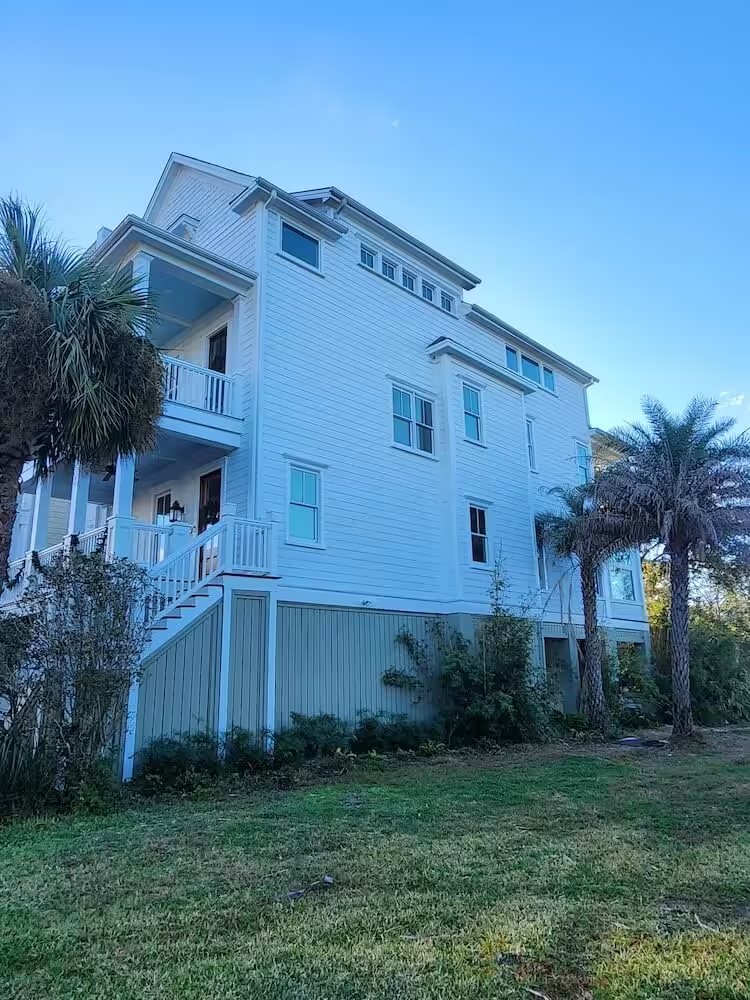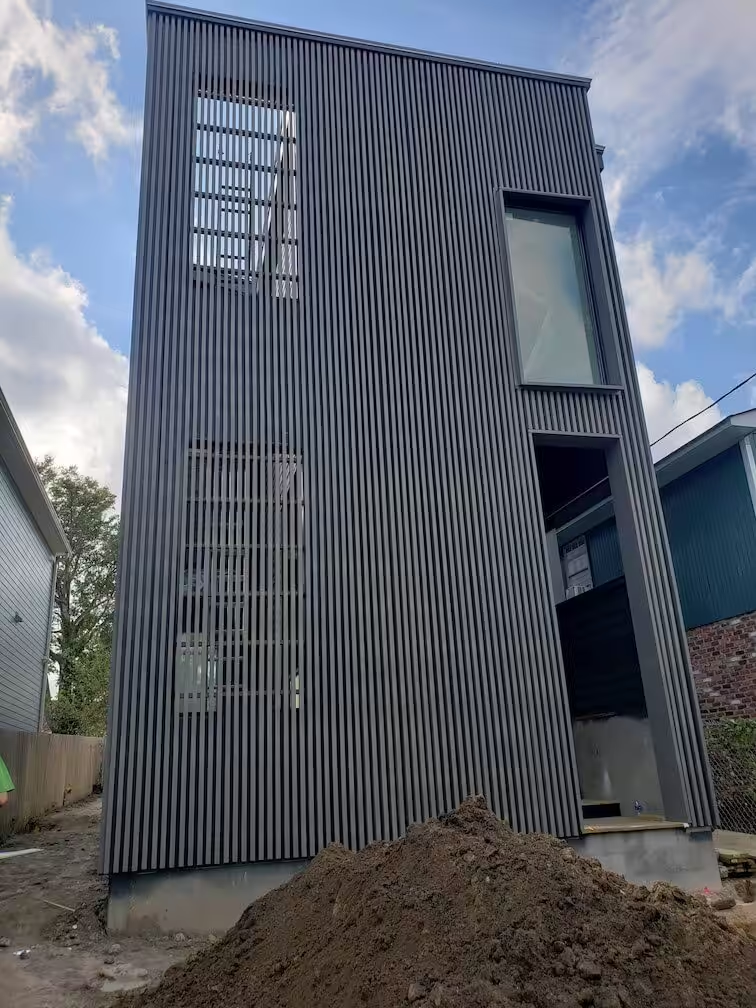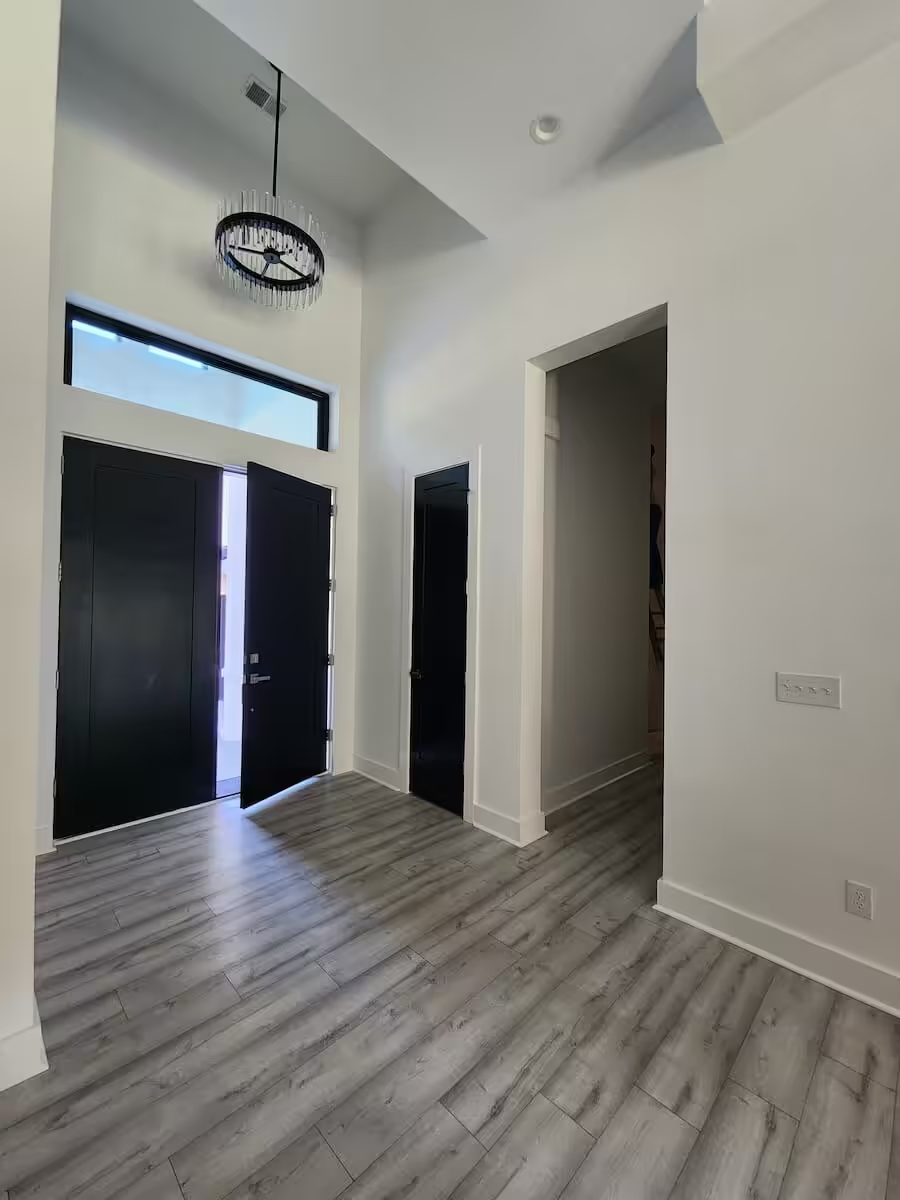
Front door paint colors that work relate to your trim and siding, survive the sun your door actually gets, and pass any review your street requires. Black, deep navy, dark green and red are the classic choices, and they look their best on a door protected by a porch or overhang.
On a door that takes full afternoon sun with no cover, a mid-tone or lighter color is the safer choice, because door makers warn that dark colors absorb more heat. Below, the color families side by side, then the three questions that narrow them down for your door.
Color families compared
Galleries show what a color looks like on someone else’s house. This table adds what each family does on a sunny door and what it asks of you afterwards.
| Color family | On the house | In direct sun | Fits best | Upkeep to plan for |
|---|---|---|---|---|
| Black and near-black | Strongest contrast on light siding; repeats dark window frames | Absorbs the most heat | Doors under a porch, deep overhang or north and east exposures | Check the door maker’s color guidance; shows dust and pollen |
| Deep navy and dark green | Classic on white or cream trim, quieter than black | Also absorbs a lot of heat | Covered entries on traditional houses | Same as black: protect from all-day sun |
| Reds and saturated colors | A focal point; needs the right undertone for the siding | Deep reds behave like other dark colors | Simple facades where one bold note works | Watch for fading and chalking on the sunny side |
| Mid-tones (gray-blue, sage, taupe) | Soft contrast, works with busy brick or stone | Moderate heat gain | Doors with partial sun | Ordinary repaint cycle |
| Light colors and off-whites | Blends with the body; trim does the contrast | Least heat absorbed | Exposed doors with no overhang and constant sun | Shows grime faster; wash it with the siding |
| Natural wood with stain | Warm, traditional | The clear topcoat takes the UV | Doors under deep cover | A UV topcoat every 2 to 3 years, more often where exposure is severe |
The heat and topcoat entries come from the care and maintenance guide that Feather River Doors publishes for its fiberglass and wood doors (2015). The upkeep notes on fading and chalking follow Diamond Vogel’s bulletin on maintaining exterior paint, which lists serious fading and loss of gloss among the problems to repair right away.
Question 1: what does the rest of the house already say?
Start with the trim, not the swatch rack. A door either contrasts with the trim on purpose or matches the body closely; one that fights both looks like an accident.
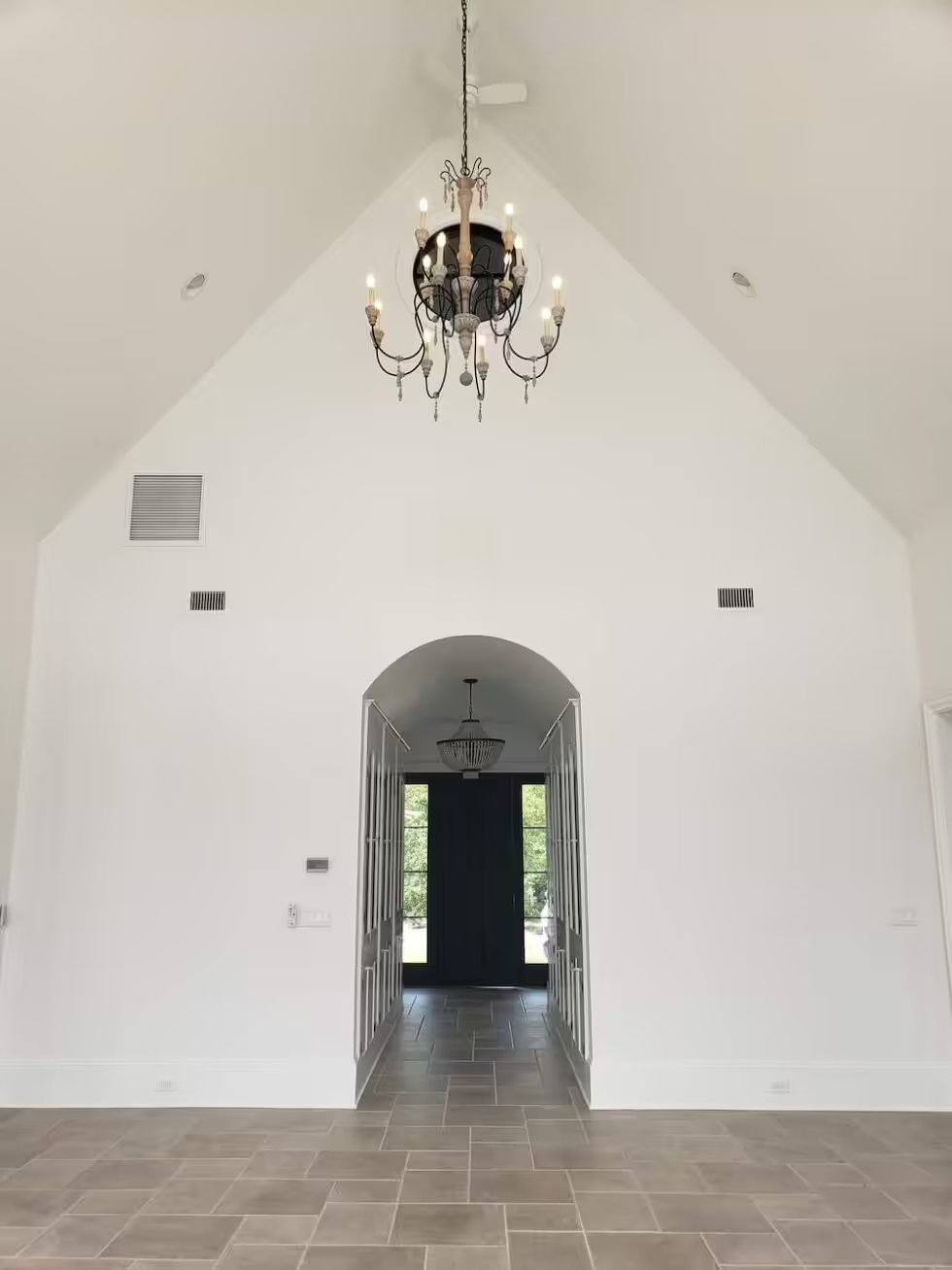
The modern farmhouse in Mount Pleasant we painted is a clean example.
Its project page describes white walls with dark trim accents and black window frames, so a black entry door simply repeats a color the house already uses. Seen from the foyer, the door closes a long white hall. From the street, it sits in a recessed arched entry, which also keeps it out of the worst of the sun.
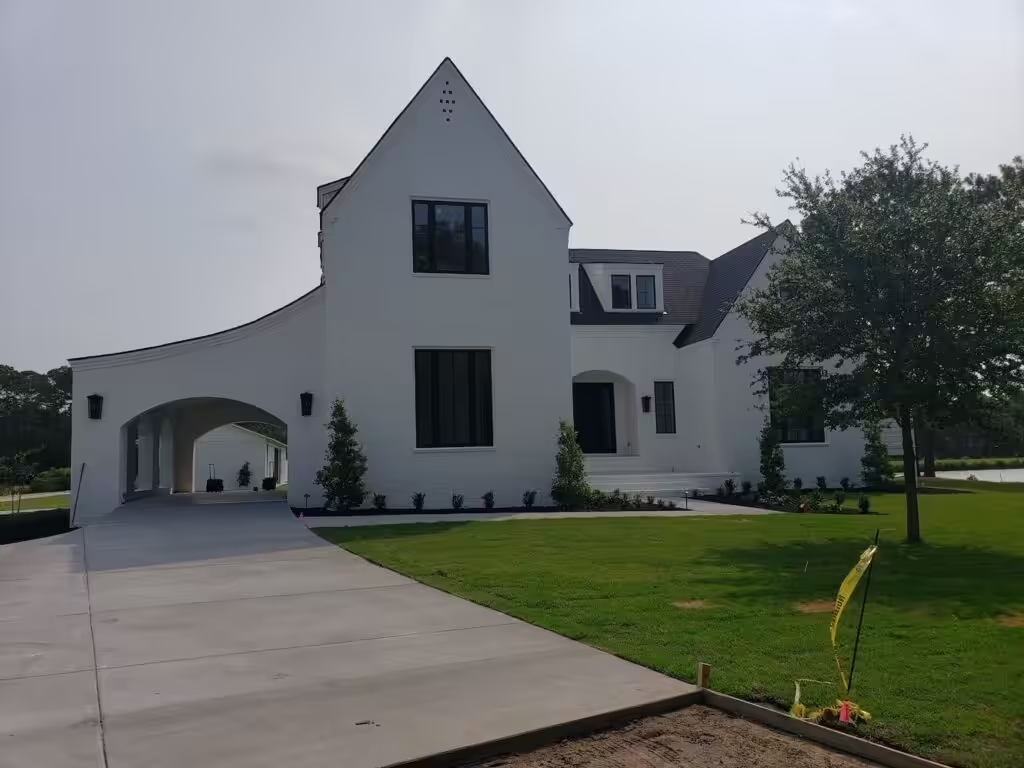
Should the front door be lighter or darker than the house? There is no rule either way. On a light house, a dark door reads as the focal point; on a dark house, a lighter or more saturated door does the same job. What matters is that the choice is deliberate.
Question 2: how much sun does the door get?
NOAA’s 1991–2020 hourly climate normals for Charleston International Airport put the average July temperature at 2 p.m. near 89°F. That is shade temperature at a weather station.
A door in direct sun runs hotter: Benjamin Moore notes that a black wall that has been in direct sun for a few hours is likely to be substantially hotter than the air.
The Feather River guide spells out what that means for a door. Dark colors absorb more heat than light ones, and a door with constant sun exposure is more likely to see topcoat deterioration, fading and even warping from the temperature difference between its two faces. Overhangs cut the maintenance. Light colors reduce the heat.
Storm doors raise the stakes: the same guide says a storm door should be ventilated, and that a full-view, non-ventilated storm door on an entry with no overhang and constant sun will most likely accelerate those problems.
If yours is a west-facing door without a porch, choose the color with that in mind, or plan for more frequent repainting.
Question 3: what is the door made of?
Which paint goes on a front door depends on the material, and the paint’s own data sheet tells you where it belongs:
- Wood and painted trim take an exterior enamel. Sherwin-Williams’ data sheet for Emerald Urethane Trim Enamel, for example, lists exterior doors and trim among its uses and says not to use it on the main body of a building.
- Benjamin Moore’s Advance, a waterborne alkyd sold for interior and exterior doors and trim, is recommended outside only on primed metal, masonry and stable trim woods such as cedar and redwood, and its data sheet says not to use it over exterior pine.
- Fiberglass and steel doors come with their own finishing instructions and warranty terms. Read them before choosing a dark color, since heat is the issue their makers raise.
Sheen is part of the color. Higher-gloss paints reflect more light and tend to enrich a color, according to Sherwin-Williams’ guide to light and color, which is one reason glossy doors look deeper than the same color in satin.
In the historic districts, the door is on the form
In the City of Charleston’s historic districts, exterior doors have their own line on the Board of Architectural Review’s color change form, with the manufacturer, color name and code. A new door color is a color change like any other.
Our guide to Board of Architectural Review color approval explains when staff can sign off and when it goes to the board. Many HOAs list the front door on their application forms too.
Painting day and the first weeks
Plan the work around the heat. Benjamin Moore’s Advance, for one, lists 100°F as the maximum surface temperature for application, and a dark door in afternoon sun can pass that while the air is cooler. Paint while the door is shaded, usually in the morning on a west-facing entry.
Enamels harden slowly.
The Advance data sheet says full hardness can take up to 30 days depending on weather, that shelves and tabletops should not go back into service for at least 3 to 5 days, and that high humidity or cooler temperatures stretch dry, recoat and cure times.
A door is used every day, so expect the paint to feel slightly soft against its weatherstripping for the first days, and keep the hardware off until the edges are dry.
Try a bold color on the door first
A front door is the smallest exterior surface you will ever repaint, which makes it the cheapest place to test a color you are nervous about.
Live with a dark green or a deep blue on the door for a season before you consider it for shutters or the whole body. If you love it in August sun and December gray, you know.
When you are ready for more than the door, our checklist for how to choose exterior paint colors covers the rest of the house. VMS Home Painting handles exterior painting in Charleston and Mount Pleasant, doors and trim included; request a free exterior estimate and tell us which way your front door faces.