Asking how often to paint a house exterior is a little like asking how often to replace tires. The calendar matters less than where the wear shows, and on a house in the Lowcountry the wear never shows evenly.
Most painting-company guides put a full exterior repaint at five to ten years, and that range works as a budget horizon for the body of a well-prepared house.
Window sills, door bottoms, railings and the walls that face south and west usually need attention before the rest. A shaded north wall may need a wash years before it needs paint. So the practical answer is a yearly decision, made part by part, inside that five-to-ten-year window.
The tree below is how we would make that decision. The table after it shows which part of a Charleston house tends to ask first, and why.
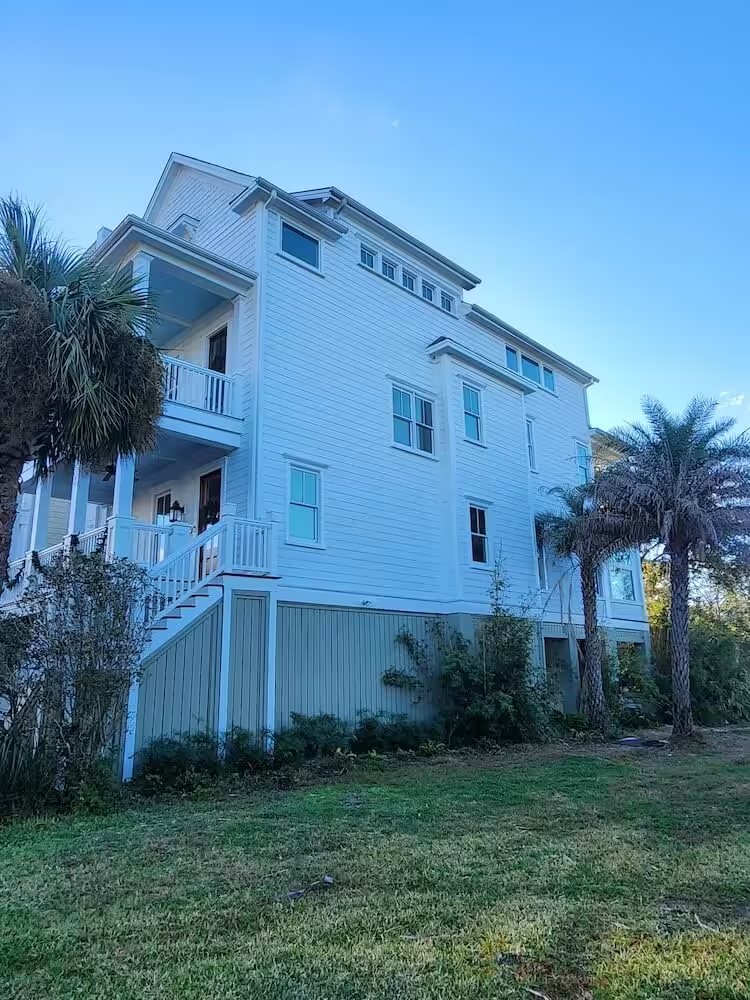
The decision tree: what to do this year
Walk around the house once, in daylight, and answer these in order. Stop at the first “yes”.
- Is bare wood, soft wood or rust showing anywhere? If yes, repair those spots now. Bare wood takes on water every time it rains, and a soft sill or a rusting rail only gets worse. Our guide to wood rot repair before painting covers what has to happen before the primer.
- Is something behind the paint causing the damage? Think blisters on one wall or peeling under a gutter. If yes, fix the cause first. The Painting Contractors Association’s standard P8 lists moisture intrusion, damaged or missing caulk and a moving substrate among the causes that corrective work has to reach, and wants other trades’ repairs finished before maintenance painting.
- Is the problem confined to one part of the house? One side, the trim, the porch railings? Then repaint that part up to a natural break, such as a corner or a trim line. The PCA’s spot-repair standard (P24) explains why: a small patch on a surface with no break point stays visible from an angle, and the higher the gloss, the more it shows.
- Is the same wear on most sides? Heavy chalk on a dark cloth, faded color, loss of gloss, cracks in many places. If yes, plan the full repaint for the next good painting season instead of patching wall by wall.
- Is something else changing? A new color, a sale, a notice from the HOA, new siding or trim. If yes, those set the date, not the age of the paint. A color change in an HOA community usually needs architectural approval before the painter starts.
- None of the above? Wash the house, renew any cracked caulk, write down what you saw, and look again next year.
Wear alone sends the whole house to the painter only at step 4; step 5 can do it for other reasons, such as a new color. The five-to-ten-year range in painting guides is, in practice, an estimate of how long a typical house takes to reach step 4.
Which parts of a Charleston house ask first
Paint on one house ages at several speeds. This table pairs each part with what wears it down, the first sign to look for and the usual fix before anyone talks about repainting the whole house.
| Part of the house | What wears it | First sign | Usual fix |
|---|---|---|---|
| Siding on the south and west sides | Afternoon sun and heat | White chalk on a dark cloth, faded color | Wash; when the chalk is heavy, repaint that side corner to corner |
| North walls and anything under trees | Moisture that stays | Dark specks that do not rinse off | Mildew wash and a recheck; paint only if the film is failing |
| Window sills, door bottoms, trim joints | Water that sits on flat surfaces and end grain | Hairline cracks, wood that dents under a thumbnail | Repair the wood, prime the bare spots, repaint the trim |
| Caulk at windows, doors and trim | Movement between materials | Cracked, shrunken or missing bead | Re-caulk; the paint around it often has years left |
| Metal railings, gates and hardware | Moisture, and salt near the water | Rust spots, bubbling at welds | Clean to sound metal, prime, paint the spot |
| Painted brick and stucco | Water moving through the masonry | White salt deposits, blisters | Find and stop the water before any coating |
| Porches: ceilings, columns, rails | Humidity under cover, splash at the base | Peeling at column bases and on ceiling boards | Repair and paint the porch as its own small job |
Where the table comes from:
- the PCA defines chalking and erosion in its glossary (P9);
- Diamond Vogel’s bulletin on maintaining exterior paint places mildew on northern and shaded exposures, suggests washing painted exteriors once or twice a year, and puts rust and peeling on its repair-right-away list;
- Benjamin Moore notes that dark colors in direct sun get substantially hotter than the air.
For painted masonry, the Brick Industry Association’s Technical Note 6 says that most paint authorities expect exterior masonry, once painted, to need repainting every three to five years.
That note dates from 1972 (reissued 1985) and coatings have changed since, so read it as a reminder that painted brick is a maintenance commitment, not as a schedule.
Why the range is five to ten years, not one number
No trade standard sets a repaint interval. The PCA’s P8 makes inspections the owner’s job once the painter’s warranty ends and ties their frequency to the coating, the area and the exposure.
The rest of the range comes from the house itself: the surface under the paint, how far the prep went last time and how hard the sun, rain and salt hit each wall. Those four factors, with humidity figures for Charleston, are the subject of what decides how long exterior paint lasts.
For planning, that means three things:
- A house painted with thorough prep and a quality system, on a lot with shade and no direct ocean exposure, tends toward the long end.
- Exposed wood trim, dark colors on sunny walls and homes facing the marsh or the beach pull the date earlier.
- A repaint that skipped prep starts the clock behind: problems left under the new coat come back through it.
When you don’t know when it was last painted
Many buyers inherit an exterior with no history. Three places to look before anyone guesses:
- The garage or the crawl space. Leftover cans often carry the product line and color on the label, and sometimes a handwritten date.
- The HOA or architectural review file. A color change approved by the community leaves an application on record, with a date.
- The seller’s paperwork. Invoices, warranties and inspection reports from the purchase can mention the last repaint.
If nothing turns up, the walk-around above is the history. Treat the house as being wherever the tree puts it today.
Partial repaint or whole house?
Repainting only the side that failed makes sense when the other sides are sound and the color is still available.
The trade-off is appearance: a newly painted wall next to a weathered one will not match perfectly at first, even in the same color, because the old film has faded and lost gloss.
Taking the new paint to a corner or a trim line keeps the difference from reading as a patch, which is the same logic as the P24 standard above.
A whole-house repaint makes more sense when most sides are at step 4 of the tree or when you are changing color. It also helps when setting up ladders, lifts and protection once is simpler than doing it three times.
That last point also shapes the price; the factors are laid out on our page about repainting the exterior of your house.
Put the next dates on the calendar now
Write down the year the house was last painted, then add five and ten. The first number is the year to start looking closely; the second is the latest year to plan for.
If your house was painted in 2021, that puts close inspections in 2026 and a repaint somewhere before 2031, with the yearly walk-around telling you where in that window you are.
Then set the walk-around itself as a fixed date every year, right after the humid months. Choose the season you would paint in if it comes to that: our notes on the best time of year to paint outside in Charleston cover the weather.
When the tree lands on step 3 or 4, VMS Home Painting can walk the house with you and price the part that needs it, or all of it: ask for a free exterior estimate.