An exterior color scheme is a short list: one color for every part of the house that gets paint, picked to work with the parts that don’t. It deserves your attention before anything else in a repaint, because the colors may need approval, get ordered by name and code, and stay on the house for years.
Here is how to choose exterior paint colors without guesswork: start from what you won’t repaint, give each color a job, decide light or dark with the sun in mind, and test samples against the house before anyone signs off.
The nine steps below use the same list of house parts the City of Charleston asks for on its color form.
The checklist, step by step
1. List every part that will get a color
Most people think of a body color and a trim color. The color change form of the city’s Board of Architectural Review lists many more parts, and it makes a good worksheet even if your house is nowhere near downtown.
| Part of the house (as listed on the city’s form) | Paint or fixed? | What you decide |
|---|---|---|
| Main body | Paint | The color seen most; it sets the tone for the rest. |
| Roof | Usually fixed | Nothing to paint, but every other color has to sit well with it. |
| Foundation | Paint or bare masonry | Match the body, go a step darker, or leave the masonry as it is. |
| Trim | Paint | Strong contrast with the body, or a quieter tone close to it. |
| Window sash | Paint, or fixed on vinyl and aluminum windows | Same as the trim, or darker so the glass recedes. |
| Shutters | Paint | The accent most people notice from the street. |
| Exterior doors | Paint or stain | The front door can carry the boldest color on the house. |
| Columns and balustrade of the piazza (porch) | Paint | Usually tied to the trim. |
| Porch (piazza) deck | Paint or stain | A floor color that hides foot traffic and sand. |
| Ceiling of the piazza | Paint | A light color keeps a deep porch from feeling dark. |
| Walls and fences | Paint or fixed | Tie them to the body or the trim. |
2. Start from what you won’t repaint
Roof shingles, brick, stone, walkways and most window frames will still be there after the painters leave. Benjamin Moore suggests taking color direction from the roof, stone, brick and plantings first. Hold your samples next to those surfaces, not next to the old paint you are about to cover.
3. Give each color a job
Benjamin Moore says most homeowners settle on three or four exterior colors. A workable split is one body color, one trim color that also covers columns and railings, and one or two accents for the door and shutters. For the door itself, our guide to front door paint colors for Charleston homes compares color families by sun exposure and door material.
You can use more. Each added color means more hand work along every edge where two colors meet, and that shows up in what sets the cost of an exterior repaint.
4. Look at the street before you look at swatches
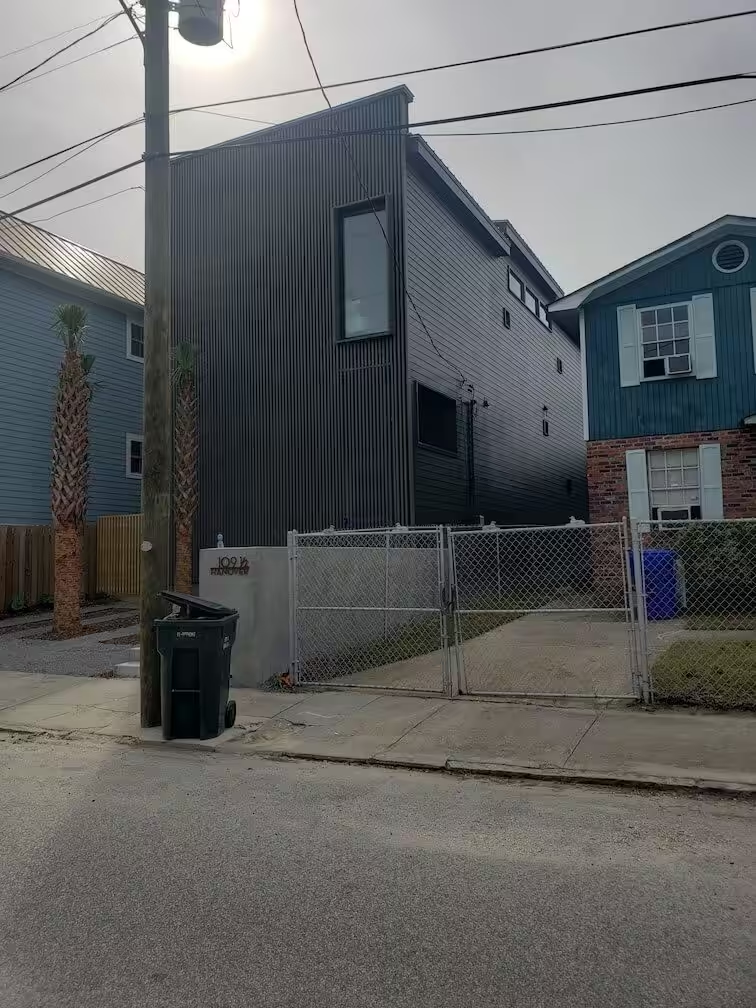
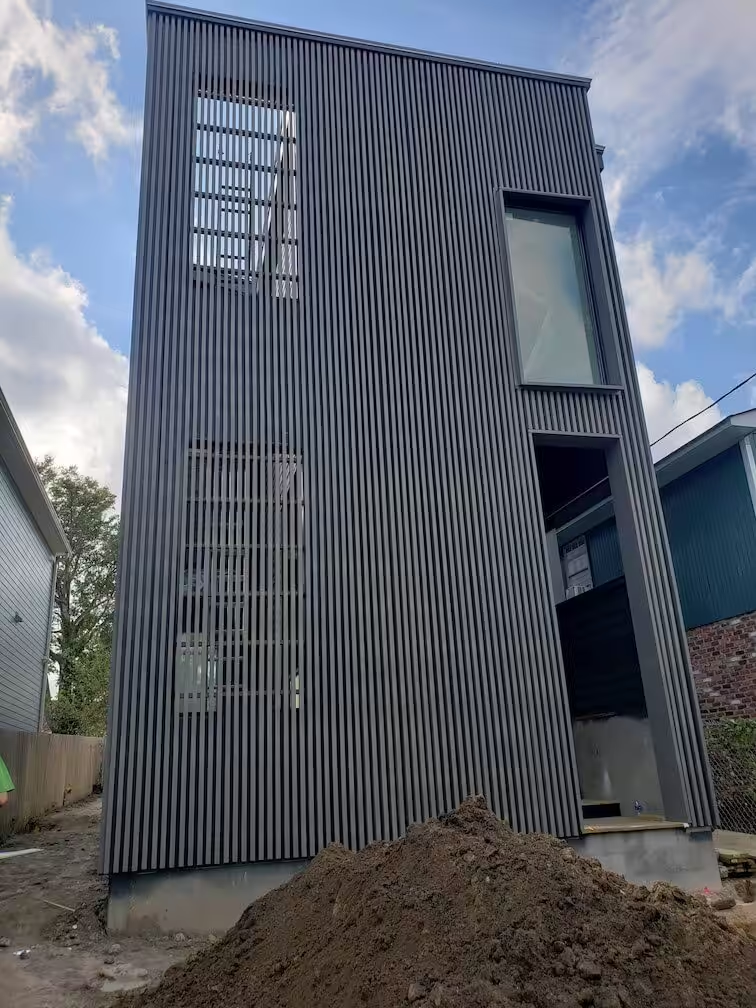
On this Downtown Charleston townhouse, the vertical siding was painted a bold charcoal gray, with very little trim. The house next door is blue-gray with white trim and a brick base.
A dark, simple shape can hold its own between lighter neighbors. On a street of near-identical houses, the same color would stand out far more. Walk the block, note the colors on either side of yours, and decide whether you want to blend in or be the one people use for directions.
5. Decide light or dark with the sun in mind
Light reflectance value, or LRV, is the share of light a color reflects. Sherwin-Williams explains that lighter tints reflect more light than darker ones, and glossier finishes more than matte ones. Sherwin-Williams and Benjamin Moore list the LRV on each color’s web page.
Under Charleston sun, that number has a practical side. Lawrence Berkeley National Laboratory’s Heat Island Group notes that dark walls can heat a building much as dark roofs do, and that light paints or darker “cool color” paints keep walls cooler.
On vinyl siding there is a hard limit: Sherwin-Williams warns that a color darker than the original can make the panels warp unless the paint is formulated for vinyl.
Should the trim be lighter or darker than the body? Either works. What matters is a clear difference in lightness, so the trim reads as a frame instead of blending into the siding.
6. Match the sheen to the part
Benjamin Moore’s exterior guide lists low-lustre as the most common sheen for siding and trim, and keeps semi-gloss and gloss for doors, shutters and architectural details. Sheen changes how a color looks in sun, so decide it before you judge the samples.
7. Test samples where the house is
Small chips mislead outdoors. Benjamin Moore recommends brushing samples onto white foam board, carrying the board outside and watching it through the day as shade and sun move; its brush-on sample pots are made for interiors, not for exterior walls.
Hold each board against the siding on the sunniest and the shadiest side of the house, next to the trim color, in the morning and again late in the afternoon. A color you still like on all four looks is a safe pick.
8. Check what needs approval before you buy paint
Inside the City of Charleston’s historic districts, exterior painting goes through the Board of Architectural Review, and most painting is reviewed by staff. The city’s form says a color change needs the color form plus the application, and repainting in the existing color still needs the application.
In Mount Pleasant’s Old Village, the Historic District Preservation Commission lists paint color changes among its staff approvals, as in its February 10, 2025 agenda. Many planned communities have their own review boards as well. Get the approval in writing before you book a painter.
9. Write down the maker, name and code of every color
The city’s form asks for the color, the manufacturer and the code for each part of the house. Keep that list even if nobody asks you for it. A painter needs it to order the right paint, a review board needs it to approve the scheme, and you will need it for touch-ups years from now.
Starting points from houses we have painted
If you would rather start from a combination already on a real house than from a blank fan deck, here are three from our own project pages:
- White body, dark shutters and trim: the traditional colonial on Bennett Street in Old Village, and the modern farmhouse in Mount Pleasant with its clean white scheme and dark trim accents.
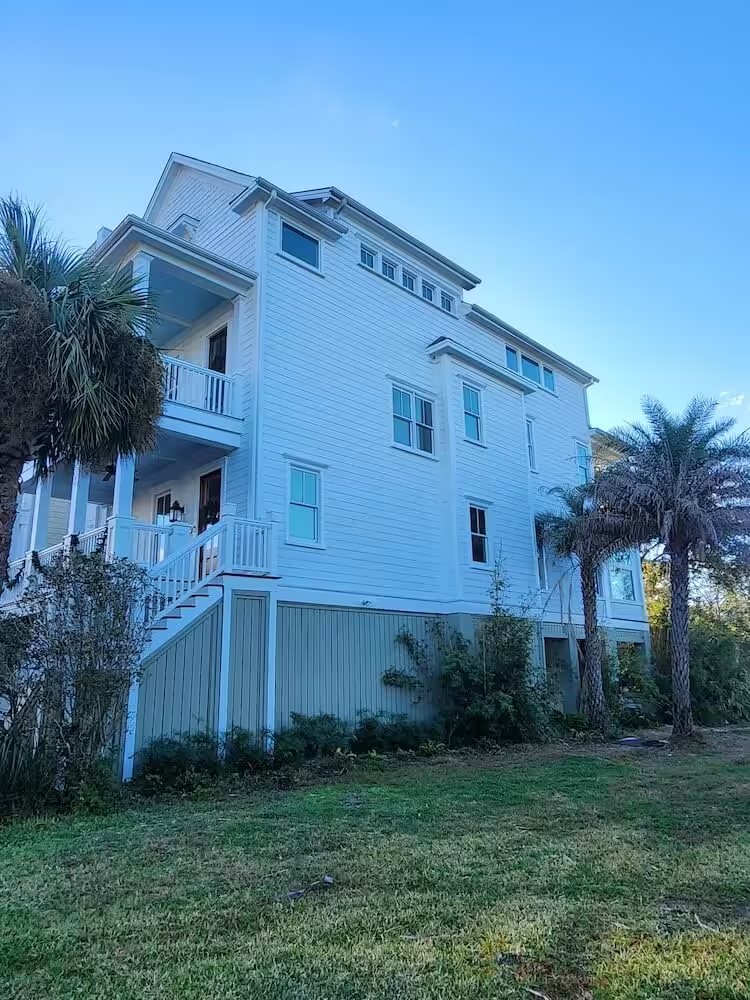
- Soft neutral body, white columns and trim: a 3,900 sq ft traditional home in Charleston with multi-level porches and balconies.
- Dark body, very little trim: the charcoal townhouse downtown from step 4, a choice that suits a simple, modern shape better than a house with deep porches.
Each still needs the steps above: the same white reads warmer or cooler depending on the roof, the light and the trim next to it.
Choosing colors to sell
If the repaint comes right before listing, you are choosing for buyers rather than for yourself, and the order of work changes. Our guide to painting a house before selling covers what to paint first.
Bringing your colors to a painter
With the list of parts, colors and codes in hand, an estimate is faster and more precise. VMS Home Painting handles repainting the exterior of your Charleston home, from the peninsula to Mount Pleasant and the islands.
Send us your color list and any approval you have, or tell us which approvals you are still waiting on, and request a free exterior painting estimate.