“How much does it cost to paint a house exterior?” is a lot like asking what a roof repair costs. The size of the house matters less than you would expect. What sets the number is the hours of washing, scraping, repairs and ladder work the house needs before and while the paint goes on.
We don’t publish prices, because labor and material costs change and a figure from someone else’s house says little about yours.
Six things set the price of an exterior repaint: the paintable surface, height and access, the condition of the paint and wood, the type of siding, the amount of trim and the number of colors, and approvals and timing. The only number worth planning around is a written estimate from someone who has walked every side of your house.
Square footage is where an estimate starts, not where it ends
The square footage on a listing measures floor area. A painter measures wall area, minus windows and doors, then adds trim, soffits, porch ceilings, railings and columns. Two houses with the same floor area can have very different paintable surfaces.
Projects published in our own portfolio show how far apart they can be. The sizes below are the ones listed on each project page; none of them is a price.
| Project | Size listed | What shaped the exterior work |
|---|---|---|
| Ranch house in Charleston | 1,100 sq ft | One story, but three different finishes: terracotta and gold paint on stucco, a brown stain on the wood siding and black window trim. |
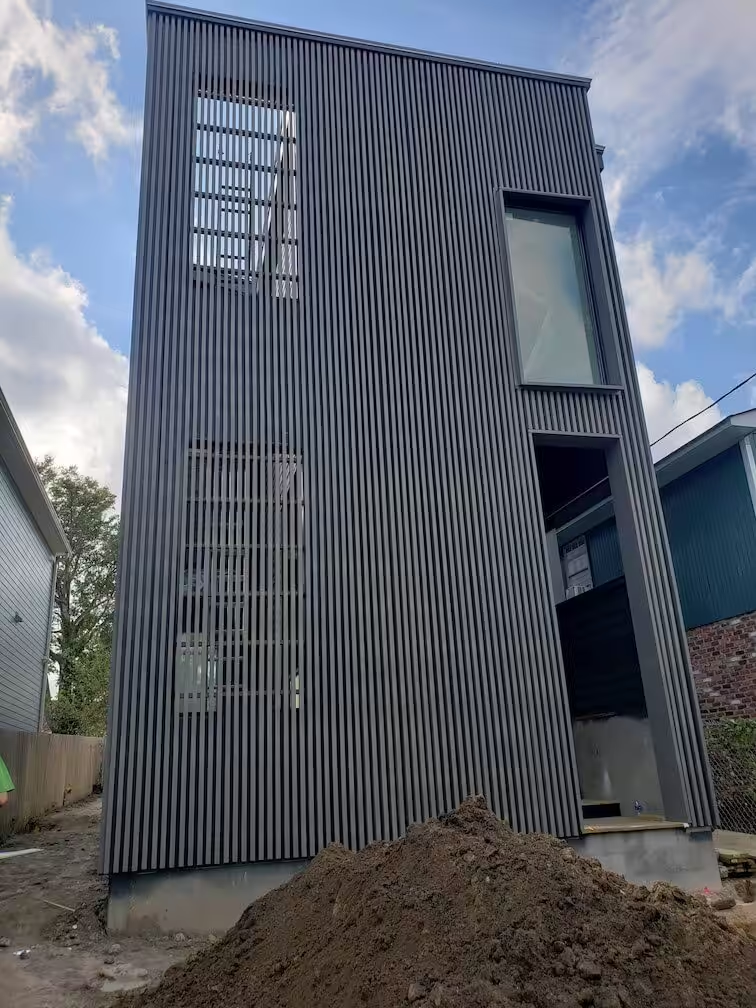
| Downtown Charleston townhouse | 2,100 sq ft | A small footprint stacked on three floors, with vertical siding in charcoal gray and very little trim. |
| Brick house in Coosaw Creek | Not listed | Traditional red brick turned pale green with masonry products; scaffolding for the upper walls; a detached garage done to match. |
| Kiawah Island estate | 5,100 sq ft | An elevated Lowcountry house with wraparound porches and balconies on three levels, and white columns and railings throughout. |
| Island Park home, Mount Pleasant | 6,500 sq ft | A multi-level contemporary design with balconies, porches and pool deck areas. |
The smallest house on the list needed three different products. The townhouse has a modest floor area, yet every wall rises three stories. That is why a painter asks to see the house before giving you a number.
Height and access
Each story adds setup and safety work. A one-story house can often be painted from the ground and short ladders. Two- and three-story walls, raised foundations and sloped lots call for extension ladders, scaffolding or a lift, and the crew spends real time moving that equipment from side to side.
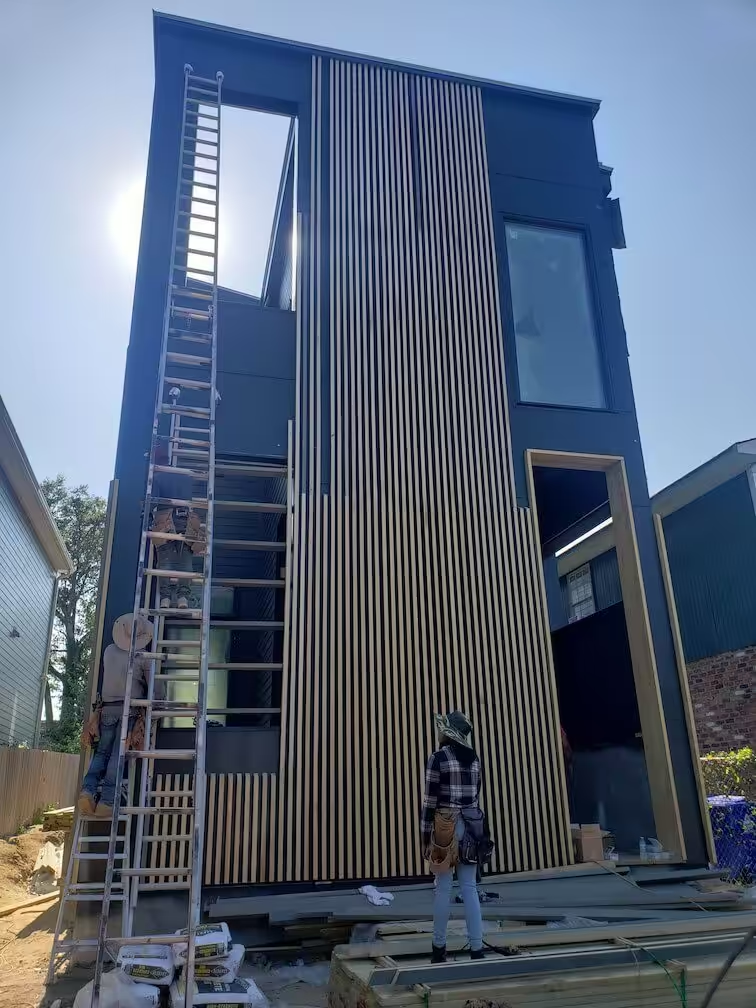
The Downtown Charleston townhouse from the table, photographed during construction. On a narrow downtown lot there is little room to set ladders, and every wall goes up three floors. Elevated homes on the islands, like the Kiawah estate, add height the same way.
Prep is where two estimates for the same house split apart
Paint is the last step. Before it come washing off dirt, salt film and mildew, scraping loose paint, sanding the edges smooth, re-caulking open joints, replacing rotted boards and priming bare wood. A house with sound paint needs little of that; a house with peeling trim and soft window sills needs all of it.
This is also where a low estimate can save money in the wrong place. Paint over mildew or soft wood fails early, and the repaint comes sooner. Our guides to pressure washing before painting and wood rot repair before painting show what that prep involves, step by step.
Houses built before 1978
According to the EPA, about three-quarters of U.S. homes built before 1978 still contain some lead-based paint. The agency’s Renovation, Repair and Painting Rule requires anyone paid to disturb painted surfaces in those homes to be certified and to use lead-safe work practices.
Those practices shape how scraping, sanding and cleanup are done, so they belong in the written scope. If your house is older than 1978, say so when you ask for estimates, and read our list of questions to ask a painter before hiring.
The surface: wood, fiber cement, stucco, brick or vinyl
Each surface takes its own primer and paint system, which is why a good estimate lists them separately.
- Wood siding and trim: the most prep wherever old paint has failed, and bare wood needs primer before the finish coats.
- Fiber cement: priced on the same factors as wood siding: area, height and the condition of the coating already on it.
- Stucco: texture and porosity raise the amount of paint per square foot, and cracks are addressed before coating.
- Brick or stone painted for the first time: a masonry coating and, inside the City of Charleston’s historic districts, approval from the full Board of Architectural Review, not only staff, according to the city’s color change form.
- Vinyl: Sherwin-Williams warns that a color darker than the original can make vinyl warp unless the paint is formulated for it, which limits the color choice.
Trim, porches, shutters and the number of colors
Brush work is slower than rolling or spraying siding. Every railing spindle, column, window sash and shutter is cut in by hand, and every extra color adds another line to paint along.
Charleston houses tend to have a lot of it. The city’s color change form gives separate lines to the main body, foundation, trim, window sash, shutters, doors, and three parts of the piazza (as porches are called here): columns and balustrade, deck, and ceiling. A house painted that way can carry five or six colors.
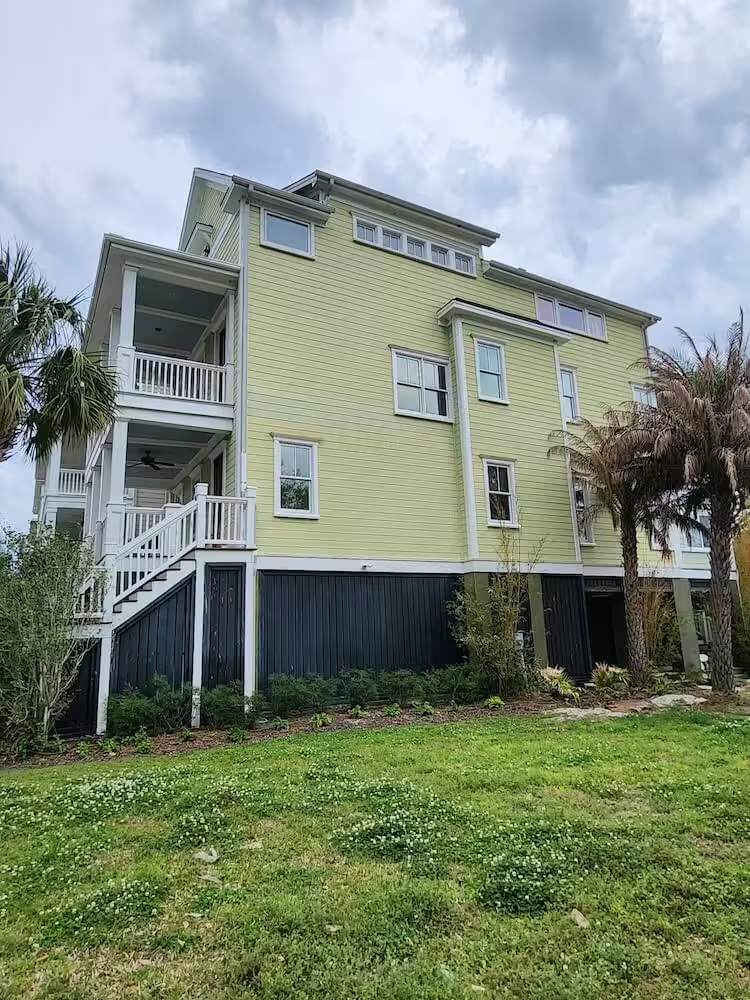
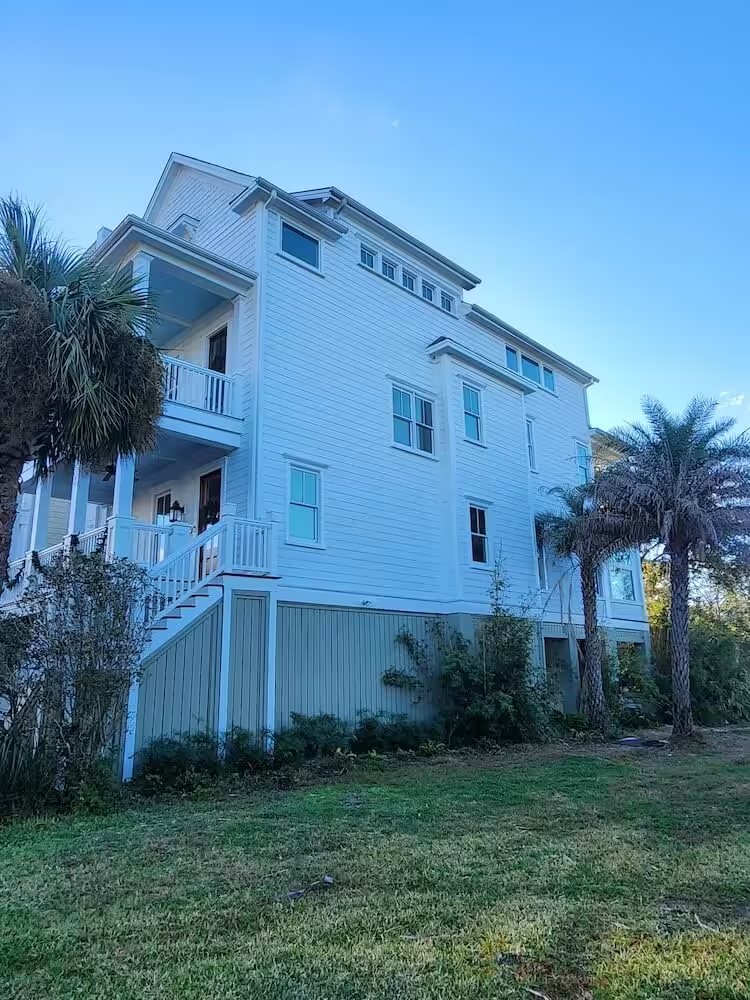
On this elevated home on Mary Ellen Drive, three levels of porches and balconies add railings, columns and stairs to the siding, and the lower level carries its own color.
Shutters can also be taken down and painted flat; one of our customers mentioned in a review that the crew removed their shutters during the exterior repaint.
Approvals, weather and the calendar
If your house is in a historic district or a community with an architectural review board, the colors need approval before the work is scheduled. The City of Charleston asks for a Board of Architectural Review application for exterior painting in its districts, and most painting is reviewed by staff rather than the full board.
Weather sets the pace of the work. The National Hurricane Center lists the Atlantic hurricane season as June 1 to November 30, with most activity between mid-August and mid-October.
A schedule that has to work around storm days and afternoon rain takes longer on the calendar. Our guide to the best time of year to paint a house exterior walks through the Charleston months.
How to compare two exterior estimates
Put the estimates side by side and compare the scope before the totals. A useful estimate tells you:
- which surfaces are included: siding, trim, soffits, porch ceilings and floors, railings, shutters, doors, garage doors;
- the prep steps, and how rotted wood found during the job will be handled and priced;
- where primer goes, the product names and the number of coats;
- how many colors, and which parts get which color;
- ladders, scaffolding or lifts, and how plants, walkways and cars will be protected;
- the schedule, what happens on rain days, and what is guaranteed in writing.
When one estimate is much lower than the others, look for what is missing from its list before you compare prices.
What you can do to keep the number down
Most of what lowers an exterior quote is taking hours out of the job, not cutting steps:
- Clear a working strip around the house: move grills, planters and patio furniture, and trim shrubs back from the walls.
- Settle the colors and any approvals before the estimate visit, so the scope does not change after the price is set.
- Keep the number of colors to what the house needs; each extra one adds brush work.
- Fix leaking gutters and other water problems first, so repaired wood does not get wet again.
Painting it yourself is possible on a one-story house with sound paint. The slow parts, washing, scraping, caulking and repairs, take the same hours whoever does them.
On a house built before 1978, the EPA’s RRP rule generally does not cover owners working on their own home, but it does apply if you rent out all or part of it.
Getting a number for your house
The price of your exterior repaint depends on the six things above, measured on your house.
VMS Home Painting gives free, no-obligation estimates for exterior house painting in Charleston, Mount Pleasant, Summerville and the islands. Tell us the age of the house, the colors you have in mind and any approvals you are waiting on, and ask for your free exterior estimate.