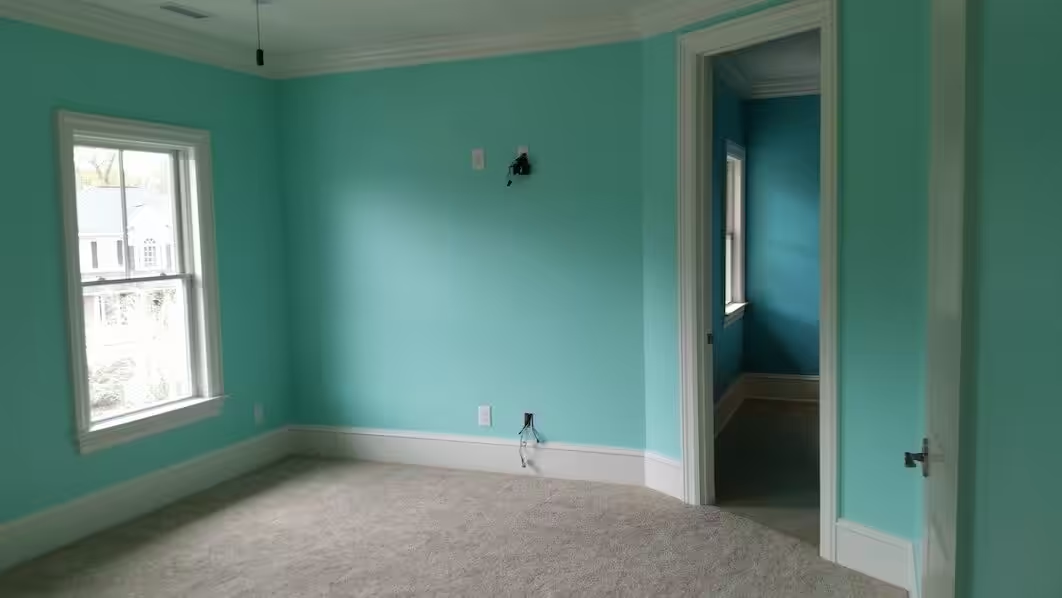
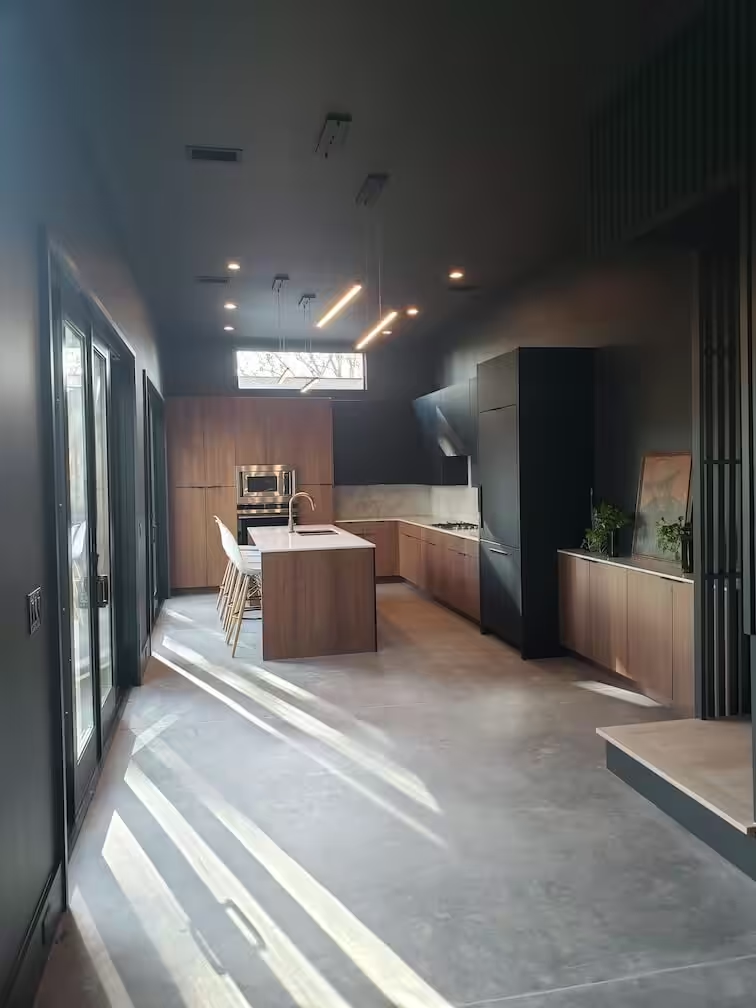
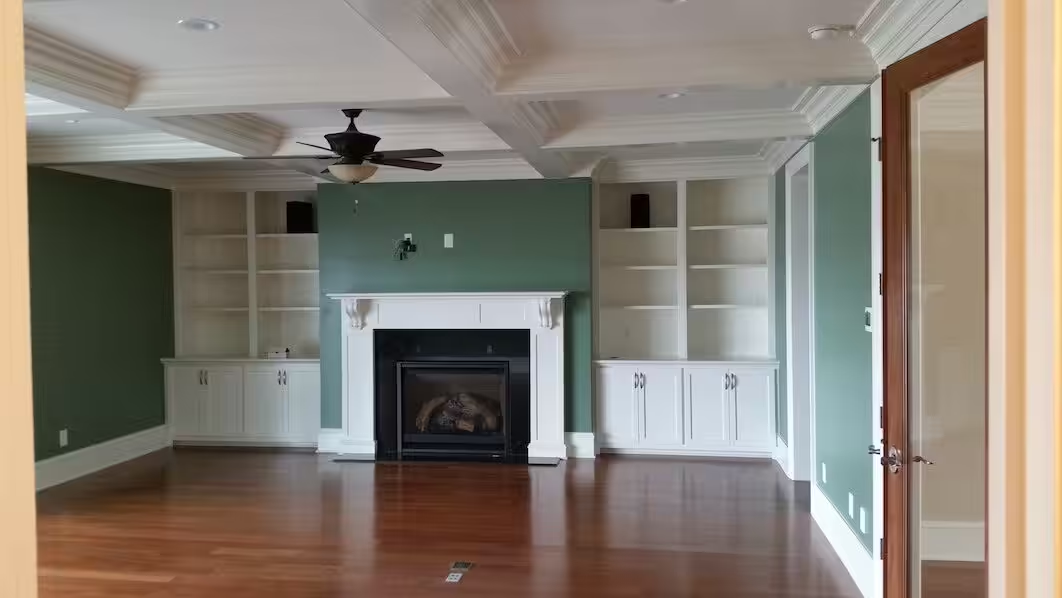
To prepare for interior painters, make the walls reachable and the decisions final. Clear everything off the walls, take breakables and electronics out of the rooms, move small furniture out and big pieces toward the middle, and settle colors, sheens and scope before the first day.
Covering floors, masking trim and protecting what stays in the room is the crew’s job; getting the rooms ready to be covered is yours. The checklist below runs in the order you will need it, with a note on why each item matters.
Two weeks before: the decisions that hold up day one
- Colors and sheens, room by room. Write them down per surface: walls, ceilings, trim, doors. Paint is ordered and tinted from that list, so it has to exist before the first day. Testing them in your own light is covered in choosing interior paint colors.
- What is in the scope, in writing. The Painting Contractors Association’s standard on typical exclusions (P23) lists items that are not part of a painting contract unless the documents name them.
- On that list: closet interiors in repaint work, vents and grilles, switch plates and covers, and the bottoms of doors. If you want the closets painted, say so now.
- Repairs. Point out cracks, nail pops and water stains during the estimate visit, so patching is priced and scheduled instead of found on day one.
- The age of the house. If it was built before 1978, lead-safe rules apply to any sanding or scraping of old paint, and the contractor has to give you the EPA’s Renovate Right pamphlet before work starts. Our questions to ask a painter before hiring explain what to expect.
The week before: clear the rooms
- Take down everything on the walls. Pictures, mirrors, clocks, shelves, curtain rods and blinds. Leave the nails and anchors in place and mark the ones you want to reuse, so the rest can be filled.
- Empty shelves and built-ins that will be painted. One review on our site came from a client who had us paint new built-in shelves in an office, and that only works with the shelves bare.
- Pack breakables and electronics. Lamps, decor, anything on tabletops, the TV if it hangs on a wall being painted, and the router if its cables run along the baseboard.
- Move small furniture out of the room, and big pieces toward the middle, so there is room for a ladder along every wall being painted. Empty drawers make heavy pieces easier to shift.
- Decide where things go meanwhile. A garage corner or one unused room works. Painting rooms in sequence means each room’s contents can move into the one already finished, once the paint has had time to dry.
What the crew protects, and what to point out
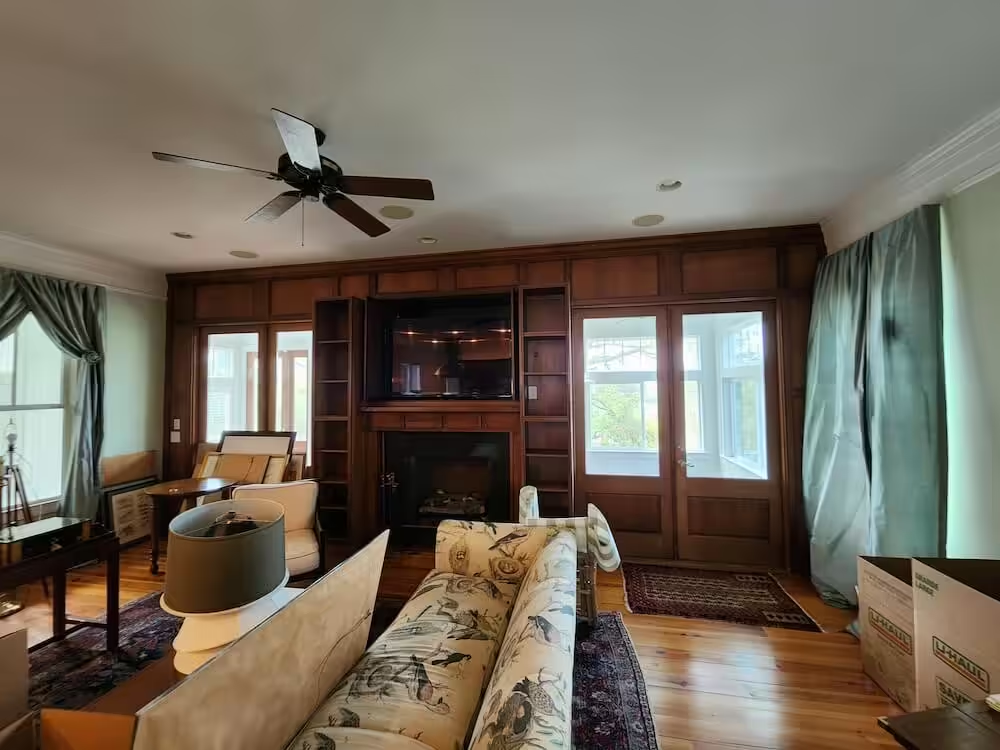
Two photos from our project on Mary Ellen Drive in Charleston show the difference between a room as it is lived in and a room ready for paint.

The first photo, at the top of this page, was taken in March 2023 with the furniture and the dark wood built-ins in place. In the second, taken in May 2023 during the job, the furniture is out, the floor is covered in protective paper and the edges are taped.
The project page notes that the home’s wood elements needed protection during painting, and that is the kind of detail to point out on day one.
Walk the crew lead through the rooms and show:
- wood that stays natural: stained trim, handrails, beams, paneling;
- surfaces that mark easily: wallpaper in an adjoining room, delicate floors, stone counters;
- anything that cannot be moved: a piano, an aquarium, a heavy cabinet;
- where the outlets, water and a bathroom are that the crew may use.
Your part and the crew’s part
Day one goes more smoothly when every item has an owner. This table splits the usual ones; anything in the last column is worth confirming at the estimate.
| Item | Your part | The crew’s part | Confirm at the estimate |
|---|---|---|---|
| Pictures, mirrors, shelves, curtains | Take them down and store them | Fill the holes you do not want to keep | Which anchors stay |
| Small furniture, lamps, decor | Move them out of the room | Work around what is left in the middle | Where things will be stored |
| Large furniture | Empty it so it can be moved | Cover it in the middle of the room | Pieces that cannot be moved at all |
| Floors | Clear the floor along the walls | Cover it; on our jobs, with protective paper and taped edges | Rugs and delicate floors |
| Wood that stays natural | Point it out | Mask it before painting | Stained trim, handrails, built-ins |
| Cracks and holes | Show them at the walk-through | Patch and sand before paint, when they are in the scope | Drywall repairs and how they are priced |
| Switch plates, vents, closets | Say what you want painted | Remove or mask plates and covers | Closet interiors, which are not assumed |
| Clean-up | Put the rooms back once the paint has dried | Remove coverings and debris at the end | Leftover paint for touch-ups |
The crew’s column follows what our interior painting page describes for our own jobs: floors covered with protective paper, edges taped, natural wood masked, patching before paint and clean-up at the end.
The night before: set up the house
- Keep the heating or air conditioning running. Paint has temperature limits; Benjamin Moore’s ADVANCE data sheet, for example, sets a minimum surface temperature of 50°F. In a Charleston summer, the air conditioning also pulls humidity out of the air, and Sherwin-Williams’ guide to drying paint names moisture as the main thing that slows it down.
- Plan for pets and children. A closed room or a day elsewhere keeps them away from open cans, wet walls and ladders.
- Clear a path and a parking spot. From the door to the work rooms, and in the driveway for the crew’s vehicle.
- Leave the room lights working. The PCA’s job-sequencing standard (P7) expects lighting comparable to the room’s permanent lighting during the work, because coverage is judged in that light, by the crew and later by you.
- Put away anything you would hate to see paint on, including in the rooms next to the work: rugs in hallways, coats on the hall tree, shoes by the door.
While the work is going on
Keep air moving through painted rooms and follow the label on the products being used; the EPA’s advice on paint fumes is to increase ventilation. If someone in the house is sensitive to odors, ask about low-odor products at the estimate, not on day one.
Check in at the end of each day rather than mid-coat. It is the easiest moment to raise a question about a color, a line or a spot that was missed. When the work is done, our guide to how long interior paint takes to cure covers when furniture, art and cleaning can come back.
If the painters start next week
Three things to do this week, in this order:
- Write the color and sheen for each surface on one page, and confirm the scope with your painter, closets included or not.
- Book the time to clear the rooms: wall items down, breakables packed, small furniture out.
- Decide where pets, children and the work-from-home desk will be on painting days.
If you are still choosing a painter, VMS Home Painting handles interior painting in Charleston-area homes, from one room to the whole house. Schedule a free interior estimate visit, and we will walk the rooms with you and agree on what gets moved, covered and painted.