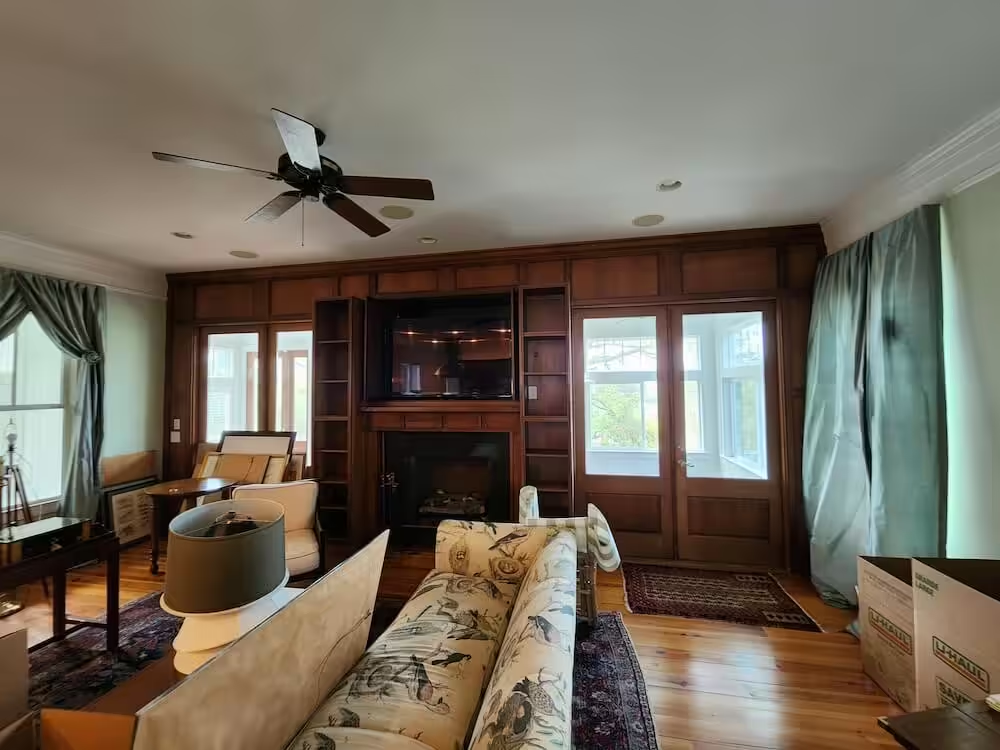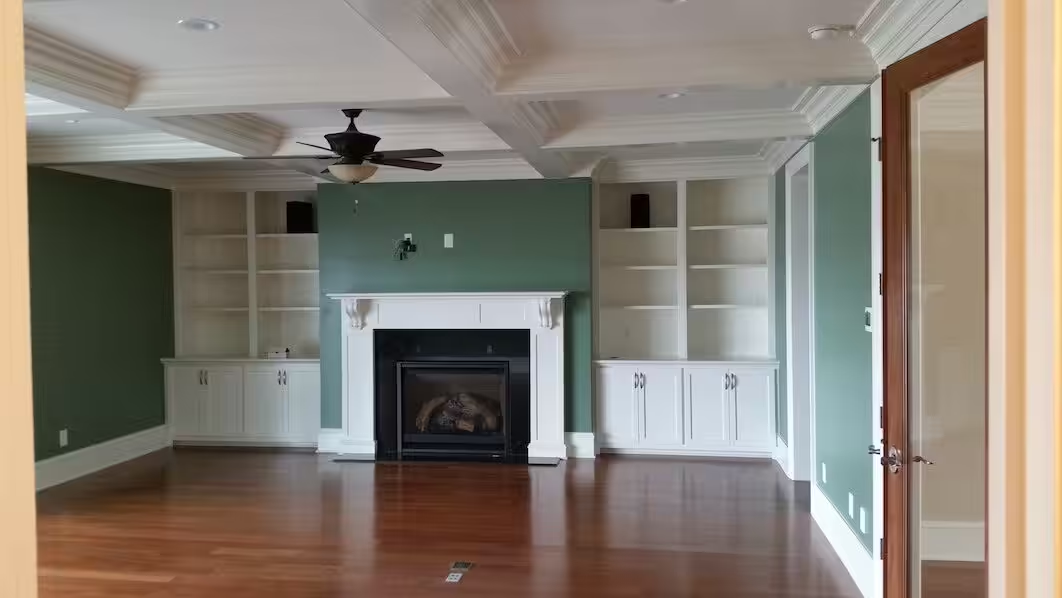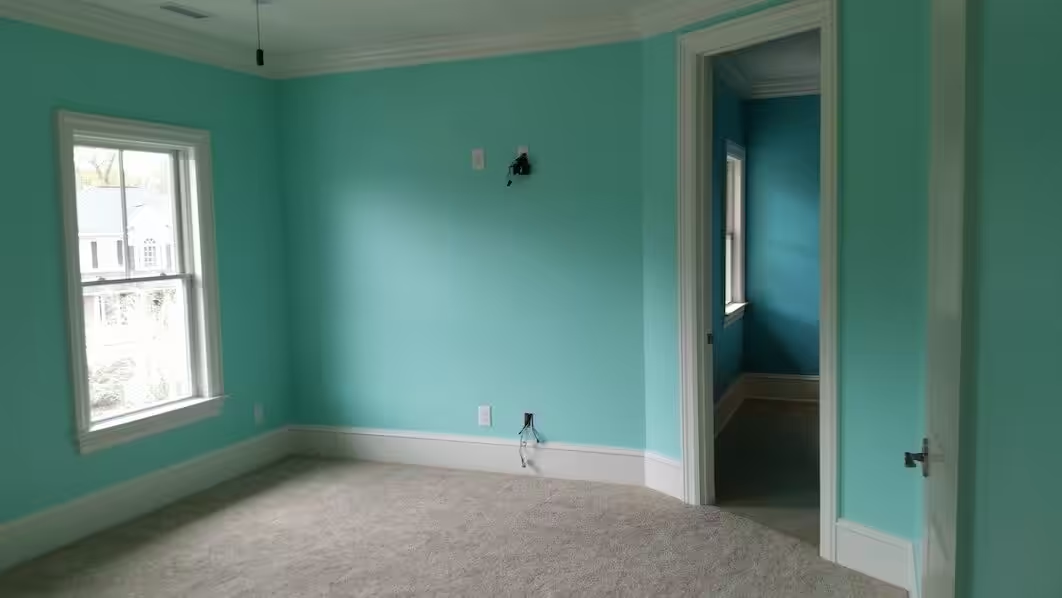
A classic mistake after an interior repaint is treating “dry” as “done.” A latex wall is dry to the touch in an hour or two, but it keeps hardening for weeks.
So how long does interior paint take to cure? Sherwin-Williams puts it at two to three weeks for acrylic and latex paints, and as little as five days for oil-based paints.
Enamels on trim, doors and built-ins can take longer: one waterborne alkyd’s data sheet says up to 30 days to reach full hardness. Humidity and cool rooms stretch every one of those numbers.
Below are the questions people ask in the days after the painters leave, answered with what the paint makers’ own documents say.
What is the difference between dry and cured?
Dry means the water or solvent has left the surface and it no longer feels wet. Cured means the film has reached the performance it was designed for: hardness, scrub resistance, resistance to sticking.
That is how Sherwin-Williams draws the line, and the company adds that nothing makes paint cure faster; you can only help it start drying sooner.
What do real data sheets say?
Times on a label are measured at a set temperature and humidity, usually 77°F and 50 percent relative humidity. Here are three examples, from a general guide and two product data sheets:
| Paint and source | Dry to touch | Recoat | Cure or full hardness |
|---|---|---|---|
| Latex and acrylic paints (Sherwin-Williams guide) | 1 to 2 hours | Per label | 2 to 3 weeks |
| Oil-based paints (Sherwin-Williams guide) | 6 to 8 hours | Per label | 5 to 15 days |
| Emerald Urethane Trim Enamel (Sherwin-Williams data sheet) | 1 hour | 4 hours | Not stated; temperature, humidity and film thickness change the times |
| Advance waterborne alkyd (Benjamin Moore data sheet) | 4 to 6 hours | 16 hours | Up to 30 days for optimum hardness; shelves and tabletops not back in service for 3 to 5 days |
Two lessons sit in that table.
First, “dry” and “recoat” are hours; “cured” is days or weeks. Second, the products that go on the surfaces you touch most, like trim, doors and shelves, can be the slow ones. If you want the same times for your own paint, ask the painter for the product names and look up their data sheets.
What the first month looks like, room by room
Put the numbers above on a calendar and the weeks after a repaint look like this. Rows that name a source come from it; the rest is our reading of those numbers, and the label on your own paint overrides any of them.
| When | Walls (latex or acrylic) | Trim, doors, shelves (enamel) | The room |
|---|---|---|---|
| Day of the last coat | Dry to the touch in 1 to 2 hours (Sherwin-Williams) | Touch-dry in 1 to 6 hours, depending on the product (data sheets above) | Ventilate during and after painting (EPA), with an eye on humidity (see the month table below) |
| Days 1 to 2 | Furniture can come back into the room, a few inches off the walls | Doors and drawers in use, but handled with care | Bedrooms aired out before sleeping |
| Days 3 to 5 | Still soft under pressure | Earliest return to service for shelves and tabletops with Advance (Benjamin Moore) | Normal daily use, no scrubbing |
| Weeks 2 to 3 | Typical cure for latex and acrylic (Sherwin-Williams): furniture back against walls, gentle washing, adhesive hooks | Still hardening | Touch-ups from the leftover can, if still needed |
| Around day 30 | Fully settled | Up to 30 days for optimum hardness with Advance (Benjamin Moore); for other enamels, check their data sheets before scrubbing | Back to your normal cleaning routine |
Can I sleep in a room while the paint is drying?
Ventilate first and follow the label. The EPA’s guidance on volatile organic compounds is to increase ventilation when using products that emit them, to meet or exceed label precautions, and to provide as much outdoor air as possible during painting.
In practice, paint bedrooms early in the day and keep air moving through the room until bedtime.
If anyone in the house is sensitive to odors, ask about low-odor products when you plan the job. The EPA also notes that gases can leak even from closed containers, so keep leftover paint in a well-ventilated storage spot, not in the bedroom closet.
Why does it still feel tacky after two days?
Usually because of moisture or a heavy coat. The Sherwin-Williams guide calls moisture the enemy of drying, tells you to avoid opening windows on a humid day, and suggests dehumidifiers in the painted room. It also warns that thick layers and overworked paint slow drying, which is why two thin coats beat one heavy one.
That advice matters here.
NOAA’s 1991–2020 normals for Charleston International Airport put the average dew point in July at 72.9°F, so a muggy summer breeze through an open window adds water to the room rather than taking it away.
Run the air conditioning or a dehumidifier instead. The EPA’s mold guidance gives a useful target for indoor air: below 60 percent relative humidity, ideally between 30 and 50.
Avoid heat as a shortcut, too: according to the same guide, heat changes can affect the color of the paint as it dries.
When opening the windows helps in Charleston, month by month
The EPA says to bring in as much outdoor air as possible when painting; Sherwin-Williams says not to open windows on a humid day. Here both are right, in different months. We ran the NOAA hourly normals for Charleston International Airport (1991–2020) to see when outdoor air is too wet to help.
The line we used is a dew point of about 57°F. Outdoor air with that dew point, brought to 72°F indoors, reaches roughly 60 percent relative humidity by the standard Magnus formula. Sixty percent is the indoor ceiling in the EPA’s mold guidance; we borrow it here as a sensible limit for a drying room.
| Months | Average dew point | Share of the average day’s hours at or above a 57°F dew point | Airing out a freshly painted room |
|---|---|---|---|
| November to March | 39°F to 48°F | None | Open windows help on dry, mild days |
| April | 54°F | About one in ten | Mostly fine; check the day’s dew point |
| May to September | 62°F to 73°F | Nearly all of them | Keep windows mostly closed; ventilate with exhaust fans while the air conditioning or a dehumidifier holds the humidity down |
| October | 59°F | About three in five | Check the day’s dew point before opening up |
These are 30-year averages, so warm, muggy days turn up in April and November too, and dry ones in summer. A weather app that shows the dew point settles it on painting day.
In the closed-window months, the trade-off is real: fresh air still matters for odors and fumes, so run exhaust fans, pick low-odor products if anyone is sensitive, and air out on the driest hours.
When can I move the furniture back?
Into the room, once the paint is dry and the floor is clear. Against the walls, wait.
Until a film has cured, firm contact can leave marks or make surfaces stick: Benjamin Moore keeps shelves and tabletops painted with its enamel out of service for 3 to 5 days for exactly that reason. A few inches of gap behind sofas, beds and dressers for the first couple of weeks costs nothing.
Kitchens are the hardest rooms to keep off-limits.
Stools and chairs are the usual culprits: they slide against walls, island panels and trim every day. Give them felt pads and a little distance while the paint cures. Painted cabinets follow their own, slower schedule, which our article on how long painted cabinets last explains.
When can I hang pictures and shelves?
Nails and screws can go in once the paint is dry, as long as nothing presses flat against the wall. Adhesive hooks, picture tape and painter’s tape are different: they pull on the film, and an uncured film is softer. Give those the full cure time on the label.
When can I wash the walls?
Spot-clean gently with a soft damp cloth if you have to; save real scrubbing for after the cure. How well a wall washes also depends on its sheen, which our guide to the best paint finish for walls compares.
Bathrooms add steam. The EPA’s mold guidance is to run the bathroom fan or open the window when showering, and that habit matters most in the first weeks after painting.
Can I touch up a scuff right away?
Wait for the cure, then touch up from the same can. The data sheet for Sherwin-Williams’ trim enamel notes that using the same application method and batch as the original improves touch-up.
Even then, the PCA’s standard on spot repairs (P24) says a repair on a wall without natural break points will be visible at an angle, and more so as the sheen goes up.
The same patience applies between coats during the job; our guide to how many coats of paint interior walls need covers recoat waits.
If you mark the wall before it has cured
Leave it alone for now.
A film that has not cured has not reached the washability it was made for, so scrubbing it can do more damage than the mark. Let the paint cure, wash the spot gently, and only if the mark survives, touch up from the leftover can with the same tool the wall was painted with.
If you are planning an interior repaint around guests, a move-in date or a nursery, tell us the date each room needs to be back in use. Our checklist on how to prepare for interior painters covers what to clear from each room before the crew arrives.
VMS Home Painting handles interior painting in Charleston homes, and the estimate can plan the order of rooms around those dates; request a free interior painting estimate.