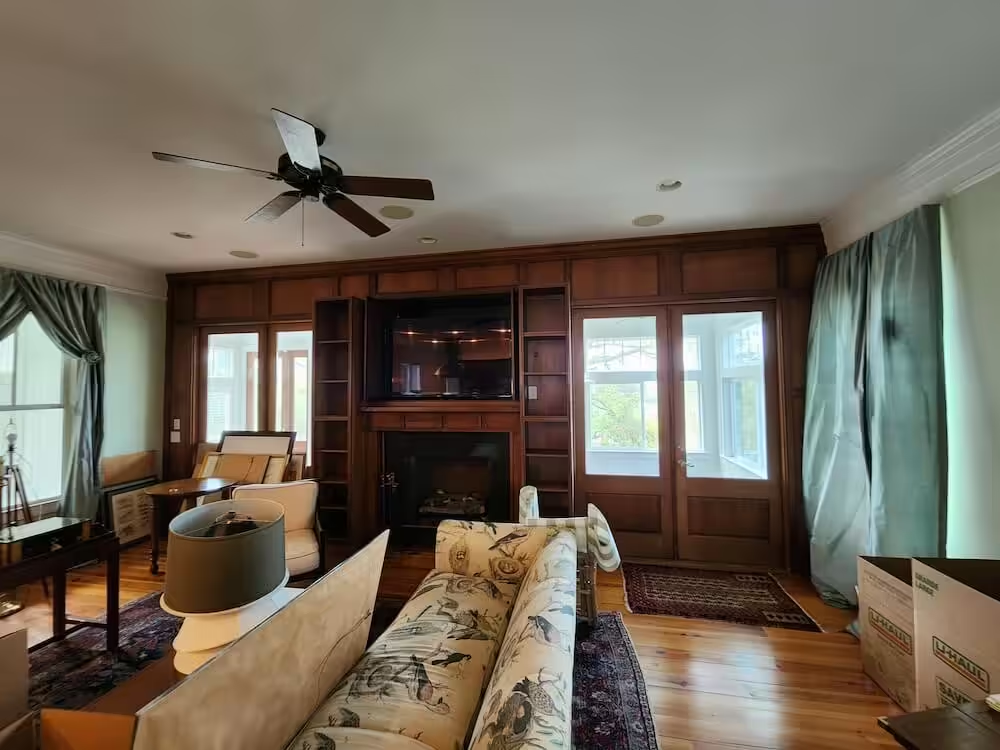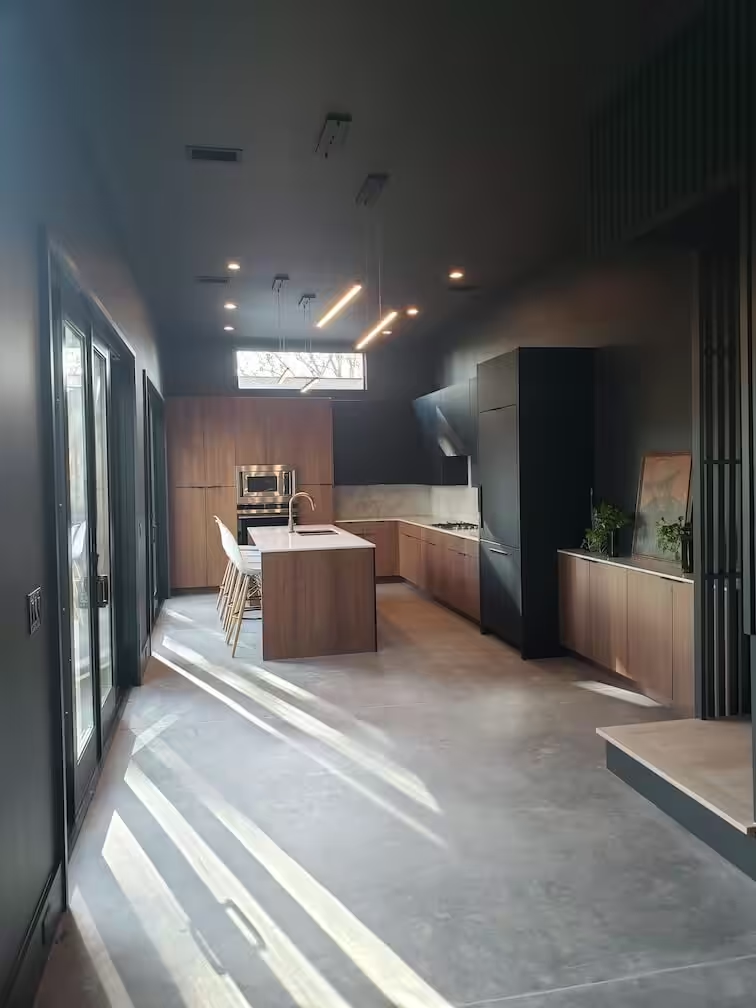
One of the homes in our portfolio, a 2,100 sq ft townhouse in Downtown Charleston, has walls in deep charcoal gray throughout its levels. Rooms like that are where the coat count stops being a formality: a thin spot that would vanish in off-white shows up as a gray shadow in strong window light.
So, how many coats of paint for interior walls? Most interior walls need two coats of finish paint. Bare drywall gets a coat of primer first, and big color changes can call for a tinted primer or a third coat. A same-color refresh over sound paint is the one case where a single coat may be enough.
Quick answer by wall situation
| Your wall | Primer | Finish coats | Why |
|---|---|---|---|
| Same color, old paint in good shape | Only on patched spots | 1 or 2 | One coat can hide a same-color wall; two give fuller, more even color. |
| New color, similar lightness | Only on patched spots | 2 | The standard for full color and an even sheen. |
| Dark to light, or light to deep | Tinted primer; deep-base primer for deep colors | 2, sometimes 3 | The old color and the new pigment both fight coverage. |
| New drywall or large patches | A full coat | 2 | Bare surfaces absorb unevenly; data sheets call for two coats over them. |
| Textured or rough walls | As for the wall’s situation above | Same count as a smooth wall | Texture takes more paint per coat, not more coats: coverage depends on texture and porosity. |
| Water stains, marker, glossy old paint | Stain-blocking or bonding primer | 2 | Stains bleed through and gloss resists adhesion until primed. |
The table follows paint makers’ own instructions. Benjamin Moore’s technical data sheet for Regal Select Interior Eggshell says two coats are required on bare substrates and that previously painted surfaces can take one or two. Sherwin-Williams’ guide to painting a room calls priming essential for new walls and for dark-to-light changes.
Why one coat rarely looks right, even when it seems covered
Wet paint looks thicker and more opaque than it will be. The same Benjamin Moore data sheet lists the recommended film at 3.6 to 4.0 mils wet and 1.6 to 1.8 mils dry, so the coat loses more than half its thickness as the water leaves it.
A wall that looked covered at noon can show the old color by evening.
Rollers also lay paint unevenly: a little heavier where the roller was loaded, a little lighter at the end of each pass. The second coat fills those thin bands. That is why the manufacturer, even for a self-priming product, recommends two coats “to achieve full color development and to maximize paint film performance.”
Paint-and-primer products can save a separate primer coat on many previously painted walls. They do not change the fact that bare or patched surfaces need two coats over them.
When primer comes first, and why it doesn’t count as a coat
Primer is a separate product with a separate job: it seals the surface and evens out how much paint each area absorbs, so the finish coats dry to one color and one sheen. Count your coats of finish paint after the primer, not including it.
Prime the whole wall when it is new drywall, when it has large patches, when there are stains that could bleed through, or when the old paint is glossy. Wallpaper is its own case: our guide to painting over wallpaper explains when the paper can stay and how it has to be sealed first.
For a big jump in color, a primer tinted toward the new color does more than an extra coat of untinted primer. Benjamin Moore’s guide to painting walls recommends asking for a deep base primer when you are painting a darker hue.
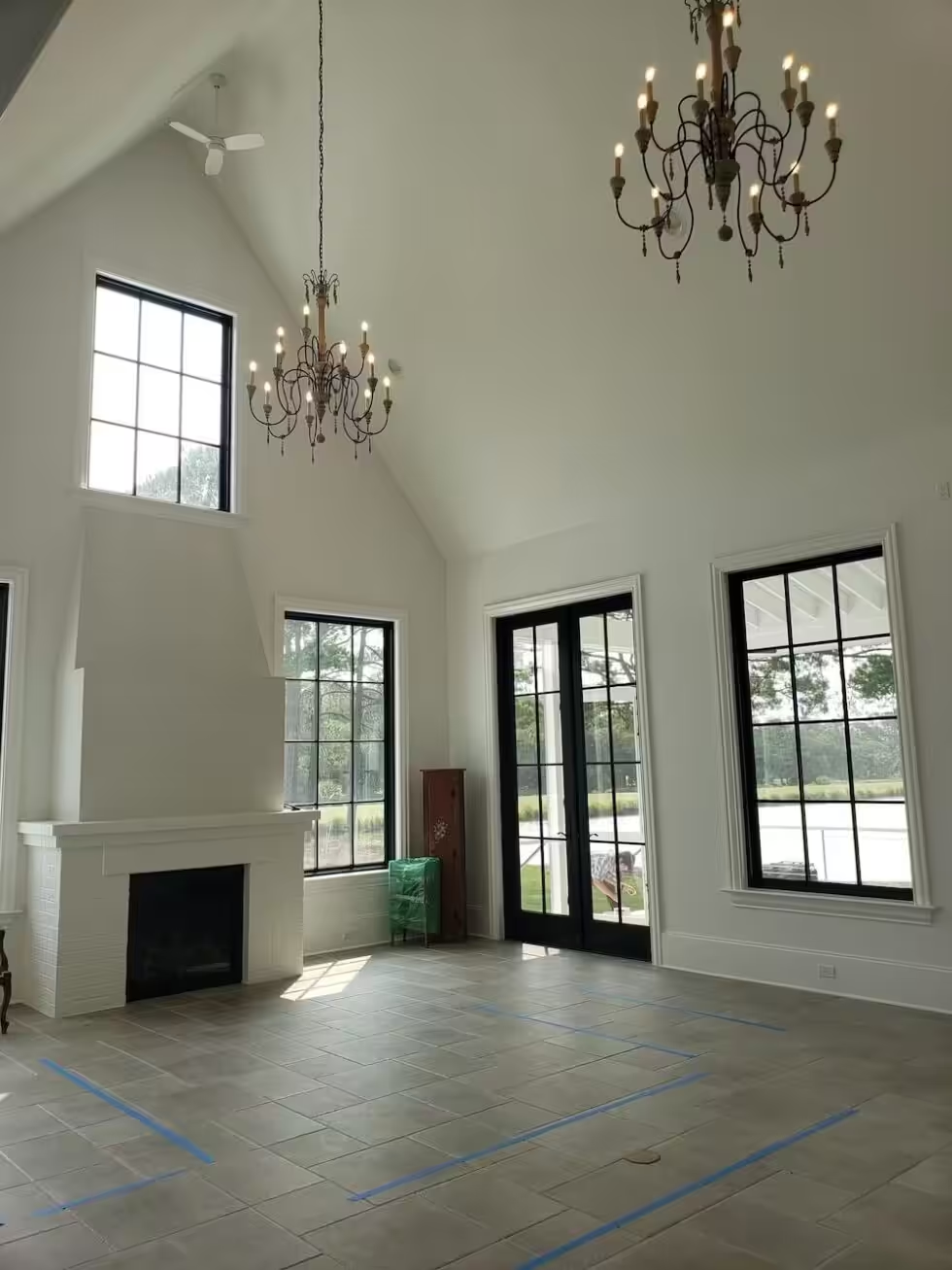
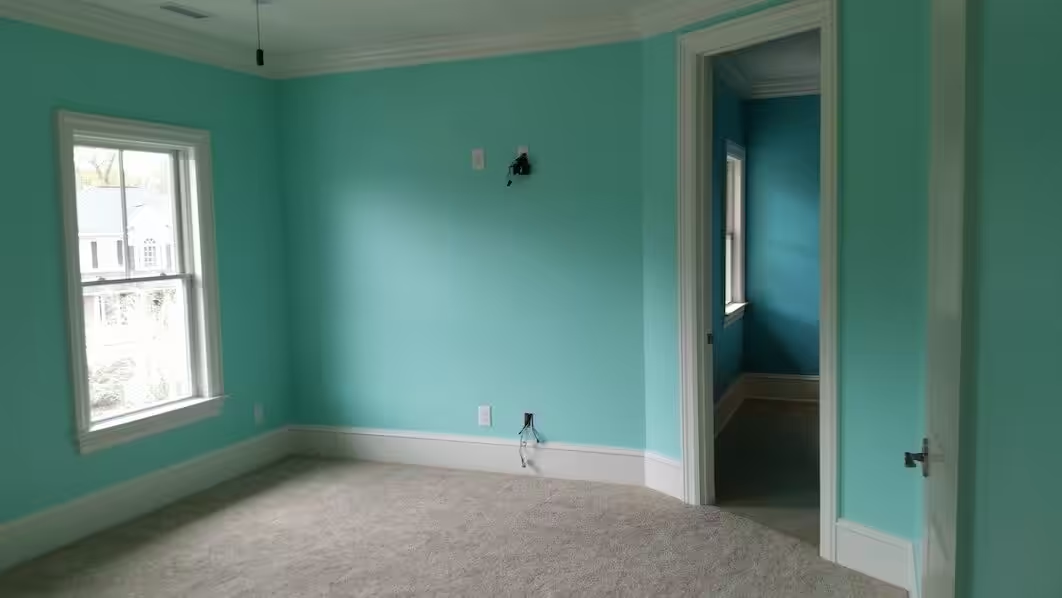
New construction is the textbook case for a full primer coat. This living room is in a modern farmhouse in Mount Pleasant that we painted while the house was being built: tall white walls, a vaulted ceiling and strong light from tall windows, which shows any patch that was not primed with the rest of the wall.
Deep colors in real rooms: what our project photos show
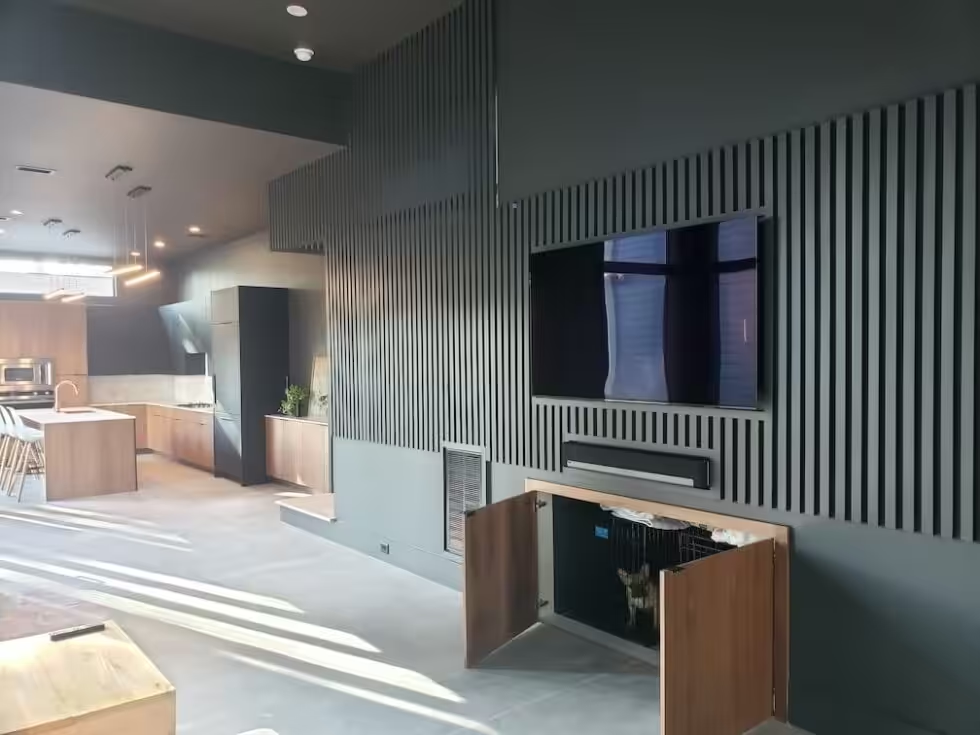
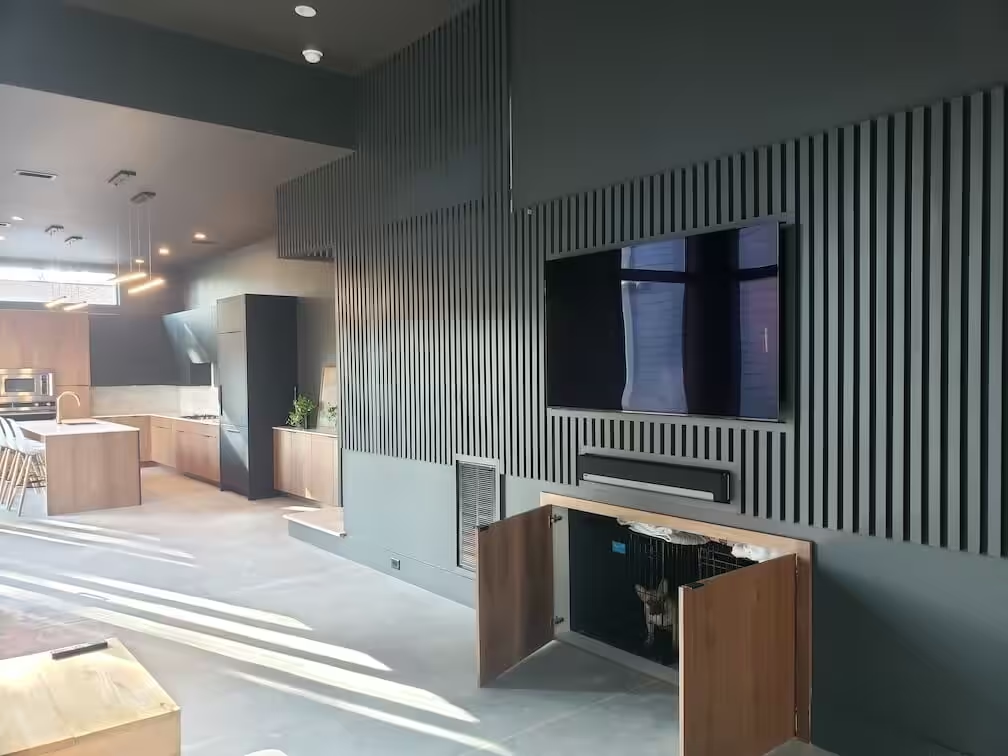
This is the Downtown Charleston townhouse from the opening, with charcoal walls and a slatted accent wall. Two details in the photo matter for coverage. Daylight comes in from the side, which is the light that exposes thin spots. And the slats create dozens of edges and inside corners, where brushed paint and rolled paint meet.
Deep and saturated colors are more likely to need a tinted primer, a third coat, or both. Some custom colors go further: Benjamin Moore’s data sheets note that certain deep colors require a deep base primer tinted to a specific formula. Ask whoever paints the room which primer the color calls for before the first coat goes on.
Waiting between coats in a humid Charleston house
Recoat only when the first coat is dry to the time on the can, and add time when the house is humid or cool.
The Benjamin Moore data sheet above gives 1 hour to touch and 1 to 2 hours to recoat, measured at 77 °F and 50% relative humidity, and states that high humidity and cool temperatures lengthen dry, recoat and service times.
Sherwin-Williams gives a typical 2 to 4 hours and tells you to check the label.
Coastal South Carolina air is often far more humid than the 50% those numbers assume. Running the air conditioning or a dehumidifier while the walls dry, and testing an inconspicuous spot before recoating, prevents the drag marks that come from rolling over tacky paint.
The same data sheet says painted surfaces can be washed after two weeks, so hold off on scrubbing the new walls.
How to tell if a wall needs another coat
Judge the wall once it is fully dry, in the room’s normal light. The Painting Contractors Association’s Standard P1 defines a properly painted surface as uniform in appearance, color, texture, hiding and sheen, viewed without magnification from 39 inches (one meter) or more, under finished lighting, from a normal viewing position.
From that distance, look for:
- the old color shadowing through, usually along edges and in corners;
- missed spots, which painters call holidays;
- patches that look duller or shinier than the wall around them, a sign they needed primer;
- lap marks, where wet paint was rolled over paint that had started to dry.
If you see any of these, the fix is another full coat on that wall, from corner to corner, not a dab on the spot.
How far a gallon and a quart go
The same data sheet lists 400 to 450 square feet per gallon at the recommended thickness, depending on surface texture and porosity. A quart is a quarter of a gallon, so it covers roughly 100 to 110 square feet in one coat. Two coats need twice the paint for the same wall.
A worked example: a 12 by 14 ft bedroom with 8 ft ceilings has 416 square feet of wall before you subtract doors and windows.
Take out about 40 square feet for one door and one window and you have roughly 376 square feet, which is close to one gallon per coat, or two gallons for two coats. Textured walls and fresh drywall take more. Coverage varies by product, so check the data sheet for the paint you are using.
Getting interior walls painted in the Charleston area
When you compare estimates, ask each painter to write the number of coats and the primer for each room, as covered in our list of questions to ask a painter before hiring.
Our interior painting in Charleston covers single rooms to entire homes, including color consultation. Request a free interior painting estimate, and ask us to put the coat count for each room in writing.