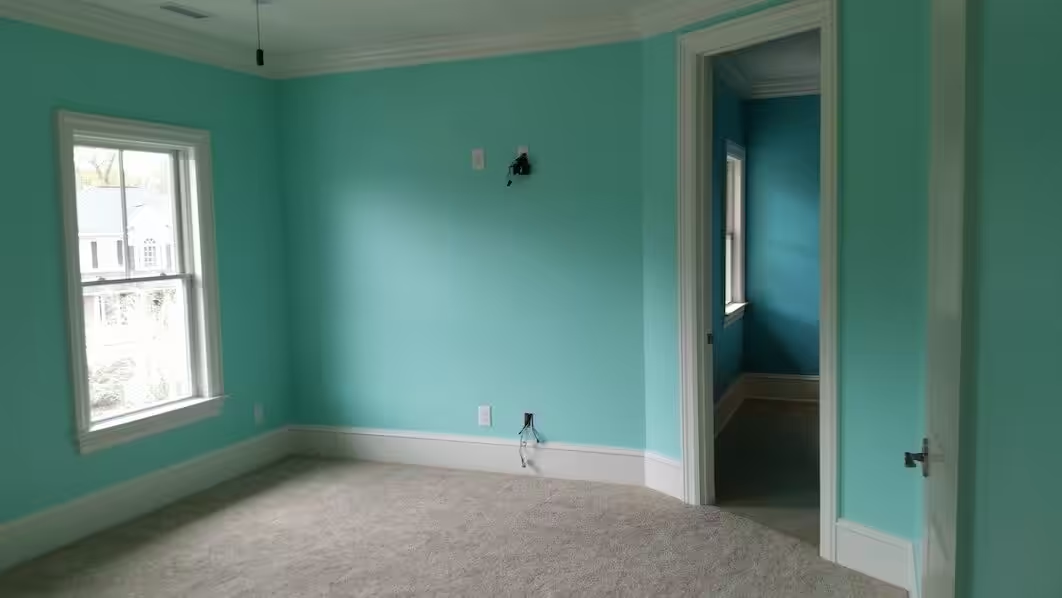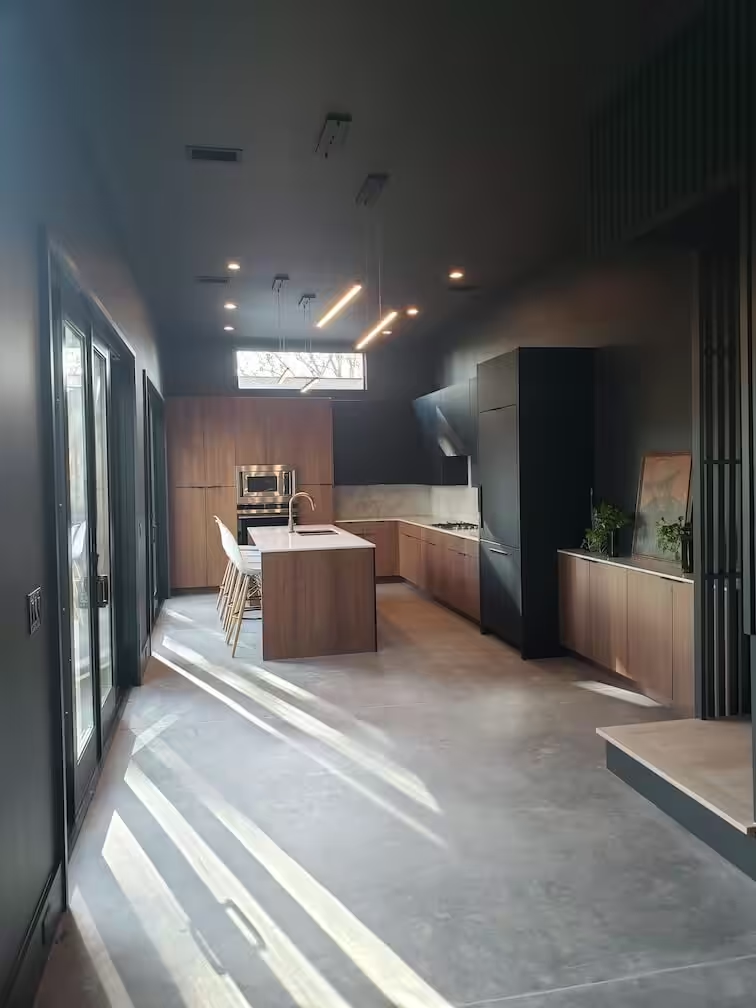
On paint makers’ own data sheets, the step from matte to eggshell is several times bigger than the step from flat to matte. Benjamin Moore lists its Regal Select interior flat at 1 to 4.5 gloss units and its matte at 3 to 5, while the eggshell reads 15 to 22, all measured at an 85-degree angle.
That gap explains why the best paint finish for walls is a choice between two low sheens, not a single winner.
For most walls, choose matte if you want the least shine and the best camouflage for flaws, or eggshell if you want walls that wipe clean more easily. Save satin for busy rooms and semi-gloss for trim, doors and wet areas.
The short answer for most walls
Living rooms, dining rooms and bedrooms do well in matte or eggshell. Hallways, family rooms and children’s rooms take more handling, so eggshell or satin earns its slightly higher sheen there. Ceilings and walls with dents, patches or texture look best in flat, which reflects the least light.
Sherwin-Williams’ paint sheen guide points the same way: matte for living and dining rooms, flat for ceilings, adult bedrooms and uneven walls, satin and its Eg-Shel finish for hallways, children’s bedrooms and family rooms, and semi-gloss for kitchens, bathrooms and trim.
What the sheen names mean in measured numbers
Sheen names are marketing; the gloss reading on the technical data sheet is a measurement. Here are the readings Benjamin Moore publishes for four of its interior finishes:
| Finish (product) | Gloss reading on the data sheet | Angle of the reading |
|---|---|---|
| Flat (Regal Select Interior) | 1 to 4.5 | 85° |
| Matte (Regal Select Interior) | 3 to 5 | 85° |
| Eggshell (Regal Select Interior) | 15 to 22 | 85° |
| Satin (Advance waterborne alkyd) | 25 to 35 | 60° |
Three things stand out. Flat and matte overlap, so in the same product line they look almost alike on a wall. Eggshell is a real step up, which is why some people call it “a little shiny.”
And readings taken at different angles are not directly comparable: low sheens are measured at a low, grazing 85° angle, higher sheens at 60°, so check the angle before comparing two numbers.
The practical rule: when two brands use different names, compare the gloss reading and its angle on each data sheet, not the label on the can.
Decision table by room and wall condition
| Room or wall | Finish to start with | Why | Trade-off |
|---|---|---|---|
| Living and dining rooms | Matte or eggshell | Low reflection and rich color | Eggshell wipes clean more easily |
| Adult bedrooms | Flat or matte | Little handling, and the least shine | Harder to clean |
| Hallways, family rooms, children’s rooms | Eggshell or satin | Washable surfaces where hands and bags rub walls | More sheen shows wall flaws |
| Kitchens and bathrooms | Satin or semi-gloss, or a matte made for bathrooms | Moisture and frequent wiping | Semi-gloss highlights every dent |
| Ceilings | Flat | Completely non-reflective, the finish Sherwin-Williams lists for ceilings | Not for scrubbing |
| Walls with patches, dents or texture | Flat or matte | Reflects the least light across imperfections | Choose a scrubbable formula for busy areas |
| Trim and doors | Semi-gloss or gloss | Durable, wipeable edges that contrast with the walls | High gloss can create glare; trim is a topic of its own |
Satin, pearl or eggshell: where the names overlap
The names overlap because each brand draws the lines differently. Sherwin-Williams groups satin with its Eg-Shel finish in one family, and describes pearl as a subtle shimmer that falls between eggshell and semi-gloss. Some lines add “low-lustre” or “medium lustre” in between.
The order and the names change from brand to brand, which is why the number matters. If a painter or a store suggests a finish by name only, ask for the product’s data sheet and read the gloss number.
Cleaning and touch-ups: what to expect from each sheen
Whatever the sheen, give new paint time before you scrub it. Benjamin Moore’s eggshell data sheet says painted surfaces can be washed after two weeks.
After that, the higher the sheen, the more cleaning a wall usually tolerates. Sherwin-Williams notes that flat paint is more challenging to maintain and prone to scuffs and stains, while its satin and Eg-Shel finishes are easily washable. That is the whole trade: flat hides flaws and shows marks; higher sheens resist marks and show flaws.
Touch-ups are judged like the rest of the wall. The Painting Contractors Association’s Standard P1 calls for uniform sheen viewed from 39 inches under finished lighting. A touch-up that shows as a shiny or dull patch from there is a reason to repaint the wall from corner to corner.
Humid rooms and coastal light in Charleston homes
Bathrooms are the hardest walls to choose for: they get steam, and in a small room you see every surface up close. Semi-gloss is the classic answer, but it is not the only one. Benjamin Moore makes a matte specifically for bathrooms (Aura Bath & Spa), so a low-sheen look is possible where you would normally reach for gloss. If the vanity in that bathroom needs paint too, our guide to painting a bathroom vanity walks through the steps and the cure time.
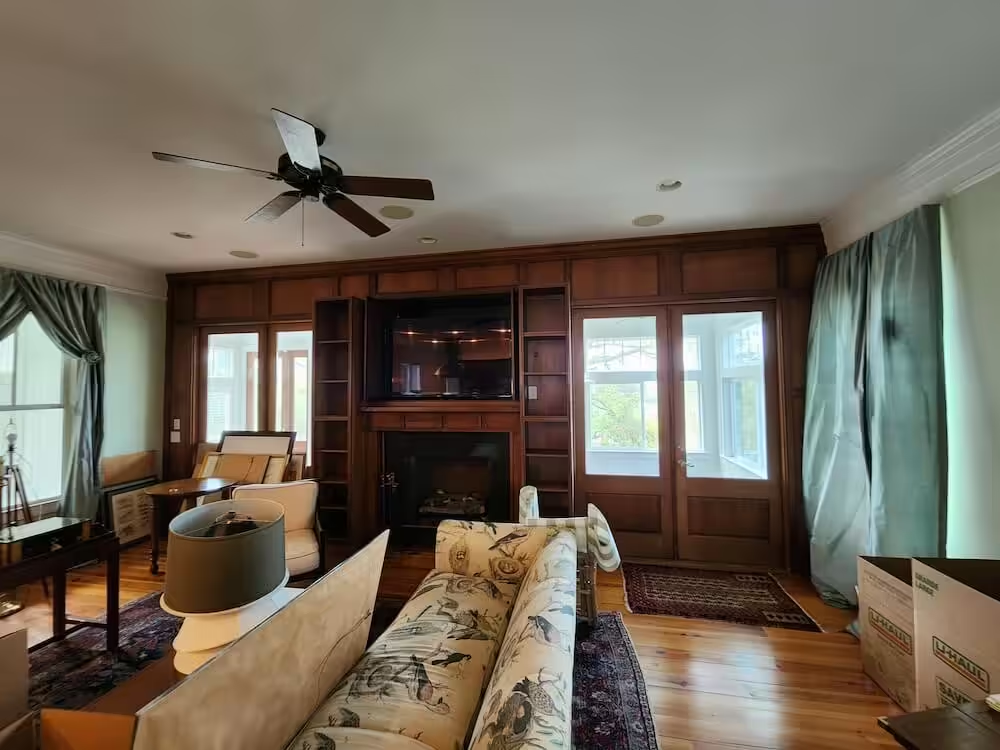
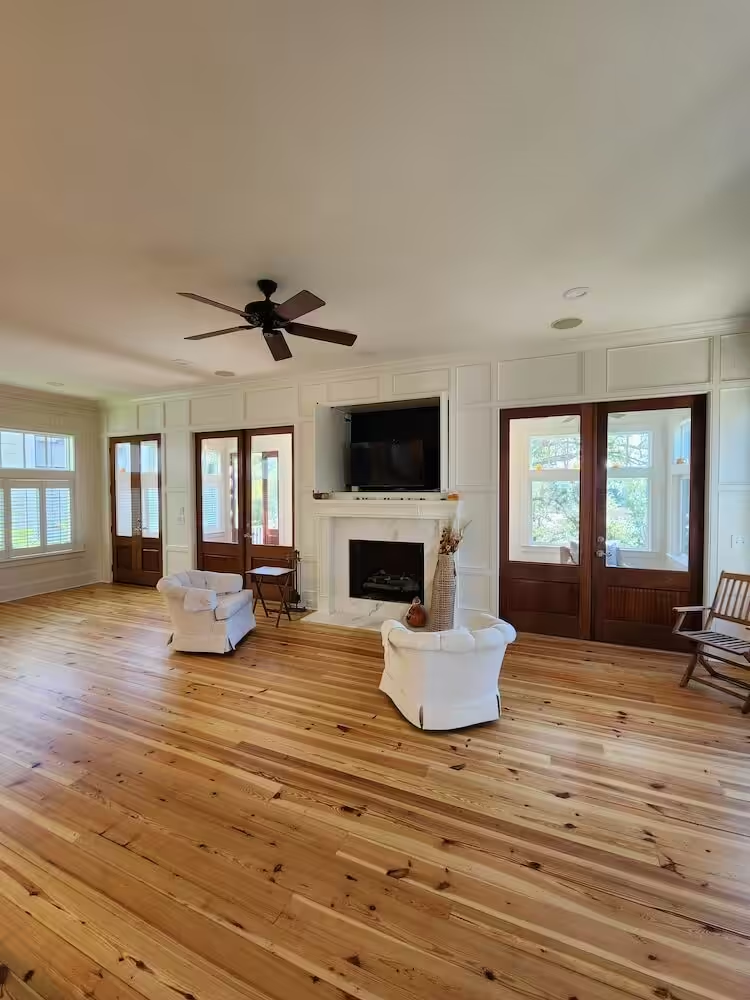
Light is the other local factor. Many coastal homes are built around big windows and French doors, and light that crosses a wall at a low angle shows every ridge and patch, more so as the sheen goes up.
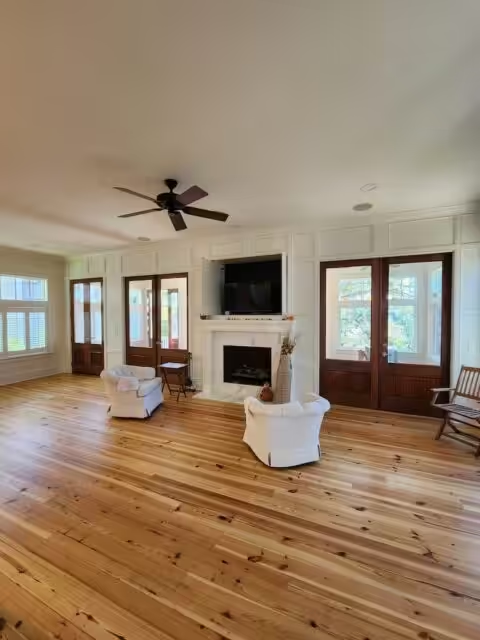
This living room is in the Mary Ellen Drive home in Charleston we painted inside and out. Side light from the French doors falls across the walls: in a room like this, the flatter the finish, the less the walls show their surface.
Test the sheen on your own wall first
Paint a sample big enough to judge on the walls that get the most side light, in the finish you plan to use, and look at it in the morning, in the evening and with the lamps on.
The Painting Contractors Association describes the professional version in its Standard P5: a full-scale sample area with the complete system, approved before the rest of the job.
Give the sample a few days. Some enamels reach their final sheen only as they cure: Benjamin Moore’s Advance data sheet says it could take up to 30 days to reach optimum hardness and final sheen.
Choosing finishes with an interior painter
Sheen and coverage go together: deep colors and big color changes may need more than two coats in any finish, as we explain in our guide to how many coats of paint for interior walls. When you get estimates, ask that the sheen for each room be written next to the color.
Our interior painters in Charleston include color consultation with interior projects, from single rooms to entire homes. Request a free interior painting estimate and bring your sample photos.