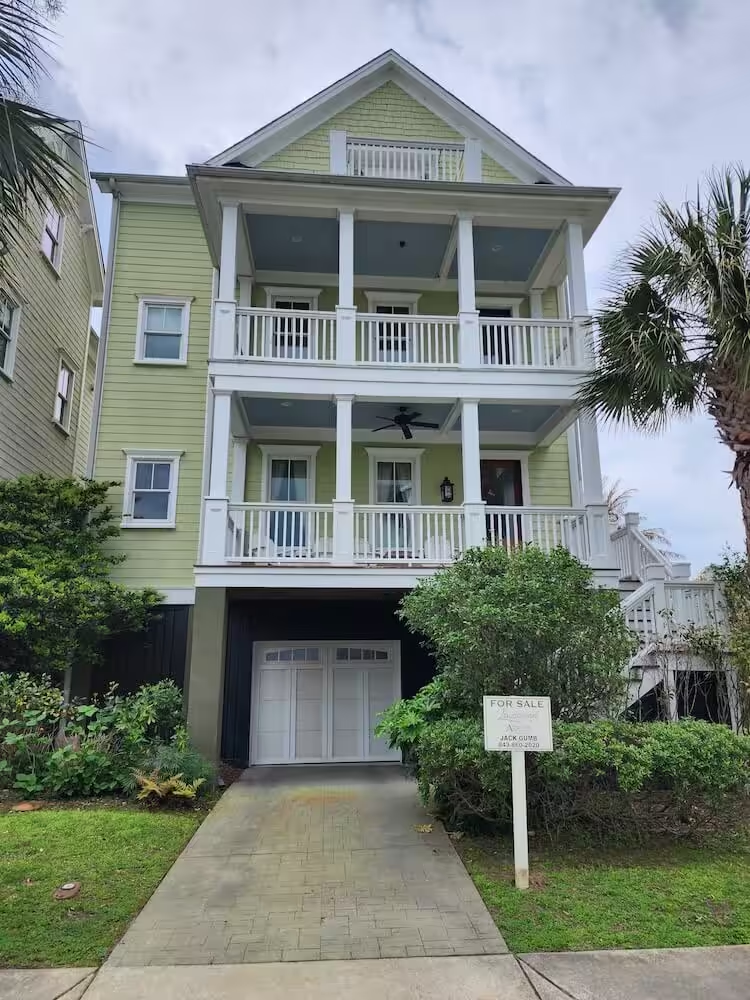
On Mary Ellen Drive in Charleston, a three-story house stands on a raised base among palms. The siding is a soft yellow-green, the railings on its stacked porches are white, and the enclosed ground level is a dark gray that anchors the tall shape.
It is one of the coastal homes in our portfolio, and its palette sums up what tends to work near the water.
The exterior paint colors that suit coastal homes are mostly light and mid-tone: soft greens, pale yellows, whites and sandy grays, with white or off-white trim and darker colors kept for doors, shutters and the base.
Light colors reflect more of the sun; dark ones absorb it. The table below shows how those palettes look on real houses and condos we have painted, from Kiawah to Folly Beach.
Five coastal palettes, and where we have used them
The colors below are described as they appear on each project page. Exact paint names and codes are not published for these jobs, so use the table for direction and test samples before you choose.
| Palette | Real project | How the colors are split | What to weigh on the coast |
|---|---|---|---|
| Soft greens with white trim | Kiawah Island estate; Mary Ellen Drive home | Sage green or yellow-green body, white columns and railings, a darker base on the elevated house | Reads well against marsh grass and live oaks; white trim on porches needs regular washing |
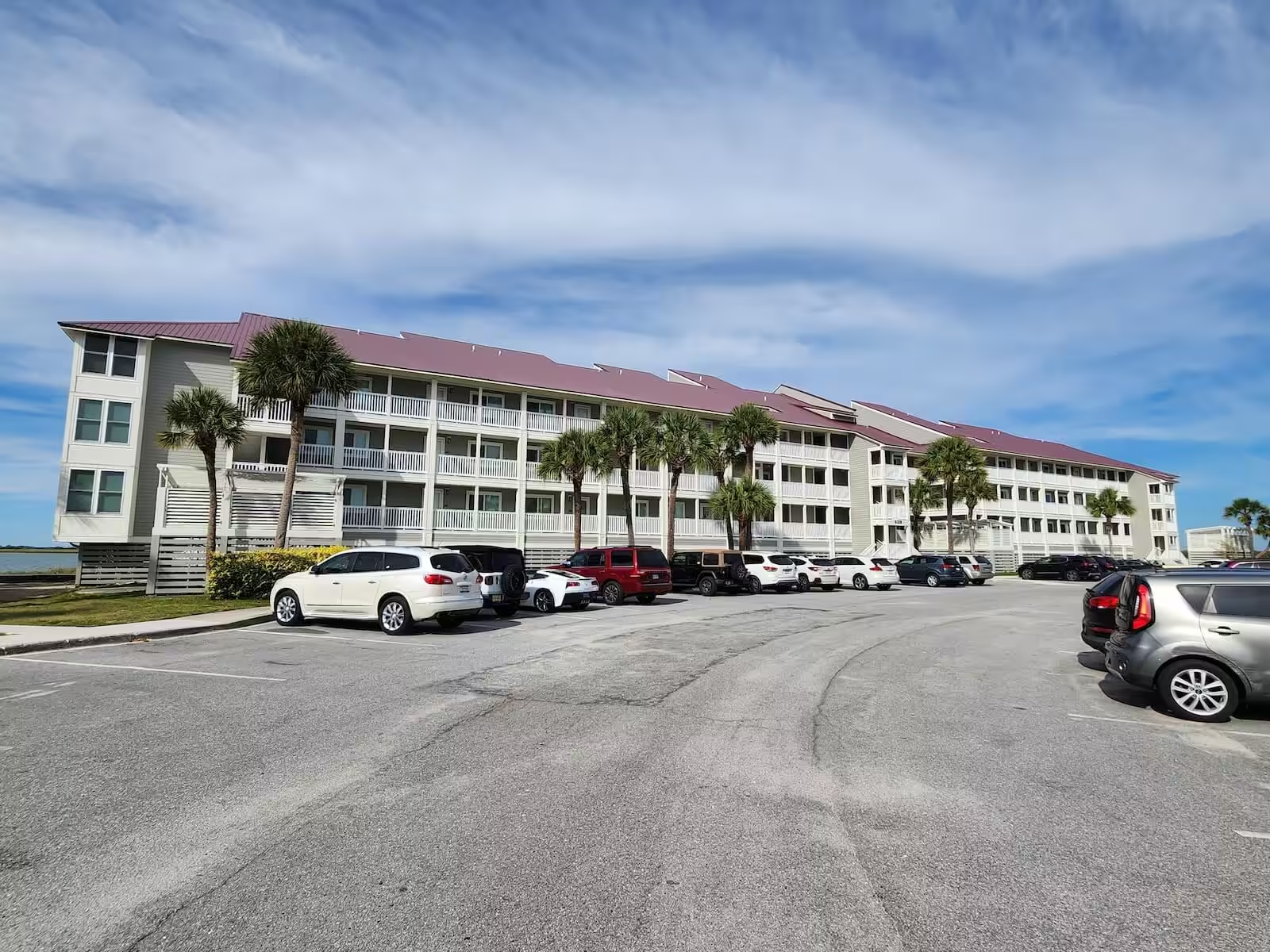
| Pale yellows and pastels, coordinated | Marines Cay, Folly Beach; South Hampton, Mount Pleasant | Soft yellows, blues, greens, grays and coral spread across buildings in one scheme | Works when a whole community plans it together; needs board approval |
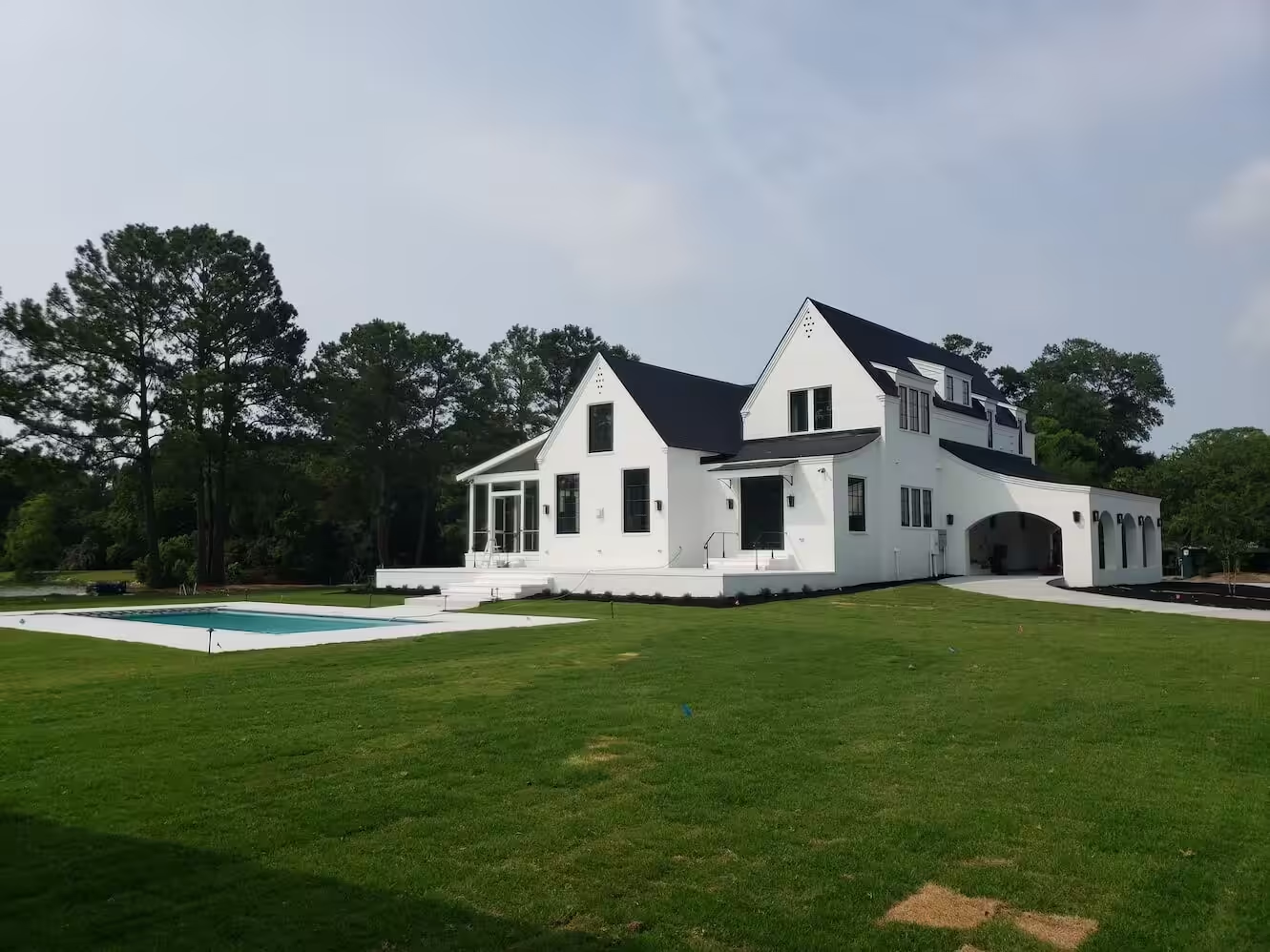
| Coastal whites with dark accents | Pelican Point, Folly Beach; guest house on Wadmalaw Island | White body and trim, with charcoal accents on the Wadmalaw house | The most reflective choice; shows salt film and mildew sooner |
| Soft grays and sand neutrals | hotel on Isle of Palms; Park West home | Coastal gray body on the hotel; soft beige with black shutters in Park West | Forgiving with sand and pollen; looks calm next to weathered wood |
| Deep and earthy | Downtown Charleston townhouse; ranch house in Charleston | Charcoal vertical siding downtown; terracotta and gold stucco with brown-stained wood on the ranch | Absorbs more sun; better suited to shaded or inland lots than to an oceanfront wall |
Soft greens with white trim
Green ties a house to the marsh and live oaks around it. The Kiawah estate, an elevated house with wraparound porches and balconies on three levels, has those porches in soft sage green, with white trim on the columns and railings. The Mary Ellen Drive house uses a yellower green with crisp white trim.
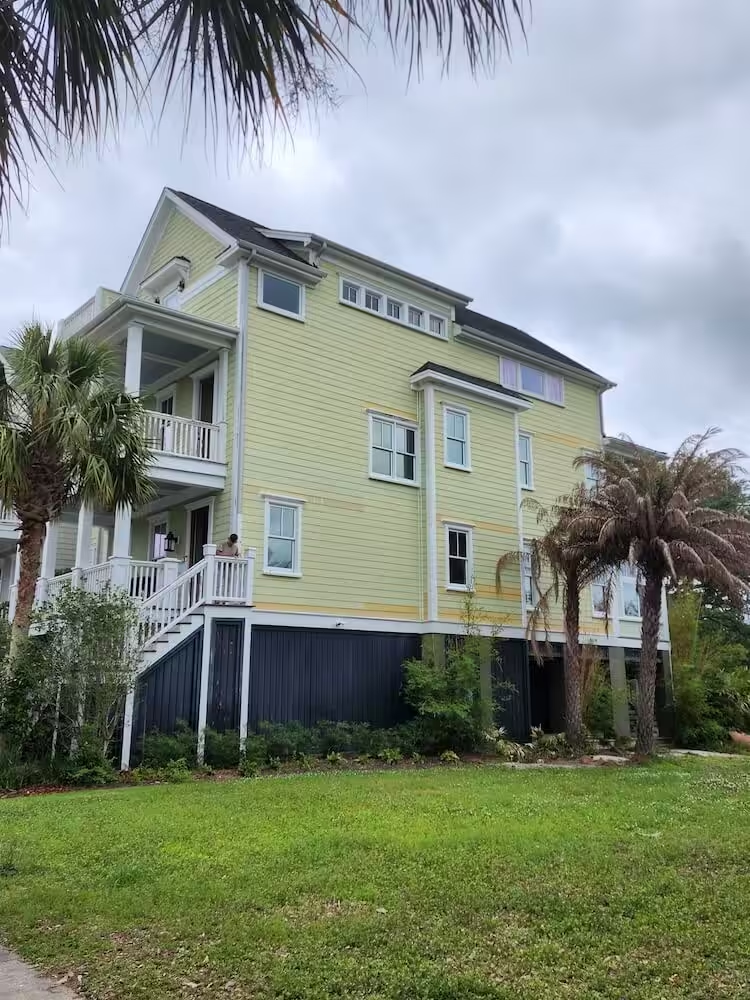
From the side, the Mary Ellen house shows how the scheme is divided: green on the siding, white on every railing, column and stair, and a dark lower level under the porches. The white repeats on each floor, which ties a tall house together.
Pale yellows and pastels across a whole community
At Marines Cay on Folly Beach, two- and three-story condominium buildings were painted in coordinated coastal colors: soft yellows, blues, grays and neutral tones. At South Hampton in Mount Pleasant, three-story buildings carry soft greens, yellows, grays and coral.
Pastels like these work when they are planned as a set, so that no two neighbors clash. On a single house inside an association, the board usually decides what is allowed; our guide to HOA painting rules in South Carolina covers how that approval works.
Whites, grays and sand neutrals
White is the classic beach choice. Pelican Point on Folly Beach is painted in coastal white across multi-story buildings, balconies and railings. On a guest house on Wadmalaw Island, clean white siding is paired with dark charcoal accents, a simple two-color scheme.
Grays and sandy neutrals are the quieter option. The Isle of Palms hotel is a fresh coastal gray; in Old Village, a contemporary home on Pitt Street combines soft gray and white with natural wood accents; in Park West, soft beige siding sits behind traditional black shutters.
Where dark colors fit near the water
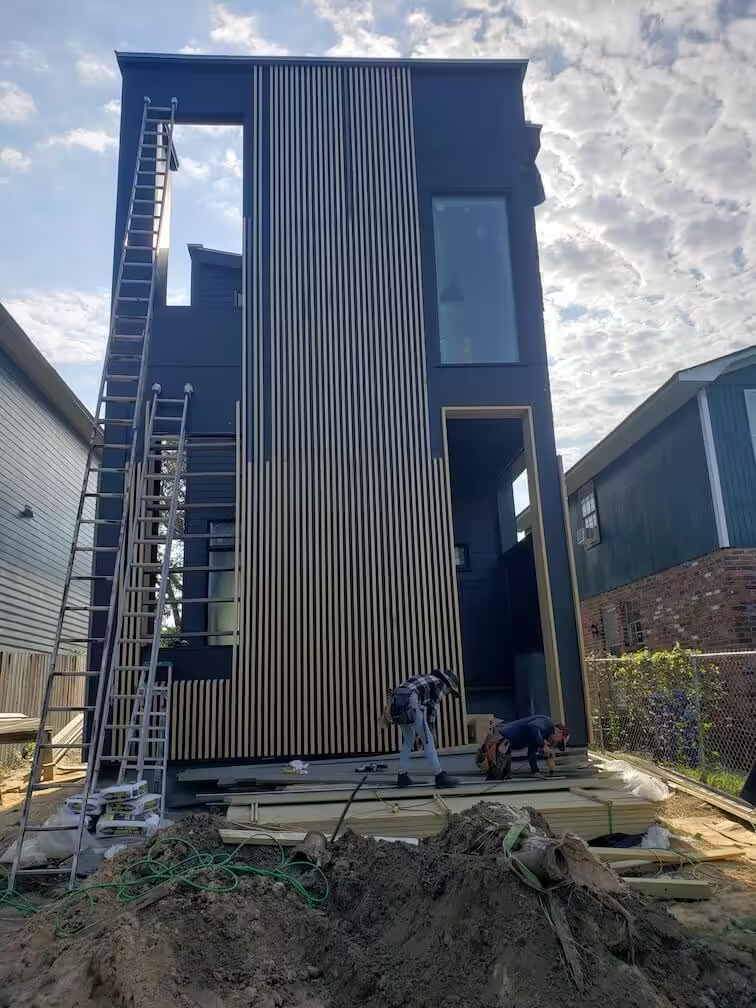
Dark exteriors are popular, and they can look sharp, as the charcoal townhouse downtown shows. Near the beach, the sun is the argument against them.
Sherwin-Williams explains that lighter tints have higher light reflectance values than darker ones, and Lawrence Berkeley National Laboratory’s Heat Island Group notes that dark walls can heat a building, while light or “cool color” paints keep walls cooler.
A practical middle path: keep the body light or mid-tone and put the dark color where there is less of it, on the front door, the shutters, window sash or the base of an elevated house.
Color by part on an elevated house
Raised coastal houses have more parts to color than a ranch on a slab. Decide each one separately:
- Body: the light or mid-tone color that covers most of the wall.
- Trim, columns and railings: white or off-white on most of the houses above; it repeats on every porch level.
- The enclosed ground level: a darker color, as on the Mary Ellen house, keeps the base from competing with the porches and hides splash-back from rain and sand.
- Porch ceilings and floors: a light ceiling keeps deep porches bright; the floor needs a color that hides foot traffic.
- Doors and shutters: the place for the strongest color on the house.
Salt, sun and mildew: what color can’t fix
No color stops salt film, pollen and mildew from building up on a house near the water. Light colors show it sooner, and every repaint starts with washing it off. Our guide to pressure washing before painting covers how that cleaning is done without damaging the siding.
On the oceanfront projects in the table, the project pages describe weather-resistant coatings chosen for salt air and strong sun. Ask any painter which product they plan for your exposure, not only which color.
Before you commit
A palette from someone else’s house is a starting point. Test it against your own roof, brick and light: our checklist on how to choose exterior paint colors walks through samples, sheen and approvals step by step.
Painting a coastal home
VMS Home Painting has painted houses and condominiums from Kiawah and Wadmalaw to Folly Beach, Isle of Palms and Mount Pleasant. If you are planning exterior painting for coastal homes in the Charleston area, tell us the palette you are considering and any approvals you need, and request a free exterior estimate.