The most common mistake when people compare the cost to paint kitchen cabinets is lining up per-door numbers without asking what a “door” includes. One quote counts both sides of each door and the boxes behind them; another counts the front only and prices the boxes, the island and the drawer fronts separately.
The price comes from three things: how many pieces get painted, how much work each piece needs before paint, and the finish system and process used on them.
We do not publish prices, because they change and because two kitchens of the same size can land far apart. This page explains each of the three, and the worksheet below lets you count your kitchen the way an estimator would.
Layer 1: the piece count
Most published cabinet prices are quoted per door or per piece, and for good reason: the work happens piece by piece, not by the size of the room.
A kitchen with many small drawers can take longer than a bigger one with a few large doors, because every piece is removed, labeled, cleaned, sanded, primed and coated on each side that shows.
Use this worksheet with a pencil, standing in your kitchen.
| Item | How to count it | Your count | Why it matters |
|---|---|---|---|
| Doors | Every hinged door, upper and lower, including the ones under the sink | Usually painted on both sides, one side at a time | |
| Drawer fronts | Every drawer front, plus false fronts at the sink | Small pieces, but each one is handled like a door | |
| Glass or mullion doors | Doors with glass panes or grids | Narrow wood around glass is slow to prep and paint | |
| Boxes and face frames | Linear feet of upper and lower runs | Painted in place, with counters, walls and floors protected | |
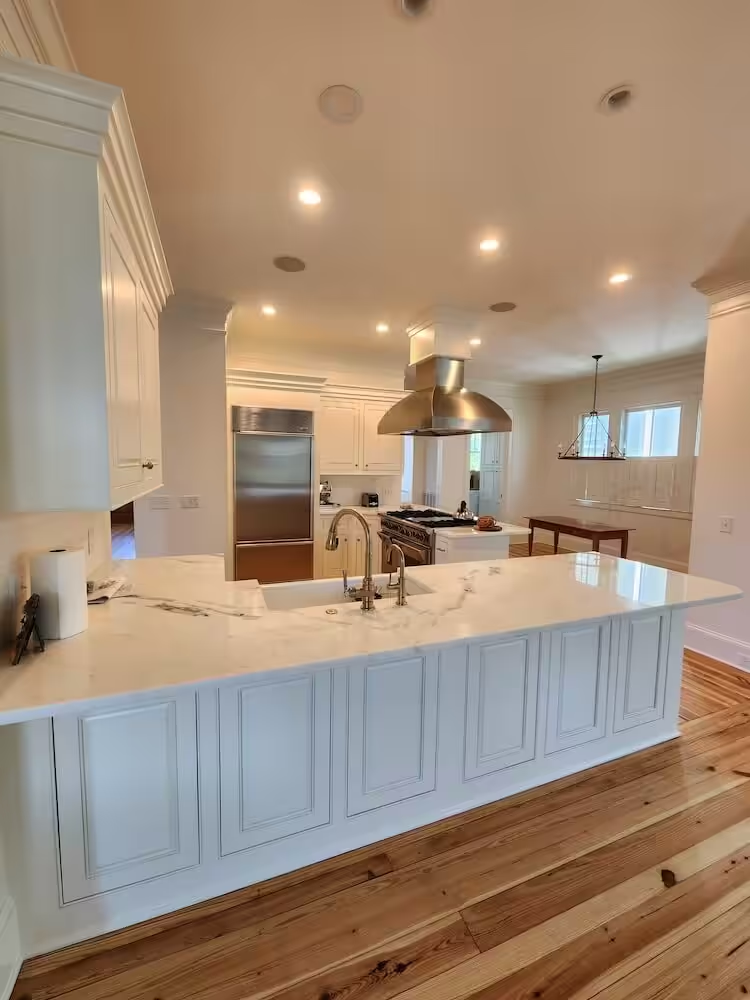
| End panels and the island | Each exposed side, and the island’s back and ends | Large flat faces in the most visible spots | |
| Trim on the cabinets | Crown, light rail, toe kicks, fillers | Detail work that is easy to leave out of a quote | |
| Open shelves and interiors | Only the ones you want painted | Not assumed in any scope; ask for them by name | |
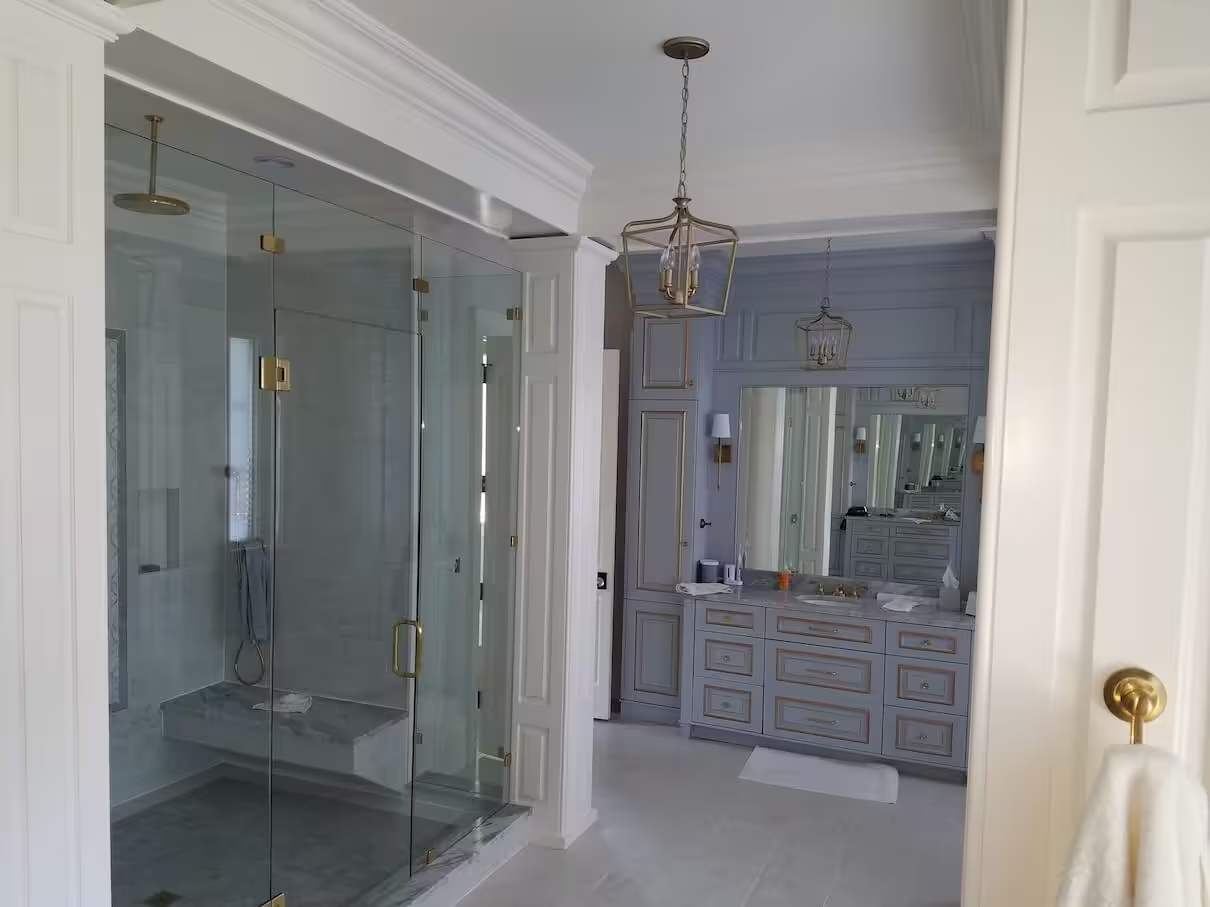
| Other cabinetry | Bathroom vanities, laundry, mudroom, built-ins | Often added to the same job; each is counted the same way |
That last column is where quotes differ. The Painting Contractors Association’s standard on typical exclusions (P23) lists cabinets, shelves and their hardware among the items that are not part of a painting contract unless the documents name them. If your quote for a kitchen repaint does not list the cabinets, they are not in it.
Layer 2: what each piece needs before paint
Two kitchens with the same count can need very different prep. Check the ones that apply to yours:
- Grease near the range and around the handles. Benjamin Moore’s cabinet guide starts with a grease remover, because primer will not bond over kitchen grease.
- A glossy or factory finish. The same guide calls for sanding until the surface is dull enough for the primer to grip, and it warns against lacquer-based primer under its cabinet enamel.
- Open-grain oak, if you want the grain filled rather than showing through. Filling is extra steps on every face; our guide to painting oak cabinets explains the choice.
- A big color change, such as dark stained wood to white. Benjamin Moore points to a high-hiding primer for drastic color changes, and coverage drives the number of coats.
- Repairs: chipped edges, swollen bottoms near the sink or dishwasher, loose joints.
- New hardware with a different hole spacing, which means filling the old holes and drilling new ones.
- A house built before 1978, where sanding old painted finishes falls under the EPA’s lead-safe rules. Our questions to ask a painter cover what that changes.
Each checked item adds labor to every piece it touches. That is why a count alone, without a look at the cabinets, cannot produce a fair number.
Layer 3: the finish system and the process
The coating and the way it goes on set the rest of the price.
The product comes first, because recoat time is paid for in schedule. Benjamin Moore lists 16 hours before recoating ADVANCE; Sherwin-Williams lists 4 hours for Emerald Urethane Trim Enamel, both at 77°F and 50% humidity.
The week-long timeline those numbers produce is laid out in how long it takes to paint kitchen cabinets. The other choices in this layer:
- The number of coats: Benjamin Moore’s cabinet guide calls for a primer and then two coats of cabinet enamel, with light sanding in between.
- Where the doors are painted: sprayed off site, sprayed on site in a set-up area, or brushed and rolled. Each has its own cost in equipment, space and protection.
- The sheen. Higher sheens reflect more light and show more of what is under the paint, so the prep has to match; our guide to the best paint finish for walls compares the sheens.
- Protection of countertops, floors and appliances while the boxes are painted in place.
Painted cabinetry on our projects
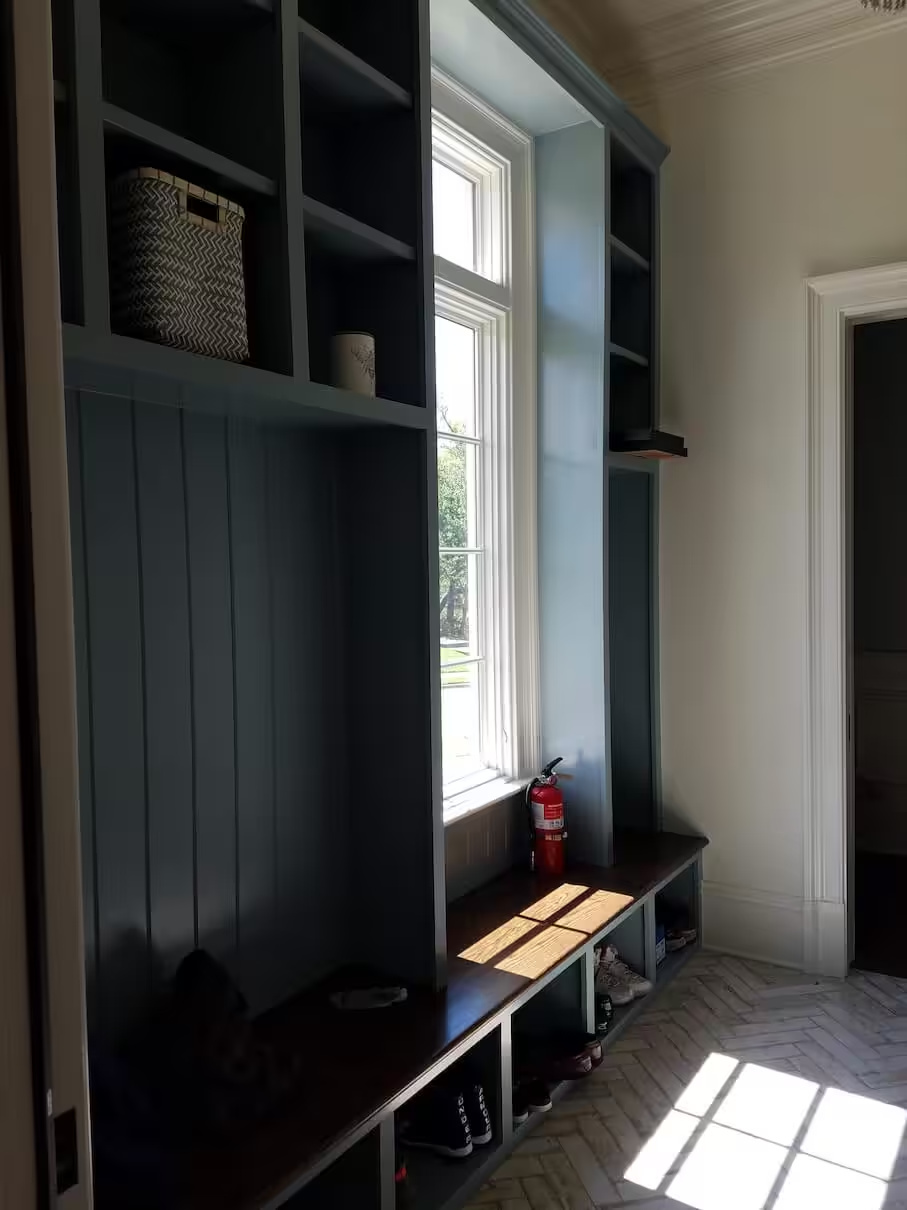
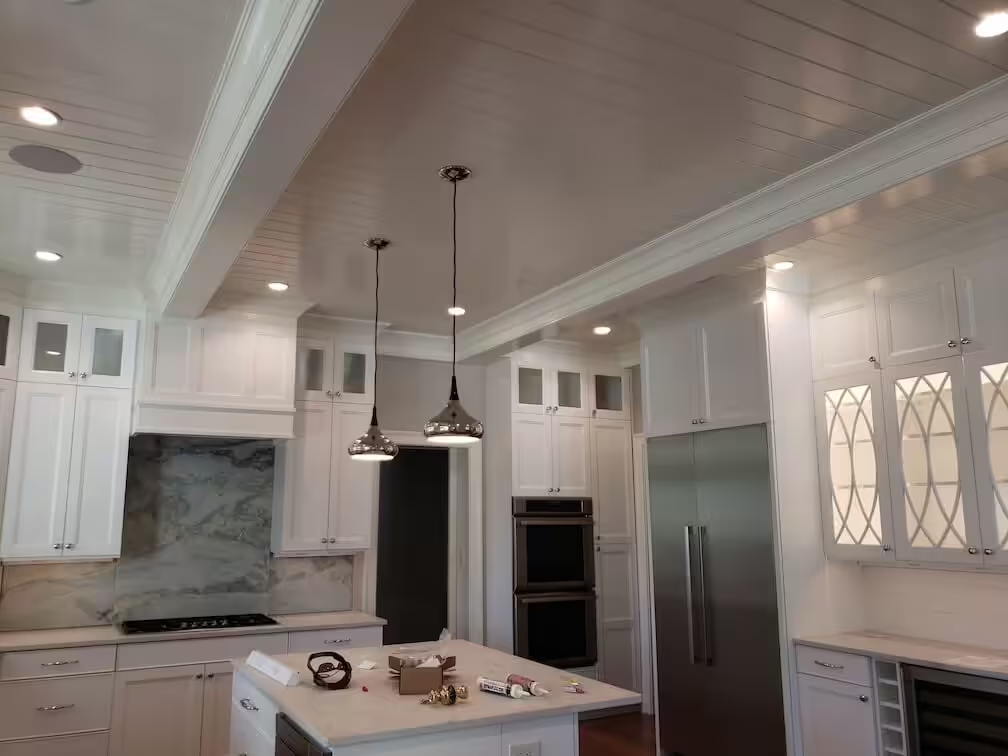
The clearest example on our site is the modern farmhouse in Mount Pleasant, where the project page describes a hallway of custom built-in cabinetry painted bright white, with glass-front doors.

On the worksheet, a hallway like that is mostly glass-front doors, and each one is counted and prepped as its own piece, whatever the length of the hall. A kitchen with a wall of glass-front uppers works the same way.
Doing it yourself, and how long the finish lasts
Paint makers write their cabinet instructions for homeowners, so the work list does not change when you do it yourself: remove and label every piece, degrease, sand, prime, sand again, apply two coats, and respect the recoat and cure times on the data sheet.
What changes is who spends the hours, where the doors dry and how long the kitchen is out of use. Benjamin Moore’s guide starts by asking for a work area with enough room to let everything dry for an extended period.
The same steps decide how long the finish lasts. Benjamin Moore notes that ADVANCE can take up to 30 days to reach optimum hardness, depending on weather and drying conditions, so the first weeks of use matter as much as the paint. Habits that keep a painted kitchen looking new are covered in how long painted cabinets last.
Paint, reface or replace?
Paint keeps the boxes, the doors, the layout and the countertops, and changes only color and finish.
That is the point of comparison: if the structure is sound and the layout suits you, paint is the smaller job. Peeling veneer, water damage under the sink or a layout you want to change are problems paint cannot solve, and they are the cases where refacing or new cabinets belong in the conversation.
Ask for the count in writing
Before you compare two cabinet estimates, ask each one to state, in writing, the pieces it includes and how they were counted, the prep steps, the primer and finish product, the number of coats, where the doors will be painted and how many days the kitchen will be out of use.
Then lay them side by side against your worksheet.
A quote that cannot answer those questions is not cheaper; it is unfinished. VMS Home Painting offers kitchen cabinet painting in the Charleston area. Get a free cabinet painting estimate and have your worksheet ready for the visit.