The best exterior paint for a humid climate is a top-quality 100% acrylic latex with a mildew-resistant film, in a sheen chosen for how damp each wall stays, over the right primer for each surface. The brand on the can matters less than what its data sheet says about the binder, mildew, temperature and moisture limits, and permeability.
Below is the checklist we would use to read any exterior paint label for a Lowcountry house, with real numbers from a manufacturer’s data sheet, and then the same questions asked of a real coastal home we painted.
What “humid” means on the Carolina coast
Humidity is easier to plan for when it has a number. NOAA’s 1991–2020 hourly climate normals for Charleston International Airport put the average dew point above 60°F every month from May through September, peaking at 72.9°F in July.
Air that holds that much water condenses on any surface that cools to the dew point overnight, and on summer mornings here that point sits only a few degrees below the air temperature.
That moisture shapes two decisions: which paint goes on, covered here, and when it goes on. For the second, our guide to the best time of year to paint a house exterior lays out Charleston’s month-by-month temperature and rain.
The checklist
The examples come from Sherwin-Williams’ data sheet for Emerald Exterior Acrylic Latex (flat, March 2026 edition). Use them as a reference point for reading any brand’s sheet, not as a product recommendation.
1. A 100% acrylic binder
Look for the line labeled vehicle type or resin. The Emerald sheet lists 100% acrylic and describes a cross-linking acrylic technology, with resistance to blistering, peeling and dirt pick-up claimed for that product. If a paint’s sheet doesn’t name its binder, ask the store or the painter for it before you buy.
2. “Mildew resistant,” and how far that promise goes
Read the exact words. The Emerald sheet says the coating contains agents that inhibit the growth of mildew on the surface of this coating film. That is a claim about protecting the paint itself.
The EPA explains the limit in its notice on treated articles (PR Notice 2000-1): products treated with an antimicrobial can claim to protect the article or substance itself, but the exemption does not cover public health claims.
A mildew-resistant paint keeps its own film cleaner for longer; it does not treat the wood behind it or make it safe to paint over existing growth.
The same data sheet is blunt about that: mildew must be removed before painting, or it will grow through any new coat. Our guide to mildew on exterior paint covers the test and the cleaning.
3. A sheen that sheds dirt
Diamond Vogel’s exterior maintenance bulletin says flat paints, oil-based paints and lower-cost paints are more susceptible to mildew growth, and that airborne dirt on paint feeds it. The Emerald flat in our example measures 0 to 5 gloss units at 85 degrees, the lowest end of the scale.
Flat still has a place on large, sunny walls where it hides siding flaws. On shaded walls, porch ceilings and trim, a sheen above flat is worth considering because it holds less dirt and washes more easily. For trim specifics, see our notes on painting trim and baseboards.
4. Temperature, dew point and rain limits
Humid weather is mostly a scheduling problem, but the limits on the sheet tell you how much room a product gives you. The Emerald sheet lists:
- air, surface and material above 35°F, and at least 5 degrees above the dew point;
- no application if rain is expected within 2 to 3 hours;
- dry to the touch in 1 hour and ready for a second coat in 4 hours above 45°F at 50% relative humidity, with times that change with temperature, humidity and film thickness;
- above 80°F, the paint sets up quickly, and it should not go on in direct sun.
5. Breathability and masonry
A paint film that lets water vapor out is less likely to trap moisture behind it. The Emerald sheet lists its water vapor permeance at 29.64 perms; a higher number means more vapor passes through.
Stucco and masonry add their own rules on the same sheet: new stucco should cure 30 days before painting (or dry 7 days and get a masonry primer), surfaces with a pH above 9 need a high-pH-resistant primer, and cracks are repaired with an elastomeric patch or sealant.
6. The primer underneath
Self-priming paints still need help on some surfaces. On cedar, redwood and knots, the Emerald sheet says the first coat may show tannin staining; if it persists, spot-prime with an exterior oil-based wood primer. Hardboard gets an oil-based primer because of wax bleeding. And standard latex primers, the sheet notes, cannot be used below 50°F.
7. A color the climate can live with
Deeper colors cost more to apply. The Painting Contractors Association’s P3 standard notes that as colors deepen, application and material costs rise.
On vinyl siding the limit is physical: the Emerald sheet says not to go darker than the original color, or below a light reflectance value of 56, unless you use its VinylSafe colors. Our article on painting vinyl siding has the rest.
8. A washing schedule
No paint stays clean on its own in a humid climate. Diamond Vogel suggests cleaning painted exteriors once or twice a year, with a mild detergent and a scrub brush or a careful power wash, and treating mildew separately with a bleach solution. A paint that washes well is only as good as the washing it gets.
Reading a real coastal house
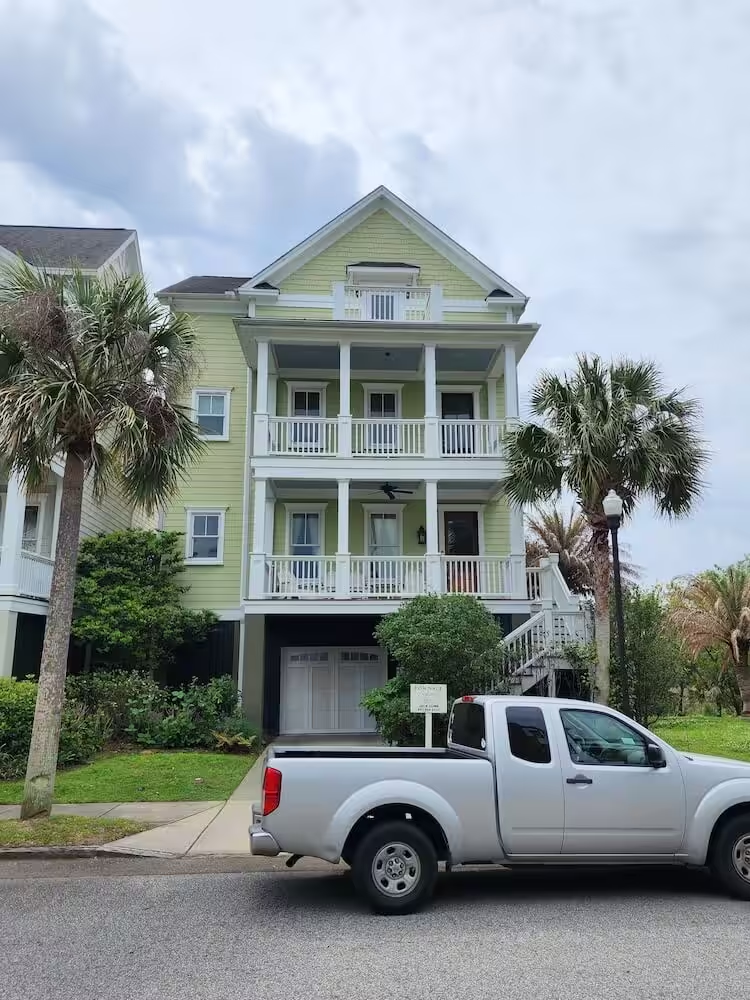
This is the Mary Ellen Drive home in Charleston, which we painted inside and out. The project page says the exterior received weather-resistant finishes chosen for salt air, humidity and strong sun. Here is how the checklist maps onto it.
- The stacked porches: the walls and ceilings behind them spend most of the day in shade. Those are the surfaces where a sheen above flat and a mildew-resistant film earn their place (checklist items 2 and 3).
- The white railings, columns and stairs: hands, salt and rain hit them first. That is where an enamel-grade finish and the most frequent washing pay off (items 3 and 8).
- The palms and shrubs: planting close to the house keeps the lower walls shaded and slow to dry. Trimming back from the siding helps any paint last.
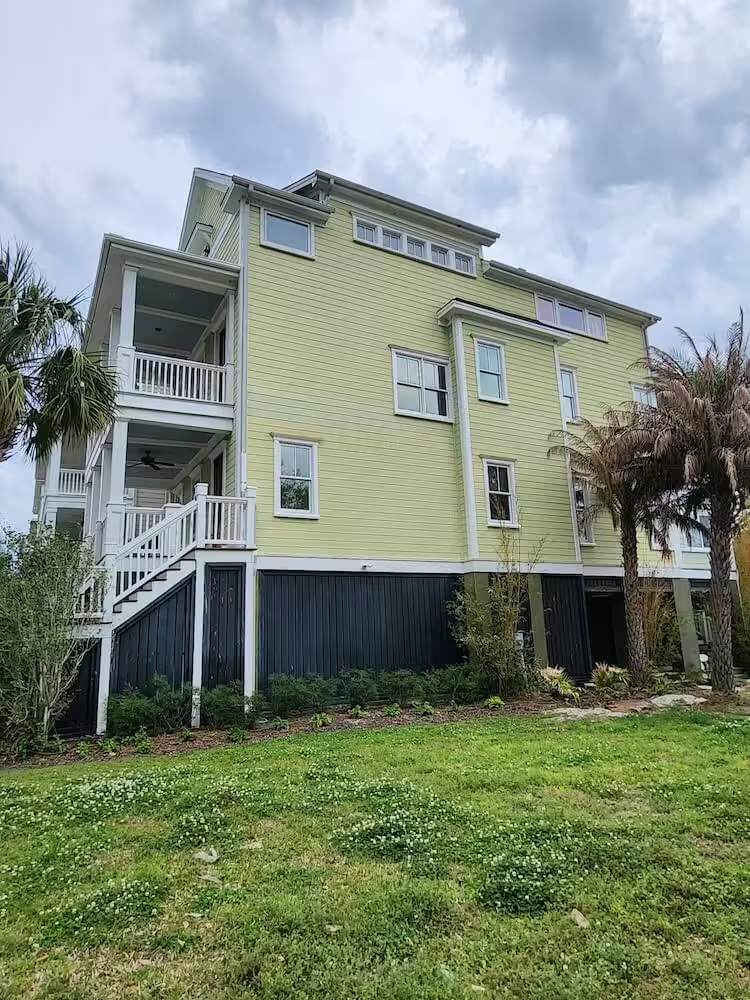
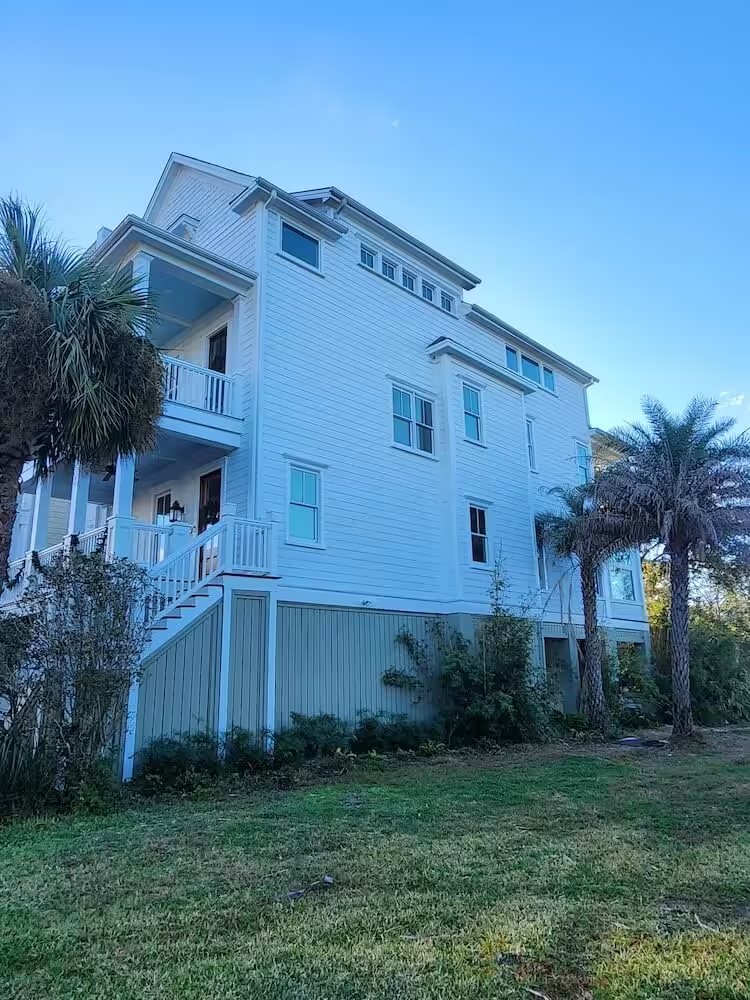
From the side, the dark lower level is the part closest to the lawn, where rain splash and irrigation reach. On an elevated house, that band near the ground is where washing and inspection should start every year.
What drives the cost of a coastal repaint
The product line is only one line on the estimate. The price of an exterior repaint depends on the size and height of the house, the siding material, how much washing, scraping and wood repair it needs, which surfaces need primer, the number of colors and the paint line chosen.
Picking the paint with your painter
Ask any painter to name the exact product line for the body, the trim and the porch ceilings, and to give you each data sheet. Run the sheets through the eight points above. A painter who chose them for a humid climate will have answers for every one.
VMS Home Painting handles exterior house painting for Lowcountry homes from Kiawah to Mount Pleasant. Get a free estimate for your exterior and ask us to list the product for each surface of your house in writing.